Adi Shankaracharya statue unveiled at Omkareshwar
Relevance: GS1 - salient aspects of Art Forms, literature and Architecture; GS4 - Contributions of moral thinkers and philosophers from India and world
(Source: The Indian Express, 09/21/2023)
Click here for Daily Current Affairs
Why in the news?
- Madhya Pradesh Chief Minister inaugurated the 108-foot-tall ‘Statue of Oneness’(Ekatmata Ki Pratima) of Adi Shankaracharya at Omkareshwar on September 21.
- The statue depicts Shankaracharya as a 12-year-old child when he is said to have visited Omkareshwar.
Table of Contents

More About the Statue and other development projects
- On February 9, 2017, CM of MP announced the construction of a 108-foot-tall Adi Shankaracharya statue, a Shankar museum, and the Acharya Shankar International Institute of Advaita Vedanta at Omkareshwar.
- Larsen and Toubro Company was given the contract to construct the Statue of Oneness.
- The multi-metal Adi Shankaracharya statue is installed at Mandhata Parvat hill, facing southwards towards the Narmada river.
- This statue stands atop a 54-feet pedestal, supported by a 27-feet lotus petal base which is made of red stone.
- It is made up of bronze that contains 88% copper, 4% zinc and 8% tin and its internal structure is made up of high-quality steel.
- At the base of the statue is the Shankar Stambh, which features wooden domes and stone pillars with “carvings depicting 32 stories related to Acharya Shankar.”
- Vasudeo Kamath, a graduate of the J. J. School of Art in Mumbai, created the conceptual sketch and painting of the statue.
Other Development projects along with the statue:
- The statue will be accompanied by Ekatma Dham, which will include the Advaita Lok museum, built to “showcase the life and philosophy of Acharya Shankar through exhibits reflecting the message of Advaita Vedanta.
- The Acharya Shankar International Institute of Advaita Vedanta is being built to “promote the study and understanding of Advaita Vedanta”.
- The research centres include the Centres for Advaita Philosophy, which will be featured.
- The Maharshi Vedavyasa Advaita Library will also be built.
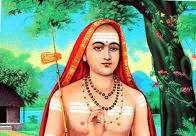
Who was Adi Shakaracharya?
What is Adi Shakaracjjarya’s Philosophy?
|
Why is Mandhata island considered an important religious destination?
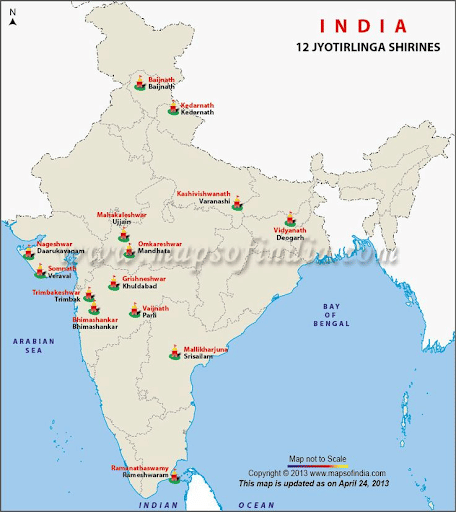
- The Mandhata island, nestled on the Narmada River, is home to two of the 12 Jyotirlingas – Omkareshwara (located on the south side of the island) and Amareshwara. The area is close to Mahakaleshwara Jyotirlinga at Ujjain, located 110 km to the northwest.
- The name ‘Omkareshwar’ is derived from the shape of the island, which resembles the sacred syllable ‘Om’, and its name means ‘the Lord of Omkara’.
What is Jyotirlingas?
|
(*Click this link to read prelims specific weekly current affairs articles)
FAQs
Question: Who was Adi Shakaracharya?
Answer:
- Adi Shankara, Indian philosopher and saint, who is believed to have lived between 788 and 820 AD, was born in Kerela’s Kaladi, situated on the bank of the Periyar River.
- He became a sanyasin at an early age and left his Brahmin household, where he is said to have made his way to Omkareshwar.
Question: What is the concept of non-dualism?
Answer:
- Adi Shankara was a proponent of Advaita-vaad/ Advaita Vedanta/ Non dualism.
- It recognizes a unity in multiplicity, identity between individual and pure consciousness, and the experienced world as having no existence apart from Brahman, which is the reality of all things..
MCQs
Quesion: With reference to Adi Shankaracharya, consider the following statements:
- He is credited with the doctrine of Advaita Vedanta.
- The followers of Shankaracharya are called Smratas.
Which of the statements given above is/are correct?
(a) Only 1
(b) Only 2
(c) Both
(d) Neither
Answer: (a) See the Explanation
Statement 1 is correct: He is associated with Maya Theory, Advaita Vedanata (Non-Dualism). This doctrine is based on the concept that the higher or true Self is identical to Brahman, the Absolute Reality. In Advaita Vedanta, Jnana yoga is the path of knowledge to Moksha, or liberation from the cycle of life, death and rebirth. This doctrine also believes that Moksha can be achieved in this life (Jivanmukthi) in contrast to other Indian philosophies that emphasize videhamukti, or Moksha after death
Statement 2 is correct: The followers of Shankaracharya are known as Smratas.
Download the PREPP App and attempt FREE IAS Exam Mock Tests and get complete study material!

Full Test - 04: UPSC CSE Prelims CSAT (Paper-II)
Full Test - 03: UPSC CSE Prelims CSAT (Paper-II)
UPSC CSE Prelims 2026 GS Paper 1 Question Paper (24-May-2026)
UPSC CSE Prelims 2026 CSAT Paper 2 Question Paper (24-May-2026)

17 February 2025 | The Hindu Must Read Articles | Current Affairs

16 February 2026 | The Hindu Must Read Articles | Current Affairs

13 February 2026 | The Hindu Must Read Articles | Current Affairs









Comments