Verma Committee on Fundamental Duties - Indian Polity Notes
Verma Committee was set up in 1999 to find ways to inculcate the spirit of Fundamental Duties among citizens, particularly through the education system. It is constituted by the Union Government in response to a notice issued by the Supreme Court in 1998. It recommended that awareness about Fundamental Duties must be created in educational institutions. In this article, we will take a deep dive into the recommendations of the committee which is crucial for UPSC IAS examination.
Table of Contents
|
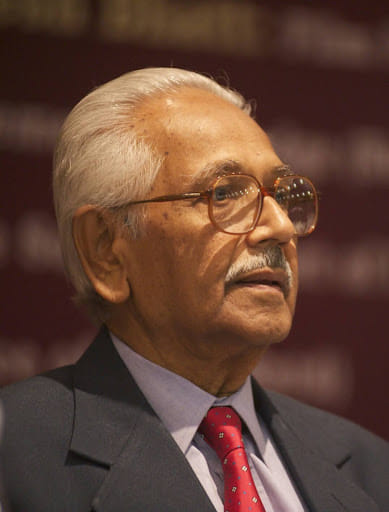
“Verma Committee was set up in 1999 to find ways to inculcate the spirit of Fundamental Duties among citizens, particularly through the education system.” |
List of Fundamental Duties
Article 51A, in Part IV-A of the Constitution, deals with Fundamental Duties. These duties were added through the 42nd Amendment Act in 1976.
It shall be the duty of every citizen of India
- To abide by the Constitution and respect its ideals and institutions, the National Flag and the National Anthem.
- To cherish and follow the noble ideals which inspired our national struggle for freedom.
- To uphold and protect the sovereignty, unity and integrity of India.
- To defend the country and render national service when called upon to do so.
- To promote harmony and the spirit of common brotherhood among all the people of India, transcending religious, linguistic and regional or sectional diversities; to renounce practices derogatory to the dignity of women.
- To value and preserve the rich heritage of our composite culture.
- To protect and improve the natural environment, including forests, lakes, rivers and wildlife, and to have compassion for living creatures.
- To develop the scientific temper, humanism and the spirit of inquiry and reform.
- To safeguard public property and to abjure violence
- To strive towards excellence in all spheres of individual and collective activity so that the nation constantly rises to higher levels of endeavour and achievement.
- Who is a parent or guardian to provide opportunities for education to his child or, as the case may be, a ward between the age of six and fourteen years.
| Other Relevant Links | |
|---|---|
| Swaran Singh Committee | 11 Fundamental Duties |
| Constitutional Amendments | Basic Structure Doctrine |
| Procedure for Amendment | Significance of Fundamental Duties |
Background of the Verma Committee on Fundamental Duties
- Fundamental Duties play a crucial role in strengthening the foundation of society and the nation. However, mere legislation is insufficient to ensure their fulfillment.
- Effective implementation of these legislations requires fostering favourable attitudes and a commitment to adhering to these duties among Indian citizens.
- Recognizing the need for this, the Supreme Court of India, in 1998, issued a notice to the Government of India, inquiring about its plans to educate citizens on Fundamental Duties.
- In response, the Government established a committee chaired by Justice J.S. Verma in 1999, known as the Verma Committee on Fundamental Duties of Citizens.
- This committee was tasked with examining the operational aspects of Fundamental Duties and recommending measures to educate and encourage citizens to fulfill these duties.
Recommendations of the Verma Committee
The Verma Committee made the following recommendations:
- Fundamental Duties will raise standards of the citizen in public life. Therefore, every individual should obey and promote these duties.
- Public office holders should avoid selfishness or nepotism. Their foremost priority must be to serve public interests rather than individual interests.
- Integrity should be the main principle in the functioning of public office.
- Holders of public office must be accountable for their decisions and actions Fundamental Duties to the public.
- They should be as open as possible about all the decisions and actions which were taken by them.
- Public officials should maintain honesty while in office.
- Leadership is very important in the sense that holders of public office should promote these principles by leadership skills and set an example
Steps Suggested to Raise Awareness
To increase the awareness among the people of India concerning Fundamental Duties, the Verma Committee has identified a few existing acts by which a proper implementation of such duties can be accomplished.
a) The Representation of People Act,1951: According to this act, membership
of any member of the Indian Parliament or State Legislatures can be rejected
if he or she is found involved with corrupt activities.
b) The Unlawful Activities Protection Act, 1967: Sectarian organizations within
the national boundaries of the country must be banned in view of making a
peaceful and stable society.
c) The Protection of Civil Rights Act, 1955: Offenders who preach and practice
untouchability must be punished in accordance with the act.
d) The Wildlife Protection Act, 1972: It aims at protecting and preserving rare
and the perishing animals, birds and plants. For this reason, this act strongly
prohibits the illegal trading of animals.
e) The Prevention of Insults to National Honour Act, 1971: By this act insults
and disrespects of the national anthem, flag, the constitution of the land
have been firmly prohibited.
f) The Forest Conservation Act, 1980: The act strongly prohibits the destruction
of natural forest keeping in mind its increasing degradation. It also prachibits
the usage of forest for other human activities.
Criticism
- In an article published in the Economic and Political Weekly in 2003, Anupama Rao criticized the recommendations of the Justice Verma Committee Report.
- She argued that the report places a disproportionate emphasis on the duties of citizens in relation to the state and nation.
- According to Rao, this overemphasis on duties undermines the concept of citizens as equals and frames duty as a precondition for citizenship.
Conclusion
The Verma Committee's work highlights the importance of cultivating a sense of responsibility and commitment among citizens. By fostering a culture of duty and integrity, the recommendations aim to build a more harmonious and progressive society. The committee's report remains a significant reference point for discussions on the balance between rights and duties in the context of Indian citizenship, and it continues to be a crucial topic for competitive examinations like the UPSC.
FAQs
Q1: What was the Verma Committee?
Answer: The Verma Committee was constituted in December 2012 in the aftermath of the Delhi gang-rape case to recommend amendments to criminal laws related to sexual offenses in India. The committee was headed by Justice J.S. Verma, a former Chief Justice of India.
Q2: What were the key recommendations of the Verma Committee?
Answer: The Verma Committee made several key recommendations, including the broadening of the definition of rape, stricter punishment for crimes like stalking and acid attacks, and changes in police accountability. It also rejected the idea of the death penalty for rape but emphasized speedy trials and stringent punishment.
Q3: Did the Verma Committee propose any changes to the Armed Forces Special Powers Act (AFSPA)?
Answer: Yes, the Verma Committee recommended that personnel of the armed forces accused of sexual offenses should not be shielded under AFSPA and should face criminal prosecution under ordinary laws. This was a significant recommendation aimed at ensuring accountability in conflict zones.
Q4: How did the Verma Committee impact Indian laws on sexual offenses?
Answer: The Verma Committee's recommendations led to the passing of the Criminal Law (Amendment) Act, 2013, which brought significant changes to Indian laws on sexual offenses, including widening the definition of rape, introducing stricter punishments, and addressing sexual harassment, stalking, and voyeurism.
Q5: What were the Verma Committee’s views on marital rape?
Answer: The Verma Committee recommended that marital rape be recognized as an offense under Indian law. However, this recommendation was not incorporated into the subsequent amendments to the criminal laws.
MCQs
- Who chaired the Verma Committee constituted to review criminal laws relating to sexual offenses in India?
a) Justice J.S. Verma
b) Justice V.R. Krishna Iyer
c) Justice P.N. Bhagwati
d) Justice R.S. Pathak
Answer: (A) See the Explanation
- The Verma Committee was constituted in the context of which major event?
a) Nirbhaya gang rape case (2012)
b) Bhopal gas tragedy
c) Godhra riots
d) Emergency of 1975
Answer: (A) See the Explanation
- Which of the following recommendations was NOT proposed by the Verma Committee?
a) Introduction of stricter punishments for sexual harassment and stalking
b) Removal of AFSPA protections for armed forces accused of sexual crimes
c) Death penalty for rapists
d) Recognition of marital rape as a crime
Answer: (C) See the Explanation
- The Verma Committee's report led to which important legislative change in India?
a) The introduction of the Juvenile Justice Act
b) The Criminal Law (Amendment) Act, 2013
c) The Prevention of Corruption Act
d) The Companies Act, 2013
Answer: (B) See the Explanation
- Which key issue regarding women’s rights did the Verma Committee address but was not incorporated into law?
a) Sexual harassment at the workplace
b) Criminalization of marital rape
c) Stalking and voyeurism
d) Acid attack punishment
Answer: (B) See the Explanation
GS Mains Questions and Model Answers
Q1: Analyze the significance of the Verma Committee's recommendations on India's criminal justice system, particularly with regard to sexual offenses.
Answer: The Verma Committee played a pivotal role in reforming India's criminal justice system, particularly concerning sexual offenses. Constituted in the wake of the 2012 Delhi gang-rape case, the committee addressed widespread concerns about the legal and procedural inadequacies in dealing with sexual crimes. Its recommendations led to the Criminal Law (Amendment) Act, 2013, which introduced landmark changes, including the broadening of the definition of rape, recognition of sexual harassment, stalking, and voyeurism as punishable offenses, and tougher punishments for acid attacks. The committee also emphasized police accountability, calling for reforms in law enforcement practices and speedy trials in sexual offense cases. While many of its suggestions were adopted, such as enhanced punishment for sexual offenses, its recommendation to criminalize marital rape was not incorporated. Nonetheless, the Verma Committee's work significantly advanced women's rights and shaped India’s modern legal framework for addressing gender-based violence.
Q2: Discuss the Verma Committee's recommendations on the Armed Forces Special Powers Act (AFSPA) and its implications for human rights.
Answer: The Verma Committee made bold recommendations regarding the Armed Forces Special Powers Act (AFSPA), particularly in conflict zones where human rights violations, including sexual offenses, were reported. The committee recommended that armed forces personnel accused of sexual offenses should not be shielded by AFSPA and should be prosecuted under ordinary criminal law. This recommendation aimed to hold the armed forces accountable and ensure that victims of sexual crimes in conflict areas received justice. The committee's stance was groundbreaking as it directly challenged the legal immunity provided under AFSPA. However, the recommendation faced resistance and was not fully implemented, highlighting the tension between national security considerations and human rights. Had this recommendation been adopted, it would have set a significant precedent for the accountability of security forces and the protection of human rights in conflict regions.
Q3: Evaluate the challenges in implementing the recommendations of the Verma Committee on criminal justice reforms, especially with regard to gender justice.
Answer: While the Verma Committee’s recommendations were widely lauded and led to the Criminal Law (Amendment) Act, 2013, several challenges have hindered the full implementation of its recommendations. One of the key challenges has been societal and institutional resistance, particularly regarding the criminalization of marital rape, which remains excluded from Indian law despite the committee’s recommendations. Another challenge lies in ensuring police accountability and reforming law enforcement practices, as recommended by the committee. Police insensitivity, corruption, and delays in processing sexual offense cases continue to undermine gender justice. Additionally, while the legal framework has been strengthened, the judiciary faces issues of backlog, delaying the resolution of sexual crime cases. Public awareness and education about legal rights are also necessary to ensure that victims of sexual offenses can access justice. These challenges highlight the need for systemic reforms beyond legislative changes to achieve gender justice.
Previous Year Questions on VERMA COMMITTEE
1. UPSC CSE 2017
Question: What are the major legal reforms introduced in India following the Verma Committee’s report?
Answer: The Verma Committee's report, submitted in response to the 2012 Delhi gang-rape case, led to significant legal reforms through the Criminal Law (Amendment) Act, 2013. The key reforms included the expansion of the definition of rape to include non-penetrative acts and the criminalization of offenses like sexual harassment, stalking, and voyeurism. Stricter punishments were introduced for crimes such as acid attacks and trafficking of women and children. The amendments also focused on ensuring faster trials in sexual offense cases and improving police accountability. Despite these reforms, some of the committee’s recommendations, such as the criminalization of marital rape and changes to the Armed Forces Special Powers Act (AFSPA), were not adopted. Overall, the reforms strengthened India's legal framework for addressing sexual offenses and marked a significant step toward gender justice.
2. UPSC CSE 2018
Question: Analyze the impact of the Verma Committee’s recommendations on the treatment of sexual offenses under Indian law.
Answer: The Verma Committee's recommendations had a profound impact on the treatment of sexual offenses under Indian law. The Criminal Law (Amendment) Act, 2013, introduced several key changes, including the redefinition of rape, which broadened the scope of what constitutes sexual assault. The act also made sexual harassment, stalking, and voyeurism criminal offenses, reflecting the committee’s emphasis on addressing a wide spectrum of gender-based violence. The law prescribed stricter penalties for these crimes, including life imprisonment for certain offenses. Furthermore, the committee's recommendations led to improved legal procedures, such as mandatory police registration of complaints and provisions for faster trials. However, the failure to criminalize marital rape remains a notable omission from the reforms. Overall, the committee’s recommendations modernized the legal response to sexual crimes and sought to create a more responsive and just system for victims.
*email: contactus@prepp.in
Download the PREPP App and attempt FREE IAS Exam Mock Tests and get complete study material!

Full Test - 04: UPSC CSE Prelims CSAT (Paper-II)
Full Test - 03: UPSC CSE Prelims CSAT (Paper-II)
UPSC CSE Prelims 2026 GS Paper 1 Question Paper (24-May-2026)
UPSC CSE Prelims 2026 CSAT Paper 2 Question Paper (24-May-2026)

17 February 2025 | The Hindu Must Read Articles | Current Affairs

16 February 2026 | The Hindu Must Read Articles | Current Affairs

13 February 2026 | The Hindu Must Read Articles | Current Affairs









Comments