Thangka Painting - Art and Culture Notes
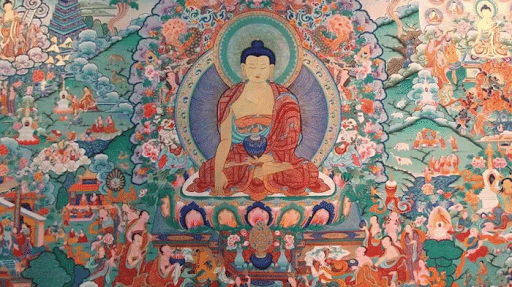
"Thangka" means "thing that one unrolls". Thangka Painting is a Tibetan Buddhist Painting that depicts the lives of Buddha, Bodhisattvas, Buddhist deities, significant lamas, or mythological scenes. Thangka Painting is usually painted on cotton and silk applique. Thangka paintings were created in areas where Tibetan Buddhism was prevalent, such as Mongolia, Ladakh, Sikkim, Arunachal Pradesh, and portions of Himalayan India. The topic “Thangka Painting” is an integral part of the UPSC/IAS Exam Art and Culture syllabus which is discussed in this article in detail.
|
Table of Contents |
Thangka Painting
What is Thangka Painting?
- In Classical Tibetan, the word "thangka" means "thing that one unrolls."
- A thangka, also known as a tangka, thanka, or tanka, is a Tibetan Buddhist painting on cotton or silk appliqué that typically features a scene, mandala, or Buddhist deity.
- Thangka Painting serves as an important tool in teaching the lives of Bodhisattvas, Buddhist deities, and significant lamas.
- In addition to the places already listed, Tangkas were painted in Mongolia, Ladakh, Sikkim, and portions of Himalayan India including Arunachal Pradesh, Dharamshala, and the Lahaul and Spiti districts in Himachal Pradesh.
- Northeast China as well as regions of Russia (Kalmykia, Buryatia, and Tuva) also practice it.
Thangka Painting - History
- Early Buddhist paintings that still exist today in a few locations, such as the Ajanta and Mogao Caves in China, are the ancestors of Tibetan Buddhist paintings.
- These cave paintings serve as archives for early Tibetan fabric paintings. Along with Buddhist wall murals, the thangka painting style emerged in this region.
- The majority of thankas were commissioned by individuals who were believed to gain merit in doing so.
- These completed commissions were delivered to a monastery to be kept by their commissioning parties.
- Thangkas from the 11th century are still in existence. At least 20 are known to date from both the 11th and 12th centuries.
Thangka Painting - Features
- The majority of thangkas are very small, about the size of a half-length Western portrait, but others are enormous, measuring several meters in each direction.
- These were made to be exhibited at religious festivals, usually for very limited periods on a monastery wall.
- Pigments are mixed with animal glue, which is a water-soluble media, to create the paint. It uses both mineral and organic pigments.
- Traditionally, thangkas are kept unframed and rolled up when not in use.
- They are put on a textile backdrop that resembles Chinese scroll drawings, and a second silk cover is placed on the front.
- The majority of thangkas were created with personal meditation or monastic students in mind.
- They frequently have complex compositions with several tiny figures. Other famous figures frequently surround the main deity in a symmetrical design.
- Although they are less frequent, narrative scenes do occur in thangka paintings.
Thangka Painting- Significance
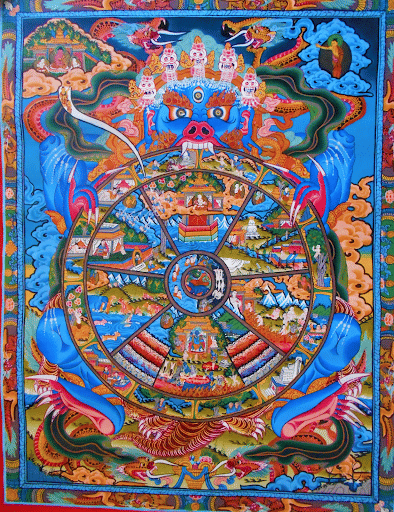
- Thangka is an important teaching tool that shows the lives of significant lamas, deities, and bodhisattvas as well as the Buddha. One such is “The Wheel of Life” (Bhavachakra), a picture that depicts the teachings of the Abhidharma (Art of Enlightenment).
- The thangka paintings are still used today for decoration and prayer in printed forms and poster sizes.
- Thangka paintings serve as educational resources by depicting historical events.
- During rituals and ceremonies, devotional images are the center of attention and frequently serve as a vehicle for prayer requests.
- In general, religious art is employed as a tool for meditation to advance on the path of enlightenment.
“The Wheel of Life”
Conclusion
Tibetans don't sell tangkas on a large scale since the Tibetan community is against the sale of religious items like tangkas and idols. As a result, non-Tibetan groups were able to capitalize on the popularity of the thangka among western Buddhists and art enthusiasts. Along with Lamas, Gurung and Tamang communities also produce Tankas, giving a lot of people in the highlands significant employment opportunities.
|
|
|
|---|---|
| Indian Art and Culture | Indian Paintings |
| Modern Indian Architecture | Indian Handicrafts |
| Indian Architecture | Architecture in Medieval India |
FAQs
Q1: What is Thangka painting?
Answer: Thangka painting is a traditional Tibetan Buddhist art form characterized by the creation of colorful and intricate scroll paintings on cotton or silk. These paintings often depict Buddhist deities, mandalas, and scenes from the life of the Buddha, serving as a teaching tool and meditation aid for practitioners.
Q2: What materials are commonly used in Thangka painting?
Answer: Thangka artists typically use natural materials, including mineral-based pigments for vibrant colors, gold leaf for embellishments, and cotton or silk as the canvas. The painting is often mounted on a brocade frame, allowing it to be easily rolled up and transported.
Q3: How is Thangka painting significant in Buddhist practice?
Answer: Thangka paintings serve multiple purposes in Buddhist practice, including as a visual aid for meditation, a means of teaching Buddhist philosophy, and a way to honor deities. They are often used in rituals and teachings, helping practitioners connect with the spiritual significance of the images depicted.
Q4: What is the process of creating a Thangka painting?
Answer: The creation of a Thangka painting involves several steps, including sketching the design, applying the background color, and meticulously painting the details. Artists follow traditional iconography and guidelines to ensure that the representation aligns with Buddhist teachings, often taking months or even years to complete a single piece.
Q5: What are the cultural and historical significance of Thangka paintings?
Answer: Thangka paintings hold deep cultural and historical significance within Tibetan Buddhism. They are considered sacred objects and reflect the artistic heritage of Tibetan culture. Historically, Thangkas have been used to preserve and transmit Buddhist teachings, serving as a bridge between the spiritual and artistic realms in Tibetan society.
MCQs
- What is the primary subject matter of Thangka paintings?
A) Historical events
B) Nature landscapes
C) Buddhist deities and teachings
D) Portraits of rulers
Answer: (C) See the Explanation
- Which of the following materials is NOT commonly used in Thangka painting?
A) Natural pigments
B) Silk
C) Plastic
D) Cotton
Answer: (C) See the Explanation
- What purpose do Thangka paintings serve in Buddhist practice?
A) Decorative art
B) Historical documentation
C) Meditation and teaching aid
D) Entertainment
Answer: (C) See the Explanation
- What is the typical format of a Thangka painting?
A) Wall mural
B) Flat canvas
C) Scroll
D) Digital artwork
Answer: (C) See the Explanation
- How long can it take to complete a Thangka painting?
A) A few hours
B) Several months to years
C) A few days
D) One week
Answer: (B) See the Explanation
GS Mains Questions and Model Answers
Q1: Discuss the significance of Thangka painting in Tibetan culture and Buddhism.
Answer: Thangka painting holds immense significance in Tibetan culture and Buddhism, serving as a vital tool for spiritual practice and education. These intricate scroll paintings depict various Buddhist deities, mandalas, and teachings, making them essential for meditation and understanding complex philosophical concepts. Thangkas are not merely artistic creations; they are considered sacred objects that embody the teachings of the Buddha. Through their vibrant colors and detailed iconography, Thangkas convey spiritual narratives and serve as visual aids for practitioners, helping them connect with the teachings of Buddhism. Moreover, the tradition of Thangka painting reflects the rich cultural heritage of Tibet, showcasing the skills and creativity of artists while preserving religious narratives for future generations. The meticulous process of creating a Thangka, often involving months or years of dedication, underscores the commitment of artists to their spiritual and artistic practices. In summary, Thangka painting is a profound expression of Tibetan spirituality and culture, reinforcing the interconnection between art, religion, and identity.
Q2: Analyze the impact of globalization on traditional Thangka painting practices.
Answer: Globalization has significantly impacted traditional Thangka painting practices in various ways, both positively and negatively. On one hand, increased exposure to international markets has provided Thangka artists with greater opportunities to showcase their work, allowing them to reach a wider audience and generate income. This has led to a resurgence in interest in traditional art forms, with more people recognizing the cultural and spiritual significance of Thangka paintings. Workshops and classes have emerged worldwide, facilitating the transmission of skills and knowledge to new generations of artists.
On the other hand, globalization has also posed challenges to the authenticity and preservation of traditional practices. The commercialization of Thangka paintings has led to the proliferation of mass-produced and less authentic artworks, often compromising the spiritual and cultural essence that defines true Thangka art. Additionally, the influence of Western art trends may lead to alterations in traditional techniques and styles, risking the dilution of the rich heritage embedded in Thangka painting. To address these challenges, it is crucial to promote awareness and appreciation for authentic Thangka art while supporting traditional artists. Efforts should focus on preserving the cultural integrity of Thangka painting, ensuring that it continues to be a vibrant expression of Tibetan spirituality and culture amid the forces of globalization.
Q3: Evaluate the role of Thangka painting as a medium of cultural expression in contemporary society.
Answer: Thangka painting serves as a powerful medium of cultural expression in contemporary society, bridging traditional practices with modern interpretations. In an age of rapid globalization and cultural exchange, Thangka painting remains a vital link to Tibetan heritage, allowing artists to convey their cultural identity and spiritual beliefs through this traditional art form. Contemporary Thangka artists often incorporate modern themes and techniques while adhering to the foundational principles of the craft, creating a dialogue between the past and present.
The resurgence of interest in spirituality and mindfulness practices has also contributed to the popularity of Thangka paintings beyond Tibetan communities. People worldwide are drawn to the intricate designs and profound meanings embedded in these artworks, using them as tools for meditation and personal reflection. Thangka paintings are increasingly exhibited in galleries and art institutions, fostering cross-cultural appreciation and dialogue about Tibetan culture and Buddhism. Furthermore, Thangka painting workshops and educational programs have emerged, promoting cultural exchange and understanding. These initiatives allow individuals to engage directly with the art form, deepening their appreciation for its historical and spiritual significance. Overall, Thangka painting continues to thrive as a dynamic expression of cultural identity, resonating with both traditional and contemporary audiences and contributing to a richer global cultural landscape.
Previous Year Questions on Thangka Painting
1. UPSC CSE Mains 2019
Question: Discuss the role of Thangka painting in the preservation of Tibetan culture.
Answer: Thangka painting plays a crucial role in the preservation of Tibetan culture by serving as a visual repository of religious and historical narratives. These intricate scroll paintings encapsulate the teachings of Buddhism, depicting various deities, mandalas, and significant events in the life of the Buddha. By conveying spiritual concepts through vivid imagery, Thangkas aid in the education and practice of Buddhism, ensuring that core beliefs and values are transmitted across generations. The craftsmanship involved in creating Thangkas reflects the rich artistic heritage of Tibet, showcasing traditional techniques that have been preserved for centuries. Additionally, Thangka painting fosters a sense of cultural identity among Tibetans, connecting individuals to their history and spiritual lineage. The revival of interest in Thangka painting, both within Tibet and among the global community, further underscores its significance as a living tradition that continues to evolve while maintaining its foundational principles. Thus, Thangka painting is not only an art form but also a vital element in the cultural continuity and resilience of Tibetan identity.
2. UPSC CSE Mains 2021
Question: Analyze the impact of globalization on traditional art forms, using Thangka painting as a case study.
Answer: The impact of globalization on traditional art forms, particularly Thangka painting, presents a complex interplay of challenges and opportunities. On one hand, globalization has facilitated greater exposure and access to Thangka art, allowing artists to reach broader audiences beyond Tibet. This has led to increased interest in traditional practices, resulting in workshops and exhibitions that promote Thangka painting globally. The infusion of new perspectives and techniques has also encouraged artists to innovate while remaining rooted in their cultural heritage.
However, globalization poses significant challenges to the authenticity and preservation of Thangka painting. The commercialization of this art form has led to the proliferation of mass-produced imitations, often compromising the spiritual and cultural integrity that defines traditional Thangkas. Additionally, the influence of Western art trends may encourage artists to deviate from established practices, risking the dilution of the rich symbolism and techniques integral to Thangka painting.
To mitigate these challenges, it is essential to foster awareness of authentic Thangka art and support traditional artists in maintaining their craft. Efforts should focus on creating platforms that celebrate the cultural significance of Thangka painting while encouraging the transmission of skills and knowledge to new generations. By striking a balance between embracing global influences and preserving traditional values, Thangka painting can continue to thrive as a vibrant expression of Tibetan culture in the contemporary world.
Download the PREPP App and attempt FREE IAS Exam Mock Tests and get complete study material!
UPSC IAS : CSAT - Mini Live Test

Live Test : UPSC CSE Prelims CSAT (Paper-II) (Oct 20 - 23)
Full Test - 04: UPSC CSE Prelims CSAT (Paper-II)
Full Test - 03: UPSC CSE Prelims CSAT (Paper-II)
UPSC CSE Prelims 2026 GS Paper 1 Question Paper (24-May-2026)
UPSC CSE Prelims 2026 CSAT Paper 2 Question Paper (24-May-2026)

17 February 2025 | The Hindu Must Read Articles | Current Affairs

16 February 2026 | The Hindu Must Read Articles | Current Affairs

13 February 2026 | The Hindu Must Read Articles | Current Affairs









Comments