Deontology - Ethics Notes
Deontology is a moral and ethical philosophy that focuses on the principles and responsibilities that regulate human behaviour. It is sometimes contrasted with consequentialism, which assesses an action's morality based on its outcomes or consequences. The emphasis in deontological ethics is on the inherent character of an action rather than its effects. According to deontologists, certain behaviours are essentially right or bad, regardless of the consequences. This article will explain about Deontology which will be helpful in Ethics preparation for the UPSC Civil service Mains exam.
Table of Contents
Deontology - Concept
- Deontological Ethics is a normative ethical school that assesses the morality of an action based on its conformity to a rule or rules rather than its effects. It is also known as responsibility, obligation, or rule-based ethics.
- Immanuel Kant, W.D. Ross, John Rawls, Thomas Hobbes, and Jean Jacques Rousseau are notable proponents of Deontological ethics.
- Immanuel Kant and W.D.Ross developed the categorical imperative theory. Some of the theories in Deontological ethics are pluralistic deontology, John Rawls' theory of justice and theory of original position, and Thomas Hobbes' Contractarian ethics.
- Deontology is an approach to ethics that focuses on the rightness or wrongness of acts rather than the rightness or wrongness of the consequences of those actions (Consequentialism) or the actor's character and habits (Virtue Ethics).
- Because Deontologists think that ethical standards tie people to their duty, it is frequently referred to as "duty-based" or "obligation-based" ethics.
- Honesty, respect for others, fairness, and human rights are frequently emphasised in deontological ethics.
- It gives a framework for making moral judgements based on an action's intentions and the moral standards or responsibilities that must be followed.
Deontology - Significance
- Kantian Ethics and Duty-Based Ethics are other names for Deontological Ethics.
- Under Deontological Ethics, good and wrong are established by the Means, and the ultimate result is irrelevant.
- Deontological ethics maintains that persons have moral duties and obligations, even if the outcome is negative. These responsibilities include "do not lie," "do not steal," and "do not cause harm to others."
- For example, the philosopher Kant believed that lying to save a friend from a murderer was wrong.
- According to Kant, the Dignity of each human is an important value that should be considered to determine what is good and wrong. "Every individual should be treated as an end in himself, not as a means to an end," he stated.
- In Deontological Ethics, intention is also important. It is determined whether an act is performed with good or poor intentions. For example: When excellent labour is done with evil motives, it is unethical.
- Mahatma Gandhi, placed a high value on means as an ethical consideration. Gandhi believed that the methods should be as devout and moral as the final result.
- The Hindu concept of Nishkama Karma, which advocates completing one's obligations without expecting anything in return, is consistent with Deontological Ethics /Duty Based Ethics.
- Even when the outcome is unclear or distant, deontological or duty-based ethics stimulates labour. Lord Krishna, for example, urged Arjun to engage in the war against the Kauravs.
| Other Relevant Links | |
|---|---|
| Conflict of Interest | UN Charter |
| Post-Aristotelian Philosophers | Buddhism |
| Vivekananda | Ramakrishna Paramahamsa |
| Consequences of Human Actions | Human Values |
| Individual Ethics of Civil Servants | Causes of Corruption |
| Accountability | Transparency |
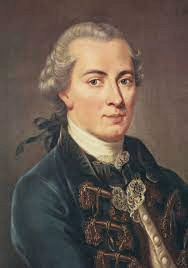
Immanuel Kant (1724-1804)
- Immanuel Kant (1724-1804), often regarded as history's greatest philosopher, was born in Germany.
- Kant is the most well-known ethical theorist of the Deontological school.
- He believed that ethical action was consistent with universal moral norms such as "Don't lie. "Don't steal anything," and "don't cheat," no matter what the consequences.
- He thinks that means are more important than ends. In contrast to Consequential theories, which justify activities based on their ability to produce greater good or pleasure, an action is justified if it adheres to moral law rather than its effects (end).
- It asserts that if a choice or action adheres to a moral norm, it is correct. Thus, an actor has a moral responsibility to act in accordance with a moral norm, regardless of the (potentially positive) consequences.
Conclusion
Deontology is a moral and ethical philosophy that focuses on the principles and responsibilities that regulate human behaviour. Deontology is a moral paradigm that emphasises obligation, principles, and the intrinsic essence of actions when assessing their moral status, rather than only relying on their effects.
| Other Relevant Links | |
|---|---|
| Virtue ethics | Gandhian Ethics |
| Aspects of Morals | Definition of Ethics |
| Ethical Ideals in Life | Ethical Ideas in Indian Philosophical Tradition |
| Lessons From The Lives Of Great Indian Leaders, Reformers And Administration | Moral Thinkers of the Twentieth Century |
FAQs
Question: What is Deontology in ethics?
Answer: Deontology is an ethical theory that emphasizes the importance of following moral rules or duties regardless of the consequences. It is rooted in the belief that some actions are morally obligatory, forbidden, or permitted based on adherence to these rules.
Question: Who is the most prominent philosopher associated with Deontology?
Answer: Immanuel Kant is the most prominent philosopher associated with deontological ethics. His work, particularly the "Categorical Imperative," emphasizes that individuals should act according to principles that could be universally applied, regardless of the outcome.
Question: What is the Categorical Imperative in Kantian ethics?
Answer: The Categorical Imperative is a central concept in Kantian ethics, which dictates that one should act only according to maxims that can be universally applied. It is an unconditional moral law that requires individuals to treat others as ends in themselves, not merely as means to an end.
Question: How does Deontology differ from Consequentialism?
Answer: Deontology focuses on the morality of actions based on adherence to rules, regardless of the consequences, while Consequentialism evaluates the morality of actions based on their outcomes. For deontologists, certain actions are inherently right or wrong, while for consequentialists, the results of an action determine its moral value.
Question: What is the role of duty in Deontological ethics?
Answer: In Deontology, duty plays a central role as it emphasizes acting in accordance with moral rules or obligations. Individuals are morally required to follow certain duties or principles, regardless of the personal consequences or benefits they may experience.
MCQs
1. Which philosopher is most closely associated with Deontological ethics?
A) John Stuart Mill
B) Immanuel Kant
C) Aristotle
D) Friedrich Nietzsche
Answer: (B) See the Explanation
Immanuel Kant is the philosopher most closely associated with Deontological ethics, particularly with his concept of the Categorical Imperative, which focuses on following moral rules without regard to consequences.
2. According to Deontological ethics, what should guide moral actions?
A) The consequences of actions
B) Adherence to moral duties and rules
C) The greatest happiness for the greatest number
D) Personal preferences and desires
Answer: (B) See the Explanation
Deontological ethics emphasizes that moral actions should be guided by adherence to moral duties or rules, regardless of the outcomes of those actions.
3. What does the Categorical Imperative require according to Kant?
A) To act according to one’s personal interests
B) To act in a way that the action can be universally applied
C) To focus on the consequences of the action
D) To follow the rules that benefit the individual
Answer: (B) See the Explanation
The Categorical Imperative requires that individuals act according to maxims that can be universally applied, ensuring that their actions could be performed by everyone without contradiction.
4. Which of the following is a key feature of Deontological ethics?
A) Focus on the outcomes of actions
B) Universal applicability of moral rules
C) Evaluation based on personal preferences
D) Moral relativism
Answer: (B) See the Explanation
A key feature of Deontological ethics is the universal applicability of moral rules, meaning that individuals must act according to principles that could be applied universally to all similar situations.
5. How does Deontology view the concept of moral duty?
A) Moral duty is based on the consequences of actions
B) Moral duty is subjective and varies with personal preferences
C) Moral duty is objective and based on adherence to rules
D) Moral duty is irrelevant in determining right actions
Answer: (C) See the Explanation
Deontology views moral duty as objective, emphasizing the need to follow moral rules or obligations regardless of personal preferences or the consequences of actions.
GS Mains Questions and Model Answers
Q1: Discuss the impact of Immanuel Kant’s Deontological ethics on modern moral philosophy.
Answer: Immanuel Kant’s Deontological ethics has had a profound influence on modern moral philosophy. His emphasis on duty, rationality, and universal principles has shaped discussions on human rights, justice, and ethics in political theory. Kant’s Categorical Imperative promotes the idea that actions should be evaluated based on their adherence to moral rules, not their consequences. This concept challenges consequentialist approaches, such as utilitarianism, and has influenced contemporary debates on ethics, particularly in legal and human rights contexts, where fairness and equality are prioritized.
Q2: Compare and contrast Deontological ethics with Consequentialism in terms of their approach to moral decision-making.
Answer: Deontological ethics and Consequentialism represent two distinct approaches to moral decision-making. Deontology focuses on adherence to moral duties and rules, regardless of the consequences. It asserts that certain actions are intrinsically right or wrong, and individuals have a duty to perform these actions. In contrast, Consequentialism evaluates actions based on their outcomes, arguing that the morality of an action is determined by its ability to produce the best consequences. While Deontology emphasizes the inherent nature of actions, Consequentialism prioritizes the results of those actions. Both frameworks offer valuable perspectives on moral dilemmas, but they can lead to different conclusions when applied to ethical issues.
Q3: Explain the relevance of Kantian ethics in addressing contemporary moral issues such as environmental ethics and human rights.
Answer: Kantian ethics remains highly relevant in addressing contemporary moral issues like environmental ethics and human rights. Kant’s emphasis on respecting individuals as ends in themselves aligns with modern human rights frameworks, where individuals' dignity and autonomy are paramount. Similarly, in environmental ethics, Kant’s principle of duty suggests that we have an ethical responsibility to future generations and the natural world, advocating for policies that respect both human and environmental well-being. Kant’s universalism also provides a framework for addressing global issues, encouraging ethical conduct that can be applied universally, ensuring fairness and justice in global governance and environmental policies.
Previous Year Questions on Deontology
1. UPSC CSE Prelims 2021:
Question: Which philosopher is associated with the concept of the "Categorical Imperative"?
A) John Stuart Mill
B) Immanuel Kant
C) Friedrich Nietzsche
D) Peter Singer
Answer: (B)
Explanation: Immanuel Kant is associated with the concept of the "Categorical Imperative," which is central to his Deontological ethics. It emphasizes the need for actions to be guided by universal moral rules.
2. UPSC CSE Mains 2020 (GS Paper 4):
Question: "Assess the role of Deontological ethics in shaping legal frameworks and human rights policies."
Answer: Deontological ethics, particularly Kant’s Categorical Imperative, has had a significant influence on the development of legal frameworks and human rights policies. Its emphasis on duties and universal principles has shaped legal systems that prioritize individual rights and justice, ensuring that laws treat all people with equal respect and dignity. In human rights, Deontology advocates for the inherent worth of individuals and the moral duty to protect their rights, irrespective of the consequences. This ethical foundation continues to influence international human rights conventions and legal reforms worldwide.
Download the PREPP App and attempt FREE IAS Exam Mock Tests and get complete study material!
UPSC IAS : GS - Indian Economy - Subject Knowledge Test

Live Test : UPSC CSE Prelims CSAT (Paper-II) (Sep 20 - 23)
Full Test - 03: UPSC CSE Prelims CSAT (Paper-II)
Full Test - 02: UPSC CSE Prelims CSAT (Paper-II)
UPSC CSE Prelims 2026 GS Paper 1 Question Paper (24-May-2026)
UPSC CSE Prelims 2026 CSAT Paper 2 Question Paper (24-May-2026)

17 February 2025 | The Hindu Must Read Articles | Current Affairs

16 February 2026 | The Hindu Must Read Articles | Current Affairs

13 February 2026 | The Hindu Must Read Articles | Current Affairs









Comments