25 Students Died By Suicide In Five And Half Years Due To Ragging, Says UGC
Relevance: GS 2 - Issues relating to the development and management of Social Sector/Services relating to Health
(Source: The Hindu, 08/19/23)
Click here for Daily Current Affairs
Why in the news?
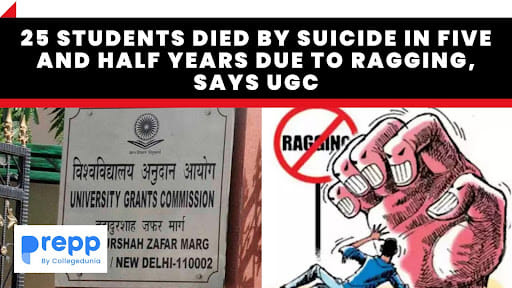
- Recently, according to a reply to a Right To Information (RTI) query, between January 1, 2018 to August 1, 2023, at least 25 students committed suicide after they were subjected to ragging.
- Ragging is any physical, verbal or mental abuse committed by one student against another student belonging to an educational institute.
Table of Contents
Reasons for ragging
- Sense of superiority
- use of alcohol in hostels and
- lack of implementation of serious anti-ragging measures by college authorities.
Measures taken
- Dedicated 24x7 anti-ragging helpline: The UGC maintains a dedicated 24x7 anti-ragging helpline for students.
- Reports and complaints received through the helpline are escalated to appropriate authorities for timely action.
- Anti-ragging cell: The UGC anti-ragging cell serves as a bridge between the students and educational authorities.
- UGC takes up cases when they are reported by the media or when it receives complaints.
Suggestion
- Ban on alcohol within colleges and hostels
- Surprise raids in hostels at night,
- Separate hostels for juniors
- Presence of the college "disciplinary committee" and "cultural committee,"
- Strict punishments for those involved in ragging,
- Strict Actions by the Medical Council of India (MCI) and University Grants Commission (UGC) against the erring colleges and universities and formulation of anti-ragging laws.
About UGC
- University Grants Commission is a statutory body formed in 1956 by an Act of Parliament with the purpose of coordinating, determining, and maintaining university education standards.
- Its headquarter is in New Delhi, with regional offices in Bangalore, Bhopal, Guwahati, Hyderabad, Kolkata, and Pune.
- The UGC has the unique distinction of being the only grant-giving organization in the country with two responsibilities:
- providing funding and coordinating,
- determining, and maintaining standards in higher education institutions.
- For more information, click on this UGC
(*Click this link to read prelims specific weekly current affairs articles)
FAQs
Question: What is Ragging?
Answer:
Supreme Court of India defines ragging as a “any disorderly conduct, whether by words spoken or written, or by an act which has the effect of teasing, treating or handling with rudeness any student, indulging in rowdy or indisciplined activities which cause or are likely to cause annoyance, hardship or psychological
harm or to raise fear or apprehension thereof in a fresher or a junior student and which has the effect of causing or generating a sense of shame or embarrassment so as to adversely affect the psyche of a fresher or a junior student”.
Question: What is National Suicide Prevention Strategy?
Answer:
The Ministry of Health and Family Welfare formulated the National Suicide Prevention Strategy to prevent suicides as a public health priority.
The policy that will set the stage for promotion of mental health and prevention of suicides in the coming decade. The goal of the strategy is to reduce suicide mortality in the country by 10 per cent by 2023.
Question: What is Depression?
Answer:
Depression (major depressive disorder) is a common and serious medical illness that negatively affects how you feel, the way you think and how you act.
UPSC Mains Practice Question:
|
MCQ
Question: Which of the following is entrusted with the responsibility for coordination and quality of higher education in India?
(a) Ministry of Skill Development and Entrepreneurship
(b) University Grants Commission
(c) Association of Indian Universities
(d) NITI Aayog
Answer: (b) See the Explanation
- The University Grants Commission is a statutory organization established by an Act of Parliament in 1956 for the coordination, determination and maintenance of standards of university education.
- Therefore (b) is the correct option.
Download the PREPP App and attempt FREE IAS Exam Mock Tests and get complete study material!

Full Test - 04: UPSC CSE Prelims CSAT (Paper-II)
Full Test - 03: UPSC CSE Prelims CSAT (Paper-II)
UPSC CSE Prelims 2026 GS Paper 1 Question Paper (24-May-2026)
UPSC CSE Prelims 2026 CSAT Paper 2 Question Paper (24-May-2026)

17 February 2025 | The Hindu Must Read Articles | Current Affairs

16 February 2026 | The Hindu Must Read Articles | Current Affairs

13 February 2026 | The Hindu Must Read Articles | Current Affairs









Comments