Tropical Crops At Risk From Pollinator Loss Due To Climate Change, Shift In Land Use, Finds Study
Relevance: GS 3- Conservation, environmental pollution and degradation, environmental impact assessment. Food security
(Source: Down To Earth, 10/18/2023)
Click here for Daily Current Affairs
Why in the news?
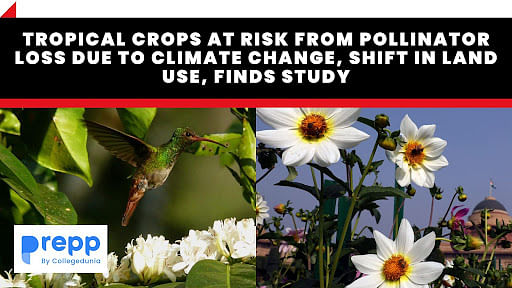
Recently, a study by the University College London and the Natural History Museum revealed that climate change and land-use change have led to a loss of pollinator insects which is likely to affect crops like coffee, cocoa, watermelon, and mango.
Table of Contents
What is the crisis faced by tropical crops?
- Climate change and changes in land use have led to a decline in the insect pollinator population of tropical crops.
- Population decline: The number of insects that pollinate tropical plants like coffee, cocoa, mango, etc declined by 61%.
- According to an FAO Report from 2021, more than 40% of invertebrate pollinators are at risk of extinction.
Factors in population decline
- Climate change: Insects are highly sensitive to climatic conditions such as precipitation and temperature and plant-pollinator interactions are highly sensitive to thermal changes.
- Destruction of habitat: Traditional habitats of insects have been destroyed due to natural reasons as well as anthropogenic activities like deforestation, pollution, etc.
- Improper land use: Areas where vegetation has been modified for human land use have led to alterations in microclimatic conditions which leads to a decline in tropical insects.
- Agricultural practices: Crop monoculture, and the unscientific use of chemical pesticides and fertilizers has impacted the insect populations.
At-risk areas
- The crisis of decline in pollinator pollutants was the most severe in the tropics, especially sub-Saharan Africa, South America, and Southeast Asia as the majority of animal pollination–dependent crops are grown in the tropics
- China, India, Indonesia, Brazil, and the Philippines are the most at risk in terms of production potential.
Crops threatened
Cocoa faced the highest risk especially in Africa, followed by mango in India, and watermelon in China.
Impact of the pollinator decline
- Production risk: The decline of insect pollinators could lead to a loss of productivity of tropical crops.
- This could have a side effect of increasing income insecurity among vulnerable agricultural populations in tropical regions.
- Loss of biodiversity: According to the US Department of Agriculture, 3/4th of the world’s flowering plants and around 35% of the world’s food crops depend on animal pollinators.
- The loss of insect pollinators could affect the survival and reproduction of many plant species.
- Human health: A study in the Environmental Health Perspectives journal revealed that around half a million premature human deaths occur each year linked to the global insect pollinator decline.
- The lowered consumption of fruits could lead to a higher incidence of strokes among humans.
- Food commodity prices: The decline in pollinator populations has impacted the availability and as a result, the price of foods such as nuts, legumes, fruits, and vegetables have risen.
- This is most severe in middle-income countries like India, Russia, and China while wealthy nations are more immune.
Way forward
- Climate change: Global action to mitigate climate change through cooperative initiatives and knowledge sharing is the need of the hour in order to reduce the impact of climate change on insect populations across the world.
- Land use: Land use changes must be slowed down and natural habitats must be protected to protect insect pollinators.
- Agriculture: Farmers should be encouraged to reduce the use of pesticides and other harmful chemicals in agriculture.
- Habitats: Governments, civil society organizations, and individuals must create new, pollinator habitats at the farm and national level and plant crops depending on their affinity to local pollinators.
What is pollination?
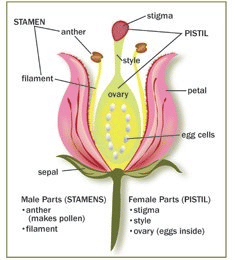
What are pollinators?
How does pollination take place?
|
(*Click this link to read prelims specific weekly current affairs articles)
FAQs
Question: What is self-pollination?
Answer:
Self-pollination is the process in which pollen grains are transferred from the stigma of the same or genetically similar flower. It is observed in plants like orchids, sunflowers, peas, peanuts, oats, peaches, potatoes, wheat, etc.
Question: What is land use change?
Answer:
Land use change is the process in which the natural landscape is transformed by human activity. This includes the setting up of settlements, and commercial and economic use of forests, etc. It can have an impact on the environment in the form of GHG emissions, land degradation, and climate change.
UPSC Mains Practice Question:
|
MCQs
Question: Due to some reasons, if there is a huge fall in the population of species of butterflies, what could be its likely consequence/consequences? (UPSC CSE 2017)
- Pollination of some plants could be adversely affected.
- There could be a drastic increase in the fungal infections of some cultivated plants.
- It could lead to a fall in the population of some species of wasps, spiders, and birds.
Select the correct answer using the code given below:
(a) 1 only
(b) 2 and 3 only
(c) 1 and 3 only
(d) 1, 2 and 3
Answer: (c) See the Explanation
- Butterflies have a critical role in the pollination of plants, therefore a drop in butterfly populations could adversely affect pollination. Hence statement 1 is correct.
- There is no clear evidence that a decline in butterfly populations could lead to an increase in fungal infections in plants. Hence statement 2 is incorrect.
- Wasps, spiders, and birds are some of the predators of butterflies. Therefore a drop in butterfly populations would mean less prey and subsequently lead to a drop in their numbers. Hence statement 3 is correct.
Therefore, option (c) is the correct answer.
Question: Biodiversity forms the basis for human existence in the following ways
- Soil formation
- Prevention of soil erosion
- Recycling of waste
- Pollination of crops
Select the correct answer using the codes given below (UPSC CSE 2011)
(a) 1,2 and 3 only
(b) 2, 3, and 4 only
(c) 1 and 4 only
(d) 1, 2, 3 and 4 only
Answer: (d) See the Explanation
- Biological diversity helps in the formation and maintenance of soil structure and the retention of moisture and nutrients. Hence statements 1 and 2 are correct.
- It also supports ecosystem services like air quality, climate water purification, pollination, and prevention of erosion, etc. Hence statements 3 and 4 are correct.
- It also acts as a biological resource of food, medicines, and future resources and has social benefits such as opportunities for research, recreation, etc.
Therefore, option (d) is the correct answer.
Download the PREPP App and attempt FREE IAS Exam Mock Tests and get complete study material!

Full Test - 04: UPSC CSE Prelims CSAT (Paper-II)
Full Test - 03: UPSC CSE Prelims CSAT (Paper-II)
UPSC CSE Prelims 2026 GS Paper 1 Question Paper (24-May-2026)
UPSC CSE Prelims 2026 CSAT Paper 2 Question Paper (24-May-2026)

17 February 2025 | The Hindu Must Read Articles | Current Affairs

16 February 2026 | The Hindu Must Read Articles | Current Affairs

13 February 2026 | The Hindu Must Read Articles | Current Affairs









Comments