Sharavati - Smaller Rivers flowing towards West - Geography Notes
Sharavati is a river in India that starts and runs entirely inside the state of Karnataka. Sharavati is one of India's few westward-flowing rivers, with a large portion of its basin located in the Western Ghats. The famous Jog Falls, which is around 24 kilometres from Sagara, was formed by this river. The river and its surroundings are rich in biodiversity and home to many unique kinds of flora and wildlife. The topic Sharavathi river is an important part of the UPSC/IAS Exam Geography syllabus which is discussed in this article in detail.
|
Table of Contents |
Sharavati River
- Sharavati River is one the west-flowing rivers in the Indian state of Karnataka. It rises in the Western Ghats and runs northwest for 60 miles (100 kilometres) to the Arabian Sea in Honavar.
- Sharavati River starts at the Ambuthirtha at Thirthahalli village in Shimoga district of Karnataka.
- The Sharavati reaches a width of 230 feet (70 metres) about 18 miles (29 kilometres) upriver from its source before a stunning 830-foot (250-metre) drop, dividing into four spectacular waterfalls known as Jog Falls.
- The main tributaries of Sharavati River are Nandihole, Haridravathi, Mavinahole, Hilkunji, Yennehole, Hurlihole, and Nagodihole.
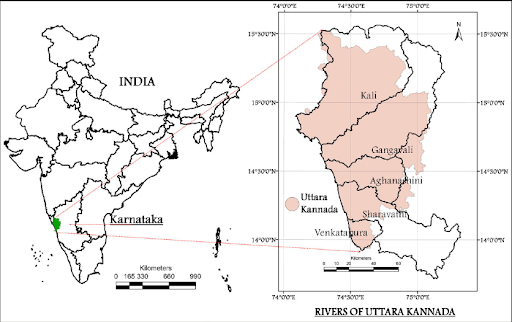
- The Sharavati river basin is divided into two Karnataka districts: Uttara Kannada and Shimoga.
- The river basin is mostly made up of Precambrian rocks.
- The Dharwar system and peninsular gneiss are the two primary rock groups found in the Sharavathi river basin.
|
|
|
|---|---|
| Sabarmati | Dhandhar |
| Mahi | Kalindi |
| Periyar | Bharathapuzha |
Sharavati River - Soil
- The Sharavati basin's soils are primarily lateritic in origin, acidic, and reddish to brownish in colour.
- The soil types found here include clay loamy, clayey, clayey-skeletal, and loamy.
- The upstream river basin has four soil orders: ultisols, alfisols, inceptisols, and entisols.
- With a substantial portion of the river flowing through the Western Ghats, the Sharavati river basin receives a lot of rain.
Sharavati River - Dam Projects
- The Mahatma Gandhi Hydroelectric Power Station and the Sharavathi Valley Project, both located a short distance downstream (east) of the cataract, produce a significant amount of power for the state of Karnataka.
- The Linganamakki Dam, located in the Sagar taluk, is 2.4 km (1 km) long and was built over the Sharavathi river in 1964.
- The Gerusoppa dam project was completed in 2002 with the primary goal of producing power.
Sharavathi River Basin - Flora and Fauna
- The Sharavati river basin is densely forested.
- A survey of 23 amphibians from the families Bufonidae, Ichthyophiidae, Microhylidae, Ranidae, and Rhacophoridae was done in the basin.
- 15 of these are indigenous to the Western Ghats.
- The river is named for the fish species that have been identified in its waters.
- The Wildlife Sanctuary of Sharavathi Valley, the sanctuary is mostly made up of evergreen, semi-evergreen, and wet deciduous woods.
Conclusion
The Sharavathi river and its surroundings are rich in biodiversity and home to many unique species of flora and wildlife. It begins in the Western Ghats and goes northwest for 60 miles (100 kilometres) to Honavar on the Arabian Sea. The river basin is primarily composed of Precambrian rocks. The Sharavathi river basin's two principal rock groups are the Dharwar system and peninsular gneiss.
FAQs
Question: What is the Sharavati River known for?
Answer: The Sharavati River is known for its scenic beauty and for being the site of Jog Falls, one of the highest waterfalls in India. The river flows through the Western Ghats in Karnataka and is a significant source of hydropower generation in the region.
Question: Where does the Sharavati River originate?
Answer: The Sharavati River originates in the Western Ghats at Ambutirtha in the Shimoga district of Karnataka. It flows westward and ultimately drains into the Arabian Sea.
Question: What is the significance of Jog Falls on the Sharavati River?
Answer: Jog Falls, located on the Sharavati River, is one of the tallest waterfalls in India, with a plunge of about 830 feet (253 meters). It is a major tourist attraction and plays an important role in the hydropower generation managed by the Sharavathi Hydroelectric Project.
Question: How does the Sharavati River contribute to the local ecosystem?
Answer: The Sharavati River supports a rich and diverse ecosystem, including unique flora and fauna, due to its location in the biodiverse Western Ghats. It plays a crucial role in sustaining forests, wildlife habitats, and agricultural lands along its course.
Question: What are some of the smaller rivers flowing westward in India?
Answer: Besides the Sharavati, other smaller rivers flowing westward from the Western Ghats into the Arabian Sea include the Netravati, Mandovi, Periyar, and Pamba. These rivers play a key role in regional water resources, ecosystems, and agriculture.
MCQs
- The Sharavati River is primarily known for which waterfall?
A) Dudhsagar Falls
B) Athirappilly Falls
C) Jog Falls
D) Sivasamudram Falls
Answer: (C) See the Explanation
Jog Falls, located on the Sharavati River, is one of India's highest waterfalls.
- Where does the Sharavati River originate?
A) Coorg
B) Ambutirtha in Shimoga district
C) Nilgiri Hills
D) Western Coast of Kerala
Answer: (B) See the Explanation
The Sharavati River originates at Ambutirtha in the Shimoga district of Karnataka.
- The Sharavati River ultimately drains into:
A) Bay of Bengal
B) Arabian Sea
C) Krishna River
D) Cauvery River
Answer: (B) See the Explanation
The Sharavati River flows westward and drains into the Arabian Sea.
- Which of the following is a significant contribution of the Sharavati River?
A) Iron ore production
B) Hydropower generation
C) Cotton cultivation
D) Shipbuilding industry
Answer: (B) See the Explanation
The Sharavati River is a major source of hydropower generation, supported by the Sharavathi Hydroelectric Project.
- Jog Falls, located on the Sharavati River, is known for:
A) Being the longest river in India
B) Its unique rock formations
C) Its high plunge and scenic beauty
D) Its delta formation
Answer: (C) See the Explanation
Jog Falls is one of India's tallest waterfalls, known for its high plunge and breathtaking views.
GS Mains Questions and Model Answers
Q1: Describe the geographical significance and features of the Sharavati River.
Answer: The Sharavati River is geographically significant as it flows westward through the Western Ghats in Karnataka and drains into the Arabian Sea. Originating at Ambutirtha in the Shimoga district, it is known for creating the spectacular Jog Falls, one of the highest waterfalls in India. The river supports a rich ecosystem, providing water for forests, wildlife, and agricultural lands. It is also a major source of hydropower generation through the Sharavathi Hydroelectric Project, contributing to Karnataka's energy needs. The Sharavati River exemplifies the ecological and economic importance of rivers flowing westward from the Western Ghats.
Q2: Discuss the ecological importance of rivers flowing westward from the Western Ghats.
Answer: Rivers flowing westward from the Western Ghats, such as the Sharavati, Netravati, and Periyar, play a crucial role in sustaining the biodiversity and ecosystems of the region. The Western Ghats are a biodiversity hotspot, and these rivers provide essential water resources for forests, wildlife habitats, and agricultural activities. They also support numerous livelihoods, including fishing, farming, and tourism. The rivers contribute to the stability of the monsoon climate and are vital for hydropower generation, enhancing regional energy security. Conservation and sustainable management of these rivers are essential to protect their ecological benefits and biodiversity.
Q3: Evaluate the impact of the Sharavathi Hydroelectric Project on the local environment and communities.
Answer: The Sharavathi Hydroelectric Project has had both positive and negative impacts on the local environment and communities. On the positive side, it contributes significantly to Karnataka's power generation, supporting economic growth and infrastructure development. However, the project has also led to ecological changes, such as habitat loss, displacement of communities, and alterations in river flow patterns. Forest areas have been submerged, affecting local flora and fauna. To mitigate these effects, it is crucial to adopt sustainable water management practices, ensure community engagement, and implement conservation initiatives to balance development with ecological preservation.
Previous Year Questions on Sharavati
1. UPSC CSE 2020
Question: Analyze the role of westward-flowing rivers in India's water resource management and ecosystem sustainability.
Answer: Westward-flowing rivers, originating from the Western Ghats, play a critical role in India's water resource management and ecosystem sustainability. These rivers, including the Sharavati, Netravati, and Mandovi, provide water for drinking, irrigation, and hydropower, contributing to regional development. They support diverse ecosystems and act as lifelines for flora, fauna, and human settlements in the region. However, unregulated development, pollution, and deforestation pose challenges to their health. Effective management strategies, including watershed protection, afforestation, and pollution control measures, are essential for maintaining the ecological and economic benefits these rivers provide.
2. UPSC CSE 2019
Question: Discuss the significance of Jog Falls and its contribution to tourism and local economy in Karnataka.
Answer: Jog Falls, located on the Sharavati River, is one of India's highest waterfalls and a major tourist attraction in Karnataka. The falls' breathtaking height and scenic beauty draw thousands of visitors, boosting the local economy through tourism-related activities such as hospitality, transportation, and guided tours. The area around Jog Falls has seen the development of infrastructure to support tourism, creating employment opportunities for the local population. However, sustainable tourism practices are necessary to protect the falls' natural beauty and ecological balance, ensuring that tourism continues to benefit the local community without harming the environment.
Download the PREPP App and attempt FREE IAS Exam Mock Tests and get complete study material!

Full Test - 04: UPSC CSE Prelims CSAT (Paper-II)
Full Test - 03: UPSC CSE Prelims CSAT (Paper-II)
UPSC CSE Prelims 2026 GS Paper 1 Question Paper (24-May-2026)
UPSC CSE Prelims 2026 CSAT Paper 2 Question Paper (24-May-2026)

17 February 2025 | The Hindu Must Read Articles | Current Affairs

16 February 2026 | The Hindu Must Read Articles | Current Affairs

13 February 2026 | The Hindu Must Read Articles | Current Affairs









Comments