Allahabad Pillar Inscription (Prayag Prasasti) - Art and Culture Notes
The Allahabad pillar inscription is an Ashoka Stambha, constructed by Ashoka, Emperor of the Maurya dynasty who flourished in the third century BCE. One of the most important epigraphic evidences of the Imperial Guptas is the Allahabad Pillar inscription, often known as the Allahabad Prasasti. While it is one of the few remaining pillars holding his edicts, it is notably significant for containing subsequent inscriptions attributed to the Gupta ruler Samudragupta (4th century CE). This article discusses the features of the Allahabad Pillar Inscription, which is important for Art and Culture preparation for the UPSC IAS Exam.
|
Table of Contents |


Allahabad Pillar Inscription (Prayag Prasasti) - Features
- "Prayag" refers to a place where something or someone can meet. Prayag is an ancient name for Allahabad because it is the confluence of the rivers Ganga, Yamuna, and the mythical Saraswati.
- Prashasti is a eulogy that means "in praise of someone."
- The Allahabad Prasasti was first inscribed on the Ashokan Pillar in Kausambhi, near Allahabad.
- It was later relocated to the Allahabad fort.
- It is an Ashokan Stambh, but it has four different inscriptions,
- The standard Ashokan inscriptions in Brahmi script are found on all pillars.
- The Queen's edict lauding Ashoka's wife Kaurwaki's charitable deeds.
- Inscriptions of Samudragupta (335–375 AD) written by Harisena in Sanskrit and Brahmi script. It discusses Samudragupta's conquests and the boundaries of the Gupta Empire.
- Jahangir’s Persian inscriptions.
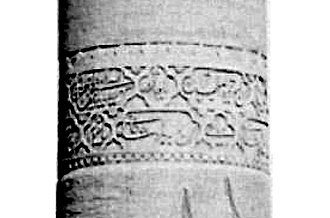
- Some scholars believe that Emperor Akbar himself moved the pillar from its original location and installed it within Akbar's Allahabad Fort in Allahabad, Uttar Pradesh.
- But this theory is challenged by other scholars who point to the lack of any confirmatory evidence that the pillar was moved and pre-Mughal inscriptions indicating that it was already present in its current location.
Inscriptions attribute to Samudragupta
- It is written in Champu kavya style, which is very basic and elegant in Sanskrit.
- It contains a list of Samudragupta's accomplishments.
- The conquests of Samudragupta and the bounds of the Gupta Empire are mentioned in this inscription, which is a glorification of Samudragupta.
- According to this inscription, Samudragupta destroyed 9 kings in the north and 12 kings in the south and made all of the Atavika nations tributary states.
- More than five states in the frontier states submitted and acknowledged his suzerainty, according to the document. He maintained strong ties with the Ceylonese monarchy and South East Asian territories.
- Harissa describes Samudragupta as a "hero of 100 wars" in his eulogy, which has been testified by a seal of Samudragupta bearing a horse attested to him performing Ashvamedha Yajna.
- After Pushyamitra Shunga, this was most likely the first Ashvamedha.
- In his coins, he is shown playing the Veena. He gave the king of Ceylon permission to construct a monastery in Bodhgaya.
- Harissa also referred to him as Kaviraja, indicating that he was a patron of the arts of poetry as well as a poet. Samudragupta was also given the name Vikramanka.


| Other Relevant Links | |
|---|---|
| Temple Architecture | Junagarh Rock inscription |
| Nasik Inscription | Mehrauli Inscription / Garuda Pillar |
| Nanaghat Inscription | Mandsaur Inscription |
Conclusion
Historians, both ancient and modern, have weighed in the historical significance of Allahabad Prasasti. The renowned Allahabad Prasasti, also known as the Allahabad Pillar inscription, has an impressive list of rulers and tribal republics acquired by Samudragupta. The inscription is a panegyric praising Samudragupta and highlighting his political and military achievements, notably his southern expeditions. It contains the majority of what is known about the geopolitical situation of the time and provides a unique perspective on the Gupta empire and its neighbors.
| Other Relevant Links | |
|---|---|
| Indian Art and Culture | Gupta Architecture |
| Art of Indus Valley Civilization | Indian Architecture |
| Visual Arts | Mauryan Art and Architecture |
| Post Mauryan Art | Rock-cut architecture |
FAQs
Question: Who composed the Allahabad Pillar Inscription?
Answer: The Allahabad Pillar Inscription was composed by Harishena, the court poet and minister of Samudragupta.
Question: What information does the Allahabad Pillar Inscription provide about Samudragupta?
Answer: The inscription provides details about Samudragupta's military conquests, diplomatic victories, and his role as a patron of art and culture.
Question: What is the significance of the Allahabad Pillar Inscription?
Answer: The inscription is significant for its detailed account of Samudragupta’s reign, making it a valuable source of information on the Gupta Empire and its role in Indian history.
Question: What is the prasasti tradition?
Answer: The prasasti tradition refers to the practice of writing eulogistic inscriptions that glorify kings and their achievements, often composed by court poets.
Question: Which ancient ruler’s inscriptions are also found on the Allahabad pillar?
Answer: The Allahabad pillar originally carries inscriptions from the time of Emperor Ashoka, which were later supplemented by Samudragupta’s inscription.
MCQs
- Who composed the Allahabad Pillar Inscription (Prayag Prasasti)?
A. Kalidasa
B. Harishena
C. Vishakadatta
D. Banabhatta
Answer: (B) See the Explanation
The Allahabad Pillar Inscription was composed by Harishena, the court poet of Samudragupta. He was a prominent figure at the Gupta court and authored the prasasti to glorify Samudragupta’s achievements.
- The Allahabad Pillar Inscription is an important source for understanding the reign of which ruler?
A. Chandragupta Maurya
B. Harshavardhana
C. Samudragupta
D. Ashoka
Answer: (C) See the Explanation
The inscription is one of the key sources for understanding the reign of Samudragupta, one of the most powerful rulers of the Gupta dynasty. It details his military campaigns and other accomplishments.
- Which of the following is a feature of the Allahabad Pillar Inscription?
A. It praises Ashoka’s Dhamma
B. It details the conquests of Samudragupta
C. It describes the battle of Panipat
D. It records the administration of the Mauryan Empire
Answer: (B) See the Explanation
The Allahabad Pillar Inscription provides a detailed account of Samudragupta’s military conquests, describing his victories over kings in northern and southern India.
- The Allahabad Pillar Inscription belongs to which historical period?
A. Mauryan Period
B. Gupta Period
C. Mughal Period
D. Vedic Period
Answer: (B) See the Explanation
The Allahabad Pillar Inscription was composed during the Gupta period, under the reign of Samudragupta. Though the pillar itself dates back to Ashoka’s reign, the inscription is from the Gupta era.
- Which type of literary tradition does the Allahabad Pillar Inscription follow?
A. Epic Tradition
B. Prasasti Tradition
C. Sangam Tradition
D. Bhakti Tradition
Answer: (B) See the Explanation
The Allahabad Pillar Inscription follows the prasasti tradition, which involves the composition of eulogistic inscriptions praising kings and their achievements.
GS Mains Questions and Model Answers
Q1: Discuss the historical significance of the Allahabad Pillar Inscription in understanding the political and military achievements of Samudragupta.
Answer The Allahabad Pillar Inscription is a key source for understanding the political and military achievements of Samudragupta, often regarded as the Napoleon of India. Composed by his court poet Harishena, the inscription provides a detailed account of Samudragupta’s conquests, both in northern and southern India. It highlights his victories over various rulers and tribes, along with the tribute and submission of several regional kings. Beyond military success, the inscription also emphasizes Samudragupta’s diplomatic strategies and his role as a patron of art and culture. The Prayag Prasasti thus not only glorifies Samudragupta’s reign but also provides insights into the political landscape of ancient India during the Gupta period.
Q2: Evaluate the role of the Allahabad Pillar Inscription in the prasasti tradition of ancient India.
Answer: The prasasti tradition in ancient India involved the composition of inscriptions that glorified kings and their accomplishments. The Allahabad Pillar Inscription, composed by Harishena, is a prime example of this tradition. It glorifies the military conquests and virtues of Samudragupta, portraying him as a powerful ruler and benevolent patron. This inscription follows the eulogistic style typical of prasastis, using poetic language to highlight the greatness of the king. The Prayag Prasasti thus exemplifies how rulers in ancient India used inscriptions to reinforce their legitimacy and create a lasting legacy of their reigns.
Q3: Analyze the importance of the Allahabad Pillar Inscription as a source for understanding the Gupta Empire’s administration and diplomacy.
Answer: The Allahabad Pillar Inscription offers significant insights into the administration and diplomacy of the Gupta Empire. It highlights Samudragupta’s military campaigns, but it also sheds light on his diplomatic relationships with neighboring states. Several rulers accepted his suzerainty and paid tribute, while others offered marriages to form alliances. This indicates a complex diplomatic strategy employed by the Gupta rulers to maintain peace and extend their influence. Additionally, the inscription hints at the centralized administration and the role of court poets and ministers in recording the achievements of rulers, making it a valuable source for understanding the political and administrative structure of the Gupta Empire.
Previous Year Questions on Allahabad Pillar Inscription
1. UPSC CSE Prelims 2019
Question: The Allahabad Pillar Inscription provides an account of which ruler's conquests?
A. Chandragupta Maurya
B. Samudragupta
C. Ashoka
D. Harshavardhana
Answer: B
The Allahabad Pillar Inscription records the conquests and achievements of Samudragupta, a prominent ruler of the Gupta dynasty. It was composed by his court poet Harishena and provides valuable insights into the military campaigns and diplomatic efforts of Samudragupta’s reign.
Download the PREPP App and attempt FREE IAS Exam Mock Tests and get complete study material!

Full Test - 04: UPSC CSE Prelims CSAT (Paper-II)
Full Test - 03: UPSC CSE Prelims CSAT (Paper-II)
UPSC CSE Prelims 2026 GS Paper 1 Question Paper (24-May-2026)
UPSC CSE Prelims 2026 CSAT Paper 2 Question Paper (24-May-2026)

17 February 2025 | The Hindu Must Read Articles | Current Affairs

16 February 2026 | The Hindu Must Read Articles | Current Affairs

13 February 2026 | The Hindu Must Read Articles | Current Affairs









Comments