
If you were to browse a table of a recent period showing life expectancy at birth for all categories of rural-urban and male-female divisions for all States of India, you are not likely to observe that 1. Urban life expectancy is higher than the rural one. 2. Male life expectancy is higher than the female one. Select the correct answer using the code given below :
2 only
Understanding Life Expectancy Trends in India
The question asks us to identify which statement about life expectancy at birth for different categories (rural-urban, male-female) across Indian states is not likely to be observed in recent data. Let's analyze each statement based on general demographic trends and available data for India.
Analyzing Statement 1: Urban vs. Rural Life Expectancy
Statement 1 says: "Urban life expectancy is higher than the rural one."
Historically and generally, life expectancy in urban areas tends to be higher than in rural areas. Several factors contribute to this difference:
- Healthcare Access: Urban areas typically have better access to quality healthcare facilities, doctors, and specialized medical services.
- Sanitation and Infrastructure: Improved sanitation, clean water supply, and better infrastructure in urban settings can reduce the incidence of many diseases.
- Education and Awareness: Higher literacy rates and health awareness in urban populations can lead to better health practices and disease prevention.
- Economic Factors: Urban residents often have higher incomes, allowing for better nutrition and healthcare spending.
Recent data from various sources, including government reports and studies, consistently show that urban life expectancy in India is higher than rural life expectancy across most states. Therefore, this statement is likely to be observed.
Analyzing Statement 2: Male vs. Female Life Expectancy
Statement 2 says: "Male life expectancy is higher than the female one."
Globally and in India, the general trend is that females have a higher life expectancy at birth than males. This difference is attributed to a combination of biological and socio-behavioural factors:
- Biological Factors: Women are often considered biologically more resilient.
- Lifestyle Factors: Males tend to have higher rates of smoking, alcohol consumption, and engagement in risky behaviours or occupations, which can lead to higher mortality rates at younger ages.
- Health-Seeking Behaviour: Studies suggest that women might be more proactive in seeking healthcare than men, although this can vary.
While there might be state-level variations or specific age group differences, the overall and recent trend for life expectancy at birth in India consistently shows that female life expectancy is higher than male life expectancy. Therefore, the statement that male life expectancy is higher than the female one is not likely to be observed.
Identifying the Unlikely Observation
The question asks which statement is not likely to be observed.
- Statement 1 (Urban life expectancy higher than rural): Likely to be observed.
- Statement 2 (Male life expectancy higher than female): Not likely to be observed.
Thus, statement 2 is the one that you are not likely to observe in a table of recent life expectancy data for India.
Conclusion on the Correct Option
The correct answer should identify statement 2 as the one not likely to be observed. Let's look at the options:
- 1. 1 only: This means only statement 1 is not likely, which is incorrect.
- 2. 2 only: This means only statement 2 is not likely, which aligns with our analysis.
- 3. Both 1 and 2: This means both statements are not likely, which is incorrect.
- 4. Neither 1 nor 2: This means neither statement is not likely (i.e., both are likely), which is incorrect.
Therefore, the statement not likely to be observed is statement 2 only.
| Statement | Likely to be Observed in Recent Indian Data? |
|---|---|
| 1. Urban life expectancy > Rural life expectancy | Yes |
| 2. Male life expectancy > Female life expectancy | No |
Revision Table: Key Life Expectancy Facts for India
| Category Comparison | Typical Recent Trend in India | Reasoning |
|---|---|---|
| Rural vs. Urban | Urban > Rural | Better healthcare, sanitation, infrastructure, education in urban areas. |
| Male vs. Female | Female > Male | Biological factors, male lifestyle choices (smoking, alcohol, risk), female health-seeking behaviour. |
Additional Information on Life Expectancy Factors
Life expectancy is a key indicator of a population's health and development. It is influenced by a wide range of factors:
- Socioeconomic Status: Higher income and education levels often correlate with better health outcomes and longer life.
- Healthcare System Quality: Access to primary healthcare, availability of doctors, hospitals, and medical technology play a crucial role.
- Public Health Interventions: Vaccination programs, disease control efforts (like malaria, tuberculosis), and maternal and child health programs significantly impact life expectancy.
- Environmental Factors: Air quality, access to clean water, sanitation, and exposure to pollutants can affect health.
- Lifestyle and Behaviour: Diet, exercise, smoking, alcohol consumption, and safety practices influence mortality rates.
- Nutrition: Adequate nutrition, especially during childhood, is vital for long-term health.
- Genetics: While less significant than environmental and lifestyle factors at a population level, genetic predispositions can play a role.
- Inequality: Disparities in access to resources and healthcare based on region, income, gender, or social group can lead to variations in life expectancy within a country.
Understanding these factors helps explain the observed differences in life expectancy between rural and urban populations and between males and females in India and globally.
Similar Questions
What is Inter-cropping?
As per Census 2011, the concentration of Scheduled Caste population (going by percentage of Scheduled Caste population to total population of the State) is the highest in the State of _________.
What do you mean by 'Demographic Dividend'?
Consider the following statements with respect to the adolescent population (age group of 10 to 19 years) of India, according to the 2011 Census :
1. Adolescent population comprises half the population of the country.
2. The group is regarded as youthful population with high potential.
3. In this group there are greater number of females than males.
Which of the statements given above is/are correct?
According to the Census 2011, in India, what is the percentage of people (approximately) considered to be migrants (internal), i.e., now settled in a place different from their previous residence?
On which among the following is National Waterway No. 2 situated?
Which of the the following statements regarding coconut production in Lakshadweep is/are correct?
1. Productivity per hectare is highest in India.
2. Oil content in nuts is highest in the world.
Select the correct answer using the code given below.
What is culturable wasteland?
According to Census 2011, which one of the following is the correct sequence of stages in decreasing order of their total size of the population?
Consider the following map of India:
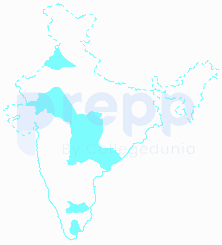
The areas marked in the map given above account for the production of which one of the following cash crops?
Important Questions from Indian Economic and Human Geography
In India, oil wells are found in:
Which of the following is a non-Conventional source of energy?
Select the top Four States with highest population according to census 2011
In which of the following district Manganese is found ?
Monu went on a trip, when he return back he told his classmates that he travelled the longest National Highway of India. You have to tell on which of the following tour he was ?



