
What do you mean by 'Demographic Dividend'?
A rise in the rate of economic growth due to a higher share of working age people in a population
Understanding the Demographic Dividend Concept
The question asks about the meaning of 'Demographic Dividend'. This term is often used in discussions about population and economic development. It refers to a specific period in a country's demographic transition that can potentially lead to accelerated economic growth.
What is Demographic Dividend?
The Demographic Dividend arises when a country experiences a shift in its population age structure. This shift typically happens as fertility rates decline, leading to a smaller proportion of young dependents (children) and, eventually, a smaller proportion of older dependents (elderly). This results in a larger share of the population being in the working-age group (usually defined as 15 to 64 years old) relative to the non-working-age population.
When there is a larger proportion of working-age people, there are potentially more individuals contributing to economic production and fewer dependents needing support. This favorable dependency ratio can boost savings, investment, and productivity, leading to faster economic growth. This period of potential accelerated economic growth is the 'Demographic Dividend'.
Analyzing the Options
Let's look at each option provided to see which one accurately describes the 'Demographic Dividend'.
Option 1: A rise in the rate of economic growth due to a higher share of working age people in a population.
This option directly links a higher share of working-age people in the population to a rise in economic growth. This aligns perfectly with the definition of Demographic Dividend, where a favorable age structure (more working-age people relative to dependents) creates conditions conducive to faster economic development.
Option 2: A rise in the rate of literacy due to development of educational institutions in different parts of the country.
A rise in literacy and educational development are crucial factors for economic growth and can help a country capitalize on a demographic dividend. However, the Demographic Dividend itself is defined by the population's age structure, not directly by the rise in literacy rates or the development of educational institutions. While education is a key factor in realizing the benefits of the demographic dividend, it is not the definition of the dividend itself.
Option 3: A rise in the standard of living of the people due to the growth of alternative livelihood practices.
An increase in the standard of living is a positive outcome often associated with economic growth, which can potentially be driven by a demographic dividend. Alternative livelihood practices also contribute to economic well-being. However, the Demographic Dividend is specifically about the economic potential arising from a particular population age structure, not a general rise in living standards or livelihood diversification.
Option 4: A rise in the gross employment ratio of a country due to government policies.
Government policies aimed at increasing the employment ratio can help a country benefit from a large working-age population. A high employment ratio is certainly desirable and contributes to economic growth. However, the Demographic Dividend is defined by the demographic structure itself (the share of working-age people), not by the employment ratio, which is an economic indicator influenced by many factors including policies.
Based on the analysis, Option 1 provides the most accurate description of what is meant by 'Demographic Dividend'.
Conclusion on Demographic Dividend
The Demographic Dividend is a window of opportunity for economic growth that opens when a country undergoes a demographic transition, leading to a larger proportion of its population being in the working-age group. To fully benefit from this dividend, countries need to invest in human capital (education, health), create jobs, and implement sound economic policies.
Revision Table: Key Concepts
| Term | Definition/Meaning |
|---|---|
| Demographic Dividend | Economic growth potential resulting from shifts in population age structure, specifically when the share of the working-age population is significantly larger than the share of dependents. |
| Working-Age Population | Typically defined as individuals aged 15-64 years, considered capable of working and contributing to the economy. |
| Dependency Ratio | The ratio of dependents (young and old) to the working-age population. A low dependency ratio is characteristic of the period when a demographic dividend can occur. |
Additional Information: Realizing the Demographic Dividend
Simply having a large working-age population doesn't automatically guarantee a demographic dividend. Countries must implement specific strategies to harness this potential. These include:
- Investing in Education and Skills: A well-educated and skilled workforce is essential for higher productivity and economic growth.
- Improving Healthcare: A healthy population is a productive population. Investments in health improve life expectancy and the quality of life, allowing people to work longer and more effectively.
- Creating Employment Opportunities: Sufficient jobs must be available to absorb the growing working-age population. This requires promoting investment and encouraging entrepreneurship.
- Promoting Good Governance and Economic Stability: A stable political and economic environment is crucial for attracting investment and fostering sustainable growth.
- Encouraging Savings and Investment: A larger working-age population often leads to higher savings. These savings need to be channeled into productive investments to fuel economic expansion.
Failing to invest in these areas can lead to unemployment, social unrest, and missed economic opportunities, potentially turning the demographic dividend into a demographic burden.
Similar Questions
What is Inter-cropping?
As per Census 2011, the concentration of Scheduled Caste population (going by percentage of Scheduled Caste population to total population of the State) is the highest in the State of _________.
Consider the following statements with respect to the adolescent population (age group of 10 to 19 years) of India, according to the 2011 Census :
1. Adolescent population comprises half the population of the country.
2. The group is regarded as youthful population with high potential.
3. In this group there are greater number of females than males.
Which of the statements given above is/are correct?
According to the Census 2011, in India, what is the percentage of people (approximately) considered to be migrants (internal), i.e., now settled in a place different from their previous residence?
On which among the following is National Waterway No. 2 situated?
Which of the the following statements regarding coconut production in Lakshadweep is/are correct?
1. Productivity per hectare is highest in India.
2. Oil content in nuts is highest in the world.
Select the correct answer using the code given below.
What is culturable wasteland?
According to Census 2011, which one of the following is the correct sequence of stages in decreasing order of their total size of the population?
Consider the following map of India:
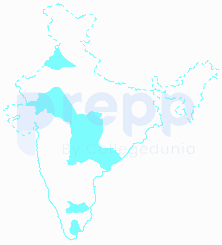
The areas marked in the map given above account for the production of which one of the following cash crops?
Headquarters of which one among the following Railway Zones in India is situated at the highest elevation from the mean sea level?
Important Questions from Indian Economic and Human Geography
In India, oil wells are found in:
Which of the following is a non-Conventional source of energy?
Select the top Four States with highest population according to census 2011
In which of the following district Manganese is found ?
Monu went on a trip, when he return back he told his classmates that he travelled the longest National Highway of India. You have to tell on which of the following tour he was ?



