
What is culturable wasteland?
Land that has been left fallow for more than five years
Understanding Culturable Wasteland
Culturable wasteland refers to a specific category of land identified in land use surveys. This type of land possesses the inherent potential to be used for agricultural purposes, meaning it could be cultivated or used for growing crops. However, it is currently not being utilized for cultivation and has been left fallow, or unused, for an extended period.
Classifying Land Based on Fallow Periods
Land classification systems often categorize land based on the duration it remains unused or fallow. This helps in understanding land management practices and potential productivity. Different timeframes for leaving land fallow lead to different classifications:
- Land left fallow for a short duration, typically less than one year, is often considered 'current fallow'. This is usually done to allow the soil to recover its fertility naturally or in preparation for the next cropping cycle.
- Land left unused for periods between one and two years might fall under other categories, sometimes referred to as 'fallow other than current fallow'.
- Periods longer than this indicate a more significant state of non-use.
Defining Culturable Wasteland Criteria
The classification of land as culturable wasteland specifically hinges on the length of time it has been left fallow, combined with its potential for cultivation. According to standard land use definitions:
Culturable wasteland is defined as land that has been left fallow for a period of more than five years. Despite being unused for such a significant duration, the land retains its potential to be brought back under cultivation if conditions permit or if management practices are applied.
Therefore, the key identifier for culturable wasteland is this prolonged period of being left unused, exceeding five years, while still being suitable for farming.
Similar Questions
What is Inter-cropping?
As per Census 2011, the concentration of Scheduled Caste population (going by percentage of Scheduled Caste population to total population of the State) is the highest in the State of _________.
What do you mean by 'Demographic Dividend'?
Consider the following statements with respect to the adolescent population (age group of 10 to 19 years) of India, according to the 2011 Census :
1. Adolescent population comprises half the population of the country.
2. The group is regarded as youthful population with high potential.
3. In this group there are greater number of females than males.
Which of the statements given above is/are correct?
According to the Census 2011, in India, what is the percentage of people (approximately) considered to be migrants (internal), i.e., now settled in a place different from their previous residence?
On which among the following is National Waterway No. 2 situated?
Which of the the following statements regarding coconut production in Lakshadweep is/are correct?
1. Productivity per hectare is highest in India.
2. Oil content in nuts is highest in the world.
Select the correct answer using the code given below.
According to Census 2011, which one of the following is the correct sequence of stages in decreasing order of their total size of the population?
Consider the following map of India:
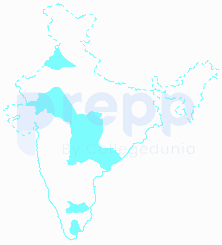
The areas marked in the map given above account for the production of which one of the following cash crops?
Headquarters of which one among the following Railway Zones in India is situated at the highest elevation from the mean sea level?
Important Questions from Indian Economic and Human Geography
Which of the following Indian states has the greatest number of sugar mills?
India possesses an expansive and continuously growing road network, vital for its economic and social development. When considering the cumulative length of national highways, state highways, and other categories of roads, India's road system is surpassed in total length by only one other country globally. What is India's rank in the world in terms of its total road network length?
According to the 2011 Census of India, which state has lowest population density?
In India, oil wells are found in:
Which of the following is a non-Conventional source of energy?



