
Consider the following statements with respect to the adolescent population (age group of 10 to 19 years) of India, according to the 2011 Census : 1. Adolescent population comprises half the population of the country. 2. The group is regarded as youthful population with high potential. 3. In this group there are greater number of females than males. Which of the statements given above is/are correct?
2 only
Analyzing India's Adolescent Population (10-19 Years) - 2011 Census
This question asks us to evaluate statements regarding the adolescent population in India, specifically the age group from 10 to 19 years, based on the data from the 2011 Census. Let's examine each statement carefully.
Statement 1: Adolescent population comprises half the population of the country.
According to the 2011 Census, India's total population was about 1.21 billion. The adolescent population (10-19 years) was roughly 243 million. To calculate the proportion:
\(\text{Proportion} = \frac{\text{Adolescent Population}}{\text{Total Population}}\)
\(\text{Proportion} \approx \frac{243 \text{ million}}{1210 \text{ million}}\)
\(\text{Proportion} \approx 0.2008\)
This means the adolescent population was approximately 20.08% of the total population in 2011. Half the population would be 50%. Clearly, 20.08% is significantly less than 50%. Therefore, this statement is incorrect.
Statement 2: The group is regarded as youthful population with high potential.
The age group 10-19 falls within the broader definition of youth and young population. This segment represents the future workforce and potential contributors to economic growth and societal development. Countries with a large proportion of young people are often said to have a demographic dividend potential, provided there are investments in their education, health, and skills. Thus, the adolescent population is widely recognized as a youthful population with high potential for the country's future. This statement is correct.
Statement 3: In this group there are greater number of females than males.
India's sex ratio (the number of females per 1000 males) has historically been skewed towards males in most age groups. While the child sex ratio (0-6 years) was a major concern in the 2011 Census, the overall sex ratio for the total population was 940 females per 1000 males, indicating fewer females than males. For the 10-19 age group in 2011, the sex ratio was also less than 1000. Specifically, the sex ratio for the 10-14 age group was 904, and for the 15-19 age group was 924. Both numbers are below 1000, indicating a greater number of males than females in these age categories that make up the adolescent population (10-19 years). Therefore, this statement is incorrect.
Summary of Statements and Correctness (Adolescent Population 2011 Census)
| Statement | Description | Correct/Incorrect (2011 Census) |
|---|---|---|
| 1 | Adolescent population comprises half the population. | Incorrect (approx. 20.08%) |
| 2 | Regarded as youthful population with high potential. | Correct |
| 3 | Greater number of females than males. | Incorrect (greater number of males) |
Based on the analysis of the 2011 Census data, only statement 2 is correct.
Revision Table: Key Facts on India's 2011 Census Adolescents (10-19 years)
- Age Group: 10-19 years
- Approximate Population in 2011: 243 million
- Approximate Share of Total Population: 20.08%
- Categorization: Youthful population
- Potential: High potential for future development
- Sex Ratio (Females per 1000 Males): Less than 1000 (more males than females)
Additional Information on India's Demographic Profile
Understanding the characteristics of different age groups is crucial for national planning and development. The 2011 Census provides valuable data on India's demographic structure. The large proportion of young people, including the adolescent group (10-19 years) and young adults, presents both opportunities and challenges.
- Demographic Dividend: A large youthful population can lead to a 'demographic dividend' if the country can provide this population with adequate education, healthcare, and employment opportunities, leading to accelerated economic growth.
- Sex Ratio Trends: The sex ratio at birth and across various age groups is an important demographic indicator. The decline in the child sex ratio (0-6 years) observed in the 2011 Census was a matter of significant concern, highlighting issues like female feticide and infanticide. While not as skewed, the adolescent sex ratio also indicated a male surplus.
- Focus on Adolescents: This age group faces unique challenges and opportunities related to education transition, health issues (like nutrition, reproductive health), skill development, and social integration. Policies and programs often specifically target this demographic for their well-being and development.
Analyzing census data helps policymakers understand population dynamics and formulate effective strategies for social and economic progress.
Similar Questions
What is Inter-cropping?
As per Census 2011, the concentration of Scheduled Caste population (going by percentage of Scheduled Caste population to total population of the State) is the highest in the State of _________.
What do you mean by 'Demographic Dividend'?
According to the Census 2011, in India, what is the percentage of people (approximately) considered to be migrants (internal), i.e., now settled in a place different from their previous residence?
On which among the following is National Waterway No. 2 situated?
Which of the the following statements regarding coconut production in Lakshadweep is/are correct?
1. Productivity per hectare is highest in India.
2. Oil content in nuts is highest in the world.
Select the correct answer using the code given below.
What is culturable wasteland?
According to Census 2011, which one of the following is the correct sequence of stages in decreasing order of their total size of the population?
Consider the following map of India:
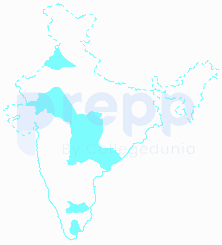
The areas marked in the map given above account for the production of which one of the following cash crops?
Headquarters of which one among the following Railway Zones in India is situated at the highest elevation from the mean sea level?
Important Questions from Indian Economic and Human Geography
Which of the following Indian states has the greatest number of sugar mills?
India possesses an expansive and continuously growing road network, vital for its economic and social development. When considering the cumulative length of national highways, state highways, and other categories of roads, India's road system is surpassed in total length by only one other country globally. What is India's rank in the world in terms of its total road network length?
According to the 2011 Census of India, which state has lowest population density?
In India, oil wells are found in:
Which of the following is a non-Conventional source of energy?



