
According to the Census 2011, in India, what is the percentage of people (approximately) considered to be migrants (internal), i.e., now settled in a place different from their previous residence?
37%
Understanding Internal Migration in India: Census 2011 Data
The question asks about the approximate percentage of people in India considered internal migrants according to the Census 2011. Internal migrants are defined as individuals who are currently living in a place that is different from their place of last residence or place of birth.
What is Internal Migration?
Internal migration refers to the movement of people from one place to another within the boundaries of a country. The Census of India collects data on migration primarily based on two criteria:
- Place of Birth: Where a person was born.
- Place of Last Residence: The last place where a person usually lived.
Someone is counted as a migrant if their place of enumeration (where they are surveyed) is different from their place of birth or place of last residence. The question specifically mentions being settled in a place different from their previous residence, which aligns with the 'place of last residence' definition being a key indicator for recent migration.
Census 2011 Findings on Internal Migration
According to data from the Census 2011, a significant portion of the Indian population has migrated internally. The total number of internal migrants based on the 'place of last residence' criterion was substantial.
The approximate percentage of people considered internal migrants (those settled in a place different from their previous residence) in India, as per the Census 2011, is around 37%.
Analyzing the Options
Let's look at the provided options in light of the Census 2011 data:
- 25%: This is lower than the reported percentage.
- 37%: This aligns with the approximate percentage of internal migrants based on place of last residence according to Census 2011.
- 45%: This is higher than the reported percentage.
- 55%: This is significantly higher than the reported percentage.
Therefore, the percentage closest to the actual figure reported by Census 2011 for internal migrants (based on previous residence) is 37%.
Key Factors Driving Internal Migration in India
Several factors contribute to internal migration:
- Economic Reasons: Seeking better employment opportunities and higher wages is a primary driver.
- Social Reasons: Migration due to marriage (especially for women) is very common.
- Educational Reasons: Moving to access better educational institutions.
- Environmental Reasons: Sometimes due to natural disasters or environmental degradation.
- Political Reasons: Although less common for internal migration, sometimes due to conflict or displacement.
In India, migration for marriage accounts for a large share, particularly female migration, while migration for work/employment is a major driver for males.
Revision Table: Census 2011 Migration Data
| Metric | Description | Approximate Value (Census 2011) |
|---|---|---|
| Internal Migrants (based on Place of Last Residence) | People living in a different place than their previous residence. | ~37% of the population |
| Total Migrants (based on Place of Birth) | People enumerated at a place different from their place of birth. | Higher than 37% (Includes lifetime migrants) |
| Major Reason for Female Migration | Marriage | Largest category |
| Major Reason for Male Migration | Work/Employment | Largest category |
Additional Information on Migration in India
Understanding migration patterns in India involves looking at various aspects beyond just the numbers. The Census provides a snapshot, but migration is a dynamic process.
- Rural-Urban Migration: A significant flow of people from rural areas to urban centers seeking jobs and better amenities.
- Inter-state vs. Intra-state Migration: Migration can occur within the same state (intra-state) or across different states (inter-state). Intra-state migration is more common.
- Seasonal Migration: Many people, especially in agricultural or construction sectors, migrate seasonally for work and return home.
- Impacts of Migration: Migration has impacts on both the place of origin (remittances, brain drain) and the place of destination (strain on infrastructure, labor supply).
- Data Sources: Besides the Census, the National Sample Survey Office (NSSO) also collects data on migration, often providing more detailed insights into the reasons and types of migration.
The 37% figure from Census 2011 highlights that migration is a widespread phenomenon influencing demographic, social, and economic landscapes across India.
Similar Questions
What is Inter-cropping?
As per Census 2011, the concentration of Scheduled Caste population (going by percentage of Scheduled Caste population to total population of the State) is the highest in the State of _________.
What do you mean by 'Demographic Dividend'?
Consider the following statements with respect to the adolescent population (age group of 10 to 19 years) of India, according to the 2011 Census :
1. Adolescent population comprises half the population of the country.
2. The group is regarded as youthful population with high potential.
3. In this group there are greater number of females than males.
Which of the statements given above is/are correct?
On which among the following is National Waterway No. 2 situated?
Which of the the following statements regarding coconut production in Lakshadweep is/are correct?
1. Productivity per hectare is highest in India.
2. Oil content in nuts is highest in the world.
Select the correct answer using the code given below.
What is culturable wasteland?
According to Census 2011, which one of the following is the correct sequence of stages in decreasing order of their total size of the population?
Consider the following map of India:
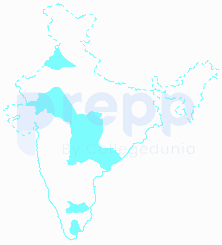
The areas marked in the map given above account for the production of which one of the following cash crops?
Headquarters of which one among the following Railway Zones in India is situated at the highest elevation from the mean sea level?
Important Questions from Indian Economic and Human Geography
Which of the following Indian states has the greatest number of sugar mills?
India possesses an expansive and continuously growing road network, vital for its economic and social development. When considering the cumulative length of national highways, state highways, and other categories of roads, India's road system is surpassed in total length by only one other country globally. What is India's rank in the world in terms of its total road network length?
According to the 2011 Census of India, which state has lowest population density?
In India, oil wells are found in:
Which of the following is a non-Conventional source of energy?



