
According to the Census 2011, which of the following statements is/are correct? 1. A person who can only read but cannot write, is not literate. 2. A person aged seven years and above, who can both read and write with understanding in any language is treated as literate. Select the correct answer using the code given below.
Understanding Literacy Definition in Census 2011
The question asks us to evaluate two statements about the definition of literacy according to the Census 2011 of India. Understanding this definition is crucial for demographic studies and related topics.
Let's break down the definition provided by the Census of India 2011.
The official definition of a literate person according to Census 2011 is:
- A person aged seven years and above.
- Who can both read and write.
- With understanding.
- In any language.
Based on this definition, let's examine the given statements:
Analyzing Statement 1: Reading but Cannot Write
Statement 1 says: A person who can only read but cannot write, is not literate.
According to the Census 2011 definition, literacy requires the ability to both read and write with understanding. If a person can only read but lacks the ability to write, they do not meet the full criteria of the definition. Therefore, such a person is indeed considered not literate as per Census 2011.
This statement aligns directly with the Census 2011 definition.
Analyzing Statement 2: Age and Ability Criteria
Statement 2 says: A person aged seven years and above, who can both read and write with understanding in any language is treated as literate.
This statement precisely matches the key components of the official Census 2011 definition of literacy:
- Age: Aged seven years and above. This is the minimum age criterion for being considered literate.
- Ability: Can both read and write. Both skills are mandatory.
- Understanding: With understanding. Rote reading or writing without comprehension is not sufficient.
- Language: In any language. The specific language does not matter, as long as the person can read and write with understanding in at least one language.
This statement is a correct representation of the Census 2011 literacy definition.
Conclusion on Census 2011 Literacy Statements
Based on our analysis of the official Census 2011 definition of literacy:
- Statement 1 is correct because the definition requires the ability to both read and write; only reading is not sufficient.
- Statement 2 is correct as it accurately reflects the age criterion and the requirement to read and write with understanding in any language.
Therefore, both statements are correct according to the Census 2011 guidelines on literacy.
The correct option is the one that states both 1 and 2 are correct.
Revision Table: Census 2011 Literacy
| Criterion | Census 2011 Definition | Statement 1 Match | Statement 2 Match |
|---|---|---|---|
| Minimum Age | 7 years and above | N/A (Focus on ability) | Yes |
| Required Ability | Read and Write with Understanding | Yes (Highlights requirement for both) | Yes |
| Language | Any Language | N/A (Focus on ability) | Yes |
| Only Reading Ability | Not Literate | Yes | N/A |
Additional Information on Literacy in India
Literacy rates are key indicators of socio-economic development. Census data on literacy helps in planning and policy making.
- The Census defines literacy status only for persons aged seven years and above. Children below seven years are treated as illiterate, irrespective of whether they can read or write.
- The ability to just sign one's name is not considered sufficient for being classified as literate.
- The literacy rate is calculated as the percentage of literate people among the population aged seven years and above.
- Improving literacy has been a major goal for the Indian government, with various programs like Sarva Shiksha Abhiyan and Saakshar Bharat aimed at increasing literacy rates.
Similar Questions
What is Inter-cropping?
As per Census 2011, the concentration of Scheduled Caste population (going by percentage of Scheduled Caste population to total population of the State) is the highest in the State of _________.
What do you mean by 'Demographic Dividend'?
Consider the following statements with respect to the adolescent population (age group of 10 to 19 years) of India, according to the 2011 Census :
1. Adolescent population comprises half the population of the country.
2. The group is regarded as youthful population with high potential.
3. In this group there are greater number of females than males.
Which of the statements given above is/are correct?
According to the Census 2011, in India, what is the percentage of people (approximately) considered to be migrants (internal), i.e., now settled in a place different from their previous residence?
On which among the following is National Waterway No. 2 situated?
Which of the the following statements regarding coconut production in Lakshadweep is/are correct?
1. Productivity per hectare is highest in India.
2. Oil content in nuts is highest in the world.
Select the correct answer using the code given below.
What is culturable wasteland?
According to Census 2011, which one of the following is the correct sequence of stages in decreasing order of their total size of the population?
Consider the following map of India:
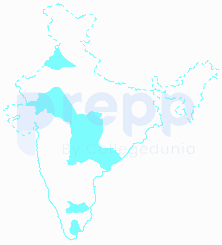
The areas marked in the map given above account for the production of which one of the following cash crops?
Important Questions from Indian Economic and Human Geography
In India, oil wells are found in:
Which of the following is a non-Conventional source of energy?
Select the top Four States with highest population according to census 2011
In which of the following district Manganese is found ?
Monu went on a trip, when he return back he told his classmates that he travelled the longest National Highway of India. You have to tell on which of the following tour he was ?



