Uniform Civil Code (UCC) - Indian Polity Notes
Uniform Civil Code (UCC) has been mentioned in the Indian Constitution under Article 44 of Directive Principles of State Policy. A Uniform Civil Code indicates that all members of society, regardless of faith, will be treated equally under a national civil code that will be applied similarly to all. It will deal with issues such as marriage, divorce, maintenance, inheritance, adoption, and succession etc. The implementation of a UCC is seen as a crucial step towards national integration, promoting social justice, and ensuring gender equality. In this article we will discuss the Uniform Civil Code which is an important topic for UPSC prelim as well as mains examination.
| To Read update on this topic: |
Table of Contents
Article 44
It says the State shall endeavour to secure for the citizens a uniform civil code throughout the territory of India.
|
"A Uniform Civil Code stands as a beacon for equality and unity, advocating for a single set of laws that apply equally to all citizens, irrespective of their religion.” |
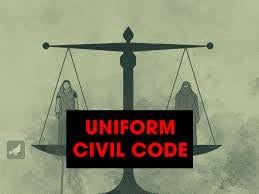
Uniform Civil Code Debate
From a historical viewpoint, the issue of a uniform civil code in India extends back to the colonial era.
Pre-Independence (colonial era)
- The October 1840 Lex Loci Report emphasized the need and necessity of uniformity in the codification of Indian law, particularly in the areas of crimes, proof, and contract. However, it was also recommended that Hindu and Muslim personal laws be left out of such codification.
- The Proclamation of the Queen of 1859 pledged complete non-interference in religious affairs.
As a result, while criminal laws were codified and made uniform across the country, personal laws are still governed by individual codes for different regions.
Post-Colonial era (1947-1985)
During the drafting of the constitution, prominent leaders like Jawaharlal Nehru and Dr. B.R Ambedkar pushed for a uniform civil code. However, they included the UCC in the Directive Principles of State Policy (DPSP, Article 44) mainly due to opposition from religious fundamentalists and a lack of awareness among the masses during the time.
Some of the reforms of this period were:-
- Hindu Succession Act, 1956
- Hindu Succession Act, of 1956 deals with succession among Hindus, Buddhists, Jains, and Sikhs.
- The Act establishes a uniform and comprehensive system of inheritance and succession, bringing consistency and fairness to the distribution of property.
- It granted Hindu females absolute property rights, giving her full authority to manage and dispose through a will.
- The Act was further strengthened by the Hindu Succession (Amendment) Act, 2005, which introduced significant changes to ensure gender equality in inheritance rights.
- Hindu Marriage Act, 1955
- The Hindu Marriage Act of 1955 reformed Hindu marriage laws, introducing provisions for divorce and legalizing various aspects of marriage, including consent and monogamy.
- This act also eliminated social evils like polygamy, ensuring a more just marital system.
- Hindu Minority and Guardianship Act, 1956
- This act defined the guardianship of minors within the Hindu community, emphasising the welfare of children as the paramount consideration.
- It established guidelines for appointing guardians and clarified the rights and responsibilities of natural guardians, particularly the parents.
- Hindu Adoptions and Maintenance Act, 1956
- The Hindu Adoptions and Maintenance Act of 1956 provided a legal framework for the adoption of children and outlined the maintenance obligations of individuals within Hindu families.
- This act aimed to ensure the welfare of adopted children and the financial support of dependents.
- Special Marriage Act, 1954
- Enacted in 1954, the Special Marriage Act allows legal marriages to take place outside of any religious personal law.
- It provides a secular framework for marriage, enabling individuals from different faiths or those who prefer a civil marriage to marry legally, thereby promoting the right to choose one's partner without religious constraints.
Shah Bano case (1985)
Shah Bano, a 73-year-old woman, was denied support after her husband used triple talaq (saying "I divorce thee" three times) to divorce her. She went to the courts, and both the District Court and the High Court agreed with her. As a result, her husband filed an appeal with the Supreme Court, claiming that he had met all of his Islamic law requirements.
1985, the Supreme Court gave judgement in her favor under the All India Criminal Code's "maintenance of spouses, children, and parents" provision (Section 125), which applied to all citizens regardless of religion. It was also suggested that a standard civil code be established.
Facts about the case
- Maintenance had only to be paid until the period of iddat under Muslim personal law (three lunar months-roughly 90 days ).
- The wife was entitled to maintenance under Section 125 of the Criminal Procedure Code, which applied to all citizens.
Daniel Latifi Case
The Muslim Women's Act (MWA) was challenged on the grounds that it infringed on Articles 14 and 15 of the Constitution, as well as Article 21 of the Constitution. While upholding the statute, the Supreme Court harmonized it with section 125 of the CrPC, ruling that the sum received by a woman during the iddat time should be sufficient to maintain her throughout the iddat period as well as provide for her future. As a result of the law of the nation, a divorced Muslim woman is entitled to maintenance for the rest of her life or until she remarries.
Sarla Mudgal Case (1995)
- The case involved a Hindu man who converted to Islam to marry a second wife without divorcing his first Hindu wife, taking advantage of the more permissive marriage laws under Islam regarding polygamy.
- The Court held that a Hindu marriage solemnized under the Hindu Marriage Act cannot be dissolved by converting to another religion.
- The act of marrying a second time after converting to Islam, without dissolving the first marriage, was deemed illegal and invalid under the Hindu Marriage Act, which prohibits bigamy.
- It highlighted the need for a Uniform Civil Code as envisioned under Article 44 of the Indian Constitution.
Shayara Bano v. Union of India (2017)
- It is a landmark case where the Supreme Court of India declared the practice of Triple Talaq (talaq-e-biddat) unconstitutional.
- Shayara Bano, a Muslim woman, challenged the constitutional validity of Triple Talaq after her husband divorced her using this method. She argued that the practice violated her fundamental rights, particularly Articles 14 (Right to Equality), 15 (Prohibition of Discrimination), 21 (Right to Life and Personal Liberty), and 25 (Freedom of Religion).
- The judgment emphasized the need to protect the rights and dignity of Muslim women, ensuring they were not subjected to arbitrary and unilateral divorce practices.
- Following the judgment, the Muslim Women (Protection of Rights on Marriage) Act, 2019, was passed by Parliament, criminalizing the practice of Triple Talaq and providing legal recourse to affected women.
Need for a Uniform Civil Code
- Constitutional Mandate: Implementing a UCC would fulfill constitutional directive mentioned under Article 44 and align with the broader vision of justice and equality articulated in the Constitution.
- Promoting Equality Before Law: It would ensure that all citizens, regardless of their religion, are subject to the same set of laws concerning personal matters, as enshrined in Article 14 of the Indian Constitution.
- To ensure Social Justice: UCC would standardize personal laws of diverse religious and ethnic communities ensuring fair and just treatment for all individuals.
- Protecting Women's Rights; Personal laws in various religious communities often discriminatory towards women. For example, practices such as polygamy and unilateral divorce. UCC will ensure gender-just laws.
- National Integration: Diverse groups practising their own set of personal laws can lead to fragmentation and tensions among communities. A UCC would promote national integration by unifying legal standards and fostering a sense of shared identity among citizens, irrespective of their religious backgrounds.
Uniform Civil Code – Challenges
Constitutional challenges
- The right to religious freedom clashes with the right to equality.
- Article 25 establishes a person's fundamental right to religion.
- Article 26(b) protects each religious denomination’s or section's ability to "conduct its own business in religious matters.
- " The right to preserve distinctive culture is defined in Article 29.
- These rights are incompatible with the equality before the law guaranteed by articles 14 and 15.
- Furthermore, under Article 25, an individual's religious freedom is subject to "public order, health, and morals."
- According to a report released by India's Law Commission in 2018, the Uniform Civil Code is "not necessary nor desirable at this time" in the country. According to the Commission, secularism cannot be incompatible with the country's diversity.
Social-political challenges
- Minorities fear that the majority's culture will be pushed on them in the name of uniformity.
- Given India's immense cultural diversity, getting all of these people together will be a huge challenge.
- The patriarchal worldview of Indian society makes the application of the Uniform Civil Code difficult.
- This may be seen in the fact that, despite the fact that the Hindu code bill has been in existence since the mid-1950s, Hindu women only inherit a fraction of the land to which they are entitled.
Conclusion
India has a unique blend of Hindu, Muslim, Christian, and Parsi personal laws codified. There is no single family-related law for all Indians in a single statute book that is acceptable to all religious faiths that coexist in India. However, the majority of them agree that UCC is unquestionably desirable and would contribute significantly to the building and consolidation of Indian nationhood. Differences of opinion exist over the timing and method in which it should be implemented.
Rather than utilizing it as an emotional issue to gain the electoral benefit, political and intellectual leaders should work to reach an agreement. The issue is not one of minority protection or even national unity; rather, it is one of treating each human being with dignity, something that personal laws have failed to do thus far.
FAQs
Question: What is the Uniform Civil Code (UCC)?
Answer: The Uniform Civil Code (UCC) refers to the proposal to replace personal laws based on the scriptures and customs of each major religious community in India with a common set governing every citizen. The aim of the UCC is to ensure equality and justice in personal matters such as marriage, divorce, inheritance, and adoption, thereby promoting gender justice and protecting the rights of individuals. The concept is rooted in the idea that all citizens of India should be treated equally under the same set of secular civil laws, regardless of their religion.
Question: What is the constitutional basis for UCC in India?
Answer: The constitutional basis for the Uniform Civil Code in India is found in Article 44 of the Directive Principles of State Policy. It states, "The State shall endeavor to secure for the citizens a uniform civil code throughout the territory of India." This provision mandates the government to work towards implementing a common set of laws governing personal matters, aiming to eliminate disparities in treatment based on religious identity.
Question: What are the advantages of implementing the UCC?
Answer: The advantages of implementing the UCC include:
- Gender Equality: UCC promotes equal rights for men and women in matters of marriage, divorce, and inheritance, thereby addressing gender discrimination.
- National Integration: By providing a common legal framework, UCC fosters national unity and reduces communal tensions arising from differing personal laws.
- Simplification of Laws: A unified set of laws simplifies the legal system, making it easier for individuals to understand their rights and responsibilities.
- Protection of Rights: UCC aims to protect the rights of marginalized communities, ensuring that all citizens have equal access to justice.
Question: What are the challenges in implementing the UCC?
Answer: The challenges in implementing the Uniform Civil Code include:
- Religious Opposition: Various religious communities may resist the UCC, viewing it as an infringement on their personal laws and cultural practices.
- Political Sensitivity: The UCC is a politically sensitive issue, and discussions around it can lead to communal tensions and electoral repercussions.
- Awareness and Education: There is a lack of awareness among the general public regarding the benefits of UCC, necessitating comprehensive education and advocacy efforts.
- Legal Complexity: The transition from multiple personal laws to a unified code involves significant legal and logistical challenges, requiring careful consideration and planning.
Question: Which states in India have implemented UCC or similar laws?
Answer: Some states in India, such as Goa, have implemented a form of the Uniform Civil Code. Goa has a common civil code that applies to all its residents, regardless of their religion, covering areas such as marriage, divorce, and inheritance. The implementation of UCC in Goa is often cited as a successful model, demonstrating that a common civil code can be effectively applied within a diverse cultural context.
MCQs
1. Which Article of the Indian Constitution mandates the implementation of UCC?
A) Article 14
B) Article 44
C) Article 21
D) Article 25
Answer: See the Explanation
Explanation: Article 44 of the Indian Constitution mandates the State to secure a Uniform Civil Code for all citizens throughout the territory of India.
2. What is a major benefit of implementing the UCC?
A) Increased complexity in personal laws
B) Gender discrimination
C) National integration
D) Religious conflicts
Answer: See the Explanation
Explanation: A major benefit of implementing the UCC is national integration, as it provides a common legal framework for all citizens, reducing communal tensions.
3. Which state in India has a form of UCC implemented?
A) Kerala
B) Goa
C) Punjab
D) Rajasthan
Answer: See the Explanation
Explanation: Goa has implemented a form of the Uniform Civil Code that applies to all its residents, covering various aspects of personal law.
4. What is one of the primary challenges to the UCC's implementation?
A) Increased gender equality
B) Political support
C) Religious opposition
D) Simplification of laws
Answer: See the Explanation
Explanation: Religious opposition is one of the primary challenges to the implementation of UCC, as different communities may resist changes to their personal laws.
5. What does UCC aim to achieve in personal law matters?
A) Maintain religious diversity
B) Ensure equality and justice
C) Support traditional practices
D) Increase complexity
Answer: See the Explanation
Explanation: UCC aims to ensure equality and justice in personal law matters for all citizens, regardless of their religion.
GS Mains Questions and Model Answers
Q1: Discuss the significance of the Uniform Civil Code (UCC) in promoting gender justice in India.
Answer: The Uniform Civil Code (UCC) plays a crucial role in promoting gender justice in India by ensuring that personal laws governing marriage, divorce, inheritance, and adoption are equitable for all citizens, regardless of gender. Currently, various personal laws across different religions contain provisions that can lead to discrimination against women, such as unequal rights in inheritance and divorce. The implementation of UCC would eliminate such disparities, providing a common legal framework that upholds the rights of women. By fostering equality in personal matters, UCC can contribute to the overall empowerment of women and ensure their rightful place in society. Furthermore, UCC aligns with the principles of justice and equality enshrined in the Indian Constitution, reinforcing the commitment to gender justice and human rights for all citizens.
Q2: Analyze the role of public opinion and political will in the implementation of the UCC.
Answer: Public opinion and political will play pivotal roles in the implementation of the Uniform Civil Code (UCC) in India. While UCC has been a longstanding demand for social reform, its acceptance and implementation depend significantly on societal attitudes towards religious personal laws. Strong advocacy and awareness campaigns are necessary to educate the public about the benefits of a common legal framework that promotes equality and justice. Political will is equally essential, as lawmakers must navigate the complexities of communal sensitivities and electoral considerations when addressing the UCC. Engaging with various stakeholders, including religious leaders and civil society organizations, can facilitate dialogue and build consensus around the UCC. Ultimately, the success of UCC implementation will rely on a collective commitment to uphold constitutional values and foster a society that prioritizes justice and equality for all.
Q3: Evaluate the potential impact of the UCC on communal harmony in India.
Answer: The Uniform Civil Code (UCC) has the potential to significantly impact communal harmony in India by providing a common legal framework that transcends religious divides. By ensuring that all citizens are governed by the same set of laws in personal matters, UCC can help reduce the tensions that arise from differing personal laws among various religious communities. This uniformity can foster a sense of unity and equality among citizens, reinforcing the idea of a secular state that respects all individuals equally. Moreover, UCC can address grievances arising from perceived injustices in personal law systems, thus promoting social cohesion and trust among communities. However, the successful implementation of UCC requires careful consideration of cultural sensitivities and ongoing dialogue among stakeholders to ensure that it is seen as a positive step towards inclusivity and equality, ultimately enhancing communal harmony.
Previous Year Questions on Uniform Civil Code
1. UPSC CSE Prelims 2021:
Question: The Uniform Civil Code (UCC) is enshrined in which part of the Indian Constitution?
A) Fundamental Rights
B) Directive Principles of State Policy
C) Fundamental Duties
D) Preamble
Answer: (B)
Explanation: The UCC is enshrined in Article 44 of the Directive Principles of State Policy in the Indian Constitution.
2. UPSC CSE Mains 2019 (GS Paper 1):
Question: "Examine the impact of the Uniform Civil Code on gender equality and minority rights in India." Discuss the potential challenges in its implementation.
Answer: The Uniform Civil Code (UCC) holds the potential to significantly impact gender equality by addressing discriminatory practices present in various personal laws. It aims to ensure equal rights for women in marriage, inheritance, and divorce, thereby promoting justice and gender parity. However, the implementation of UCC raises concerns regarding minority rights, as it may be perceived as an imposition on religious practices. To navigate these challenges, it is essential to engage in dialogue with minority communities and incorporate their perspectives in the formulation of the UCC. Building consensus around the principles of equality and justice is crucial for achieving the objectives of UCC while respecting the rights and beliefs of all citizens. Thus, careful consideration of social sensitivities and continuous advocacy for gender justice are imperative for the successful implementation of UCC in India.
*email: contactus@prepp.in
Download the PREPP App and attempt FREE IAS Exam Mock Tests and get complete study material!
UPSC IAS : CSAT - Mini Live Test

Live Test : UPSC CSE Prelims CSAT (Paper-II) (Oct 20 - 23)
Full Test - 04: UPSC CSE Prelims CSAT (Paper-II)
Full Test - 03: UPSC CSE Prelims CSAT (Paper-II)
UPSC CSE Prelims 2026 GS Paper 1 Question Paper (24-May-2026)
UPSC CSE Prelims 2026 CSAT Paper 2 Question Paper (24-May-2026)

17 February 2025 | The Hindu Must Read Articles | Current Affairs

16 February 2026 | The Hindu Must Read Articles | Current Affairs

13 February 2026 | The Hindu Must Read Articles | Current Affairs









Comments