Gandhian Principles - DPSP - Indian Polity Notes
Gandhian Directive Principles of State Policy embody the essence of Mahatma Gandhi's vision for India, emphasizing social justice, rural development, and the upliftment of the marginalized. They serve as a moral compass, guiding the state to strive for a society rooted in non-violence, self-reliance, and equitable distribution of resources. Articles 40,43,43B,46,47 and 48 talk about these principles. This article explains the Gandhian Principles which is important for UPSC Indian Polity Preparation.
|
Table of Contents |
|
"Gandhian Directive Principles of State Policy embody the essence of Mahatma Gandhi's vision for India, emphasizing social justice, rural development, and the upliftment of the marginalized.” |
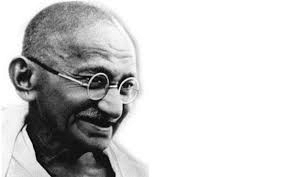
Gandhian Principles - Directive Principles of State Policy
- These concepts embody Gandhi's rebuilding ideology, which he spread through the national movement.
- Some of his notions have been included into DPSP in order to fulfil his ambitions.
- These articles - Article 40, Article 43, Article 43 B, Article 46, Article 47, and Article 48 - instruct the State.
Article 40 - Organization of Panchayats/self-government
- States will take initiatives to build village panchayats and decentralise power and authority in order to establish self-government.
- The constitution's 73rd and 74th amendments, which are related to Panchayati Raj and Municipal Corporations, respectively, later became the constitutionally supported framework for the principle mentioned in Part IV.
Article 43 - Fair wages and a decent standard of life
- It states that the state can endeavour to secure, through appropriate legislation or economic organisation, a living wage, working conditions, a decent standard of living, and enjoyment of leisure and social-cultural opportunities for all workers employed in agricultural, industrial, or otherwise, work, and promote cottage industries on an individual or cooperative basis in rural and remote areas of the country.
Article 43B - Promotion of cooperatives
- To promote co-operative societies' voluntary formation, autonomous functioning, democratic control, and professional administration.
- It was added in 2011 by the 97th Amendment Act. It states that the state shall make every effort to support the administration of cooperative societies in order to assist those who are involved in them.
Article 46 - Protection of SCs, STs, weaker sections from exploitation.
- To prevent exploitation and injustice against Scheduled Castes and Scheduled Tribes, their educational and economic interests must be encouraged.
Article 47 - Nutrition, Standard of living and public health
- The state shall seek to improve the nutrition and living standards of its citizens. To increase people's nutrition and standard of living while also improving public health.
- Except for therapeutic grounds, the State shall make every effort to ban the consumption of intoxicating beverages and medications that are harmful to one's health.
- Many social development programmes, such as the National Health Mission and the Mid-Day Meal Scheme, that target the underprivileged elements of society, such as women, children, and the poor, are inspired by this DPSP.
Article 48 - Scientific agriculture and animal husbandry
- Organization of agriculture and animal husbandry along scientific lines, with initiatives taken to preserve and improve breeds, including the prohibition of slaughter of cows, calves, and other milch and draught cattle.
Conclusion
Although these principles are not legally enforceable, they hold significant moral and political weight, shaping policies and legislative measures aimed at achieving sustainable and inclusive development. They serve as a constant reminder of the need to balance economic growth with social justice, ensuring that the benefits of development reach every corner of the nation.
FAQs
Question: What are Gandhian principles in DPSP?
Answer: Gandhian principles are part of the Directive Principles of State Policy, based on Mahatma Gandhi’s ideals focusing on social justice, decentralization, and self-reliance.
Question: Which articles of the Constitution reflect Gandhian principles?
Answer: Articles 40, 43, 46, 47, and 48 reflect Gandhian principles within the DPSP.
Question: What is Article 40 related to?
Answer: Article 40 directs the state to organize village panchayats and empower them with self-governance.
Question: What does Article 47 emphasize?
Answer: Article 47 focuses on the improvement of public health, prohibiting intoxicating substances and ensuring the state raises the level of nutrition.
Question: How does Article 46 promote social justice?
Answer: Article 46 seeks to protect the educational and economic interests of the weaker sections, particularly Scheduled Castes (SCs) and Scheduled Tribes (STs).
MCQs
- Which of the following is a Gandhian principle included in the DPSP?
a) Equal pay for equal work
b) Promotion of cottage industries
c) Uniform civil code
d) Separation of the judiciary from the executive
Answer: (B) See the Explanation
Promotion of cottage industries is based on Gandhi's idea of economic self-reliance, especially in rural areas.
- Under which article is the organization of village panchayats mandated?
a) Article 38
b) Article 40
c) Article 44
d) Article 46
Answer: (B) See the Explanation
Article 40 directs the state to organize village panchayats and empower them with self-governance, aligning with Gandhian principles of decentralization.
- Which article promotes the prohibition of intoxicating drinks and drugs?
a) Article 41
b) Article 43
c) Article 47
d) Article 48
Answer: (C) See the Explanation
Article 47 emphasizes raising the level of nutrition and improving public health, including the prohibition of intoxicating substances.
- Which of the following reflects Gandhian ideals in the DPSP?
a) Right to education
b) Right to property
c) Promotion of cottage industries
d) Uniform civil code
Answer: (C) See the Explanation
Cottage industries align with Gandhi's vision of promoting rural self-sufficiency and reducing dependence on large-scale industries.
- Article 46 of the Constitution primarily deals with:
a) Protection of minority rights
b) Safeguarding educational and economic interests of SCs and STs
c) Uniform civil code
d) Right to education
Answer: (B) See the Explanation
Article 46 aims to promote the educational and economic welfare of SCs, STs, and other weaker sections of society, aligning with Gandhi's focus on uplifting the marginalized.
GS Mains Questions and Model Answers
Q1: Analyze the role of Gandhian principles in shaping the Directive Principles of State Policy.
Answer: Gandhian principles focus on social justice, rural development, and self-reliance, which are embedded in the DPSP. Articles 40 (village panchayats), 43 (promotion of cottage industries), 46 (uplifting SCs/STs), and 47 (public health) are direct reflections of Gandhi's vision for a decentralized and self-sustaining India. These principles aim to create a balanced socio-economic structure, ensuring equity and empowering rural areas. The emphasis on non-violence, prohibition of intoxicants, and upliftment of the marginalized continues to influence Indian policies, particularly in rural development and public health.
Q2: Discuss the relevance of Gandhian principles in the modern socio-economic context of India.
Answer: Gandhian principles, reflected in the DPSP, remain relevant in addressing contemporary socio-economic challenges. The promotion of village panchayats (Article 40) aligns with the push for decentralization and grassroots democracy, while the emphasis on cottage industries (Article 43) supports local economies and employment. Furthermore, public health concerns, as articulated in Article 47, are critical in tackling modern health crises. As India grapples with inequality, Gandhian principles focusing on the welfare of weaker sections (Article 46) provide a framework for inclusive development and social justice.
Q3: Evaluate the implementation of Gandhian principles in contemporary governance, particularly in rural India.
Answer: The implementation of Gandhian principles, especially in rural areas, has seen partial success through schemes like Panchayati Raj (Article 40) and MGNREGA, which promote village self-governance and employment in cottage industries. However, challenges remain in achieving full decentralization and economic self-sufficiency. Public health initiatives under Article 47 have seen progress with campaigns against intoxicants, yet health and nutrition levels in rural areas require significant improvement. While Gandhian principles continue to inspire policies, more robust implementation and adaptation to contemporary needs are essential.
Previous Year Questions on Gandhian Principles - DPSP
1. UPSC CSE Prelims 2018:
Question: Which article of the Indian Constitution directs the state to organize village panchayats?
A. Article 38
B. Article 40
C. Article 44
D. Article 48
Answer: B
Explanation: Article 40 directs the state to organize village panchayats, promoting self-governance and decentralization, principles central to Gandhi’s vision.
2. UPSC CSE Mains 2017 (GS Paper 2):
Question: Discuss the importance of Gandhian principles in the Directive Principles of State Policy and their relevance in contemporary India.
Answer: Gandhian principles in the DPSP emphasize self-reliance, village autonomy, and the welfare of weaker sections. Articles like 40, 43, 46, and 47 are crucial for promoting social justice and public health. In contemporary India, these principles remain relevant, especially in areas like rural development (through Panchayati Raj), promoting small-scale industries, and uplifting marginalized communities. They also encourage sustainable development and decentralization, aligning with current global goals for inclusive and equitable development.
3. UPSC CSE Prelims 2017:
Question: Which article of the Constitution emphasizes improving public health and prohibiting intoxicating drinks?
A. Article 43
B. Article 47
C. Article 46
D. Article 40
Answer: B
Explanation: Article 47 emphasizes improving public health and raising nutritional standards, while also prohibiting the consumption of intoxicating drinks and drugs.
*email: contactus@prepp.in
Download the PREPP App and attempt FREE IAS Exam Mock Tests and get complete study material!

Full Test - 04: UPSC CSE Prelims CSAT (Paper-II)
Full Test - 03: UPSC CSE Prelims CSAT (Paper-II)
UPSC CSE Prelims 2026 GS Paper 1 Question Paper (24-May-2026)
UPSC CSE Prelims 2026 CSAT Paper 2 Question Paper (24-May-2026)

17 February 2025 | The Hindu Must Read Articles | Current Affairs

16 February 2026 | The Hindu Must Read Articles | Current Affairs

13 February 2026 | The Hindu Must Read Articles | Current Affairs









Comments