New Industrial Policy 1991 - Indian Economy Notes
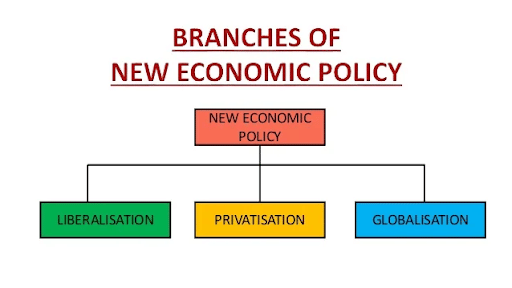
New Industrial Policy, 1991 was launched on on July 24, 1991 with aim of empowering market forces and enhancing efficiency and to address distortions and shortcomings in the nation's industrial structure built over four decades. It aspired to elevate industrial efficiency to global standards and expedite overall industrial growth through Liberalization, Privatization and Globalization (LPG). This article pertains to the New Industrial Policy 1991 which is important for aspirants preparing for the UPSC examination.

|
Table of Contents |

What is New Industrial Policy 1991?
- The industrial policy is a series of standards and measures implemented by the government to track the development of industries and related sectors to promote India’s economic growth and development.
- The New Industrial Policy, of 1991 had the main objective of providing facilities to market forces and increasing efficiency.
- The bigger roles were played by:
- L – Liberalization (Reduction in Government Control)
- P – Privatization (Increasing the Private Sector's Role & Scope)
- G – Globalisation (Economic Integration between India and the rest of the world)
- The government undertook it to take measures to improve the competitiveness and capabilities of various industries.
- The government undertook various measures to boost the growth of industries such as it allowed domestic firms to import better technology to improve efficiency and to have access to better technology.
- The Foreign Direct Investment ceiling was increased from 40% to 51% in specific sectors.
|
|
|
|---|---|
| Industrial Policy Resolution, 1948 | Industrial Policy Resolution, 1980 |
| Industrial Policy Resolution, 1956 | Industrial Policy Resolution, 1985 & 1986 |
Need for New Industrial Policy in 1991
India was forced to implement a New Industrial Policy in 1991, including privatization, liberalization, and globalization for the following reasons:
- Mounting Fiscal Deficit: As our planned economy developed, expected spending constantly exceeded expected revenue, leading to a growing fiscal deficit. Compared to 5% in 1981–1982, it climbed to 8.5% of GDP in 1991.
- The government has to undertake interest-bearing public borrowings to cover this shortfall.
- Adverse Balance of Payment: A deficit in the balance of payments occurs when foreign payments exceed foreign receipts. It increased from Rs. 2214 crores in India in 1980–81 to Rs. 17367 crores in 1990–91.
- Thus, the government was forced to borrow money from outside to cover this deficit.
- Gulf Crisis: The Gulf Crisis refers to the 1990–1991 Iran–Iraq war. The result was a dramatic increase in petrol prices in the global market. Despite a dramatic decline in exports to Gulf countries, import costs increased significantly.
- The status of the balance of payments became much more severe. The government was obligated to announce the new industrial plan at this time.
- Fall in Foreign Reserves: Foreign exchange reserves briefly dipped to a level of 2400 crores in 1990–1991; at that time, there was just enough money to cover three weeks' worth of imports.
- Due to the severity of the situation, Chandra Shekhar's government was forced to mortgage its gold reserves to pay off the interest and international debts.
- India was compelled to implement a fresh set of policies to build up its foreign exchange reserves.
- Rise in Prices: When the inflation rate increased from 6.7% to 16.7%, the situation deteriorated significantly.
- From 1951 to 1991, the Government of India greatly enlarged the public sector, yet the results were insignificant. So, moving it to the private sector from the public sector was necessary.
Objectives of New Industrial Policy 1991
- Removal of regulations such as licenses and controls.
- Providing assistance to the small-scale sector.
- Increasing the competitive culture among industries to benefit the general public.
- Providing extra incentives to underserved areas and their residents.
- To keep up with the industrialized countries, industrial development must move quickly.
- To free the economy from various government limitations.
- To allow the private sector to operate independently.
- To increase exports while liberalizing imports.
- to increase job opportunities
- Economic liberalization
Features of New Industrial Policy 1991
- Reduction in Government’s Monopoly: Government monopoly was reduced by decreasing the number of industries reserved for the public sector from 17 (as per 1956 policy) to 8 industries such as arms and ammunition, atomic energy, coal, mineral oil, mining of iron ore, manganese ore, gold, silver, mining of copper, lead, etc.
- Abolition of Industrial Licensing: The Industrial Licensing Policy abolished the industrial licensing given to all industries except for the 18 industries, which was further reduced to 6 industries in 1999. These included drugs and pharmaceuticals, hazardous chemicals, explosives such as gunpowder, detonating fuses, etc.
- Provision of Foreign Companies as a Major Stake: It allowed foreign companies to have a majority stake in India. For example, in 47 high-priority industries, up to 51% of FDI was allowed.
- Provision to Non-Residential Indians (NRIs): Non-Resident Indians (NRIs) were allowed 100% equity investments on a non-repatriation basis in all activities except the negative list.
- Internal Agreements on Foreign Technologies: Various international agreements were made about foreign technologies. For example, permitting high-priority industries up to a lump sum payment of Rs. 1 crore, with 5% royalty for domestic sales and 8% for exports.
- Restructuring of Portfolio of Public Sector Investments: Restructuring the portfolio of public sector investments, for example, the PSUs that were unlikely to be turned around were to be referred to the Board for Industrial and Financial Reconstruction (BIFR).
- Removal of Prior Approval from Central Government: To remove the requirement of prior approval of the Central Government for the establishment of new undertakings, expansion of undertakings, merger, amalgamation, etc MRTP act was to be amended.
- Changes in the Standard for Small Units: The criteria for a tiny unit was changed to a unit having an investment limit of Less than Rs. 5 Lakh.
- Establishment of National Renewal Fund: As per this policy, the government announced the establishment of a National Renewal Fund (NRF) to ensure a social safety net for labor.
Impact of New Industrial Policy 1991
- Removal of Restrictions Regarding License, Permit, and Quota Raj: It removed the restrictions experienced during the license, permit, and quota raj. It intended to liberalize the economy by removing bureaucratic restrictions on industrial growth.
- Public Sector’s Role and Disinvestment: The role of the public sector was decreased and two sectors were reserved for the public. The process of disinvestment was started in PSUs.
- Entry of Multi-National Companies: By removing restrictions it enabled the entry of multinational companies, privatization, removal of asset limits on MRTP companies, liberal licensing policy, etc.
- Increment in Domestic and Foreign Investment: Domestic, as well as foreign investment, increased in almost every sector of the economy.
- Increment in Exports and Related Activities: Increased efforts were undertaken to increase exports such as Export Oriented Units (EOU), Export Processing Zones (EPZ), Agri-Export Zones (AEZ), etc emerged.
- Establishment of a Separate Ministry: To better resolve the issues of MSMEs, in 2006, a new act and separate ministry were established.
Conclusion
The New Industrial Policy of 1991 marked a transformative era for India's economic landscape. Aimed at empowering market forces and enhancing efficiency, the policy addressed the challenges in the country's industrial structure accumulated over decades. The focus on liberalization, privatization, and globalization ushered in significant changes, reducing government monopoly, abolishing industrial licensing, and attracting foreign investment. The impact was profound, fostering increased domestic and foreign investment, boosting exports, and restructuring the public sector. The policy's legacy continues to shape India's economic trajectory, contributing to its growth and development.
FAQs
Question: What were the main objectives of the New Industrial Policy of 1991?
Answer: The primary objectives were to liberalize the Indian economy, reduce the role of government in industrial regulation, promote private and foreign investments, and modernize Indian industries through technology transfer and competitive markets.
Question: How did the New Industrial Policy 1991 affect the public sector in India?
Answer: The policy limited the exclusive presence of the public sector to a few strategic industries, reducing its dominance and opening up several sectors to private players. This led to greater competition and efficiency in the economy.
Question: What was the role of foreign direct investment (FDI) in the New Industrial Policy?
Answer: The policy allowed up to 51% foreign equity in high-priority industries, encouraging foreign companies to invest in India. This move aimed to bring in advanced technologies, capital, and managerial expertise to modernize Indian industries.
Question: How did the New Industrial Policy of 1991 address the issue of monopolies?
Answer: The policy relaxed the provisions of the Monopolies and Restrictive Trade Practices (MRTP) Act, allowing large firms to expand and invest without requiring government clearance. This encouraged the growth of industries and competition.
Question: What were the immediate outcomes of the New Industrial Policy of 1991?
Answer: The immediate outcomes included increased foreign investments, the entry of private players into previously restricted sectors, improved industrial competitiveness, and greater integration of India into the global economy.
MCQs
- Which of the following was a key feature of the New Industrial Policy 1991?
A. Complete nationalization of industries
B. Abolition of industrial licensing for most industries
C. Increased government control over the private sector
D. Restriction of foreign investments
Answer: (B) See the Explanation
- The New Industrial Policy 1991 allowed foreign direct investment (FDI) up to what percentage in high-priority industries?
A. 26%
B. 51%
C. 75%
D. 100%
Answer: (B) See the Explanation
One of the key features of the New Industrial Policy 1991 was allowing foreign direct investment (FDI) up to 51% in high-priority industries. This was a significant move to attract foreign capital, technology, and managerial expertise. The government aimed to open up the economy to global investors, making Indian industries more competitive and modernized. At the time, this level of FDI was a considerable shift, given the previous restrictions on foreign investment.
- What was the primary objective of relaxing the Monopolies and Restrictive Trade Practices (MRTP) Act under the New Industrial Policy 1991?
A. To promote state-owned enterprises
B. To restrict the expansion of private firms
C. To enable the growth of large industrial firms
D. To prevent foreign firms from entering the Indian market
Answer: (C) See the Explanation
The MRTP Act was originally designed to prevent the concentration of economic power in the hands of a few. However, under the New Industrial Policy 1991, the provisions of the MRTP Act were relaxed to allow large Indian firms to grow and expand without needing government approval. The objective was to foster the development of large industrial houses capable of competing on a global scale, thus promoting economic growth and industrialization. This relaxation was aimed at encouraging investment and expansion rather than restricting the growth of private firms.
- Which of the following sectors remained reserved for the public sector after the implementation of the New Industrial Policy 1991?
A. Telecommunications
B. Textiles
C. Atomic energy
D. Automobiles
Answer: (C) See the Explanation
Even though the New Industrial Policy 1991 liberalized many sectors of the economy, some strategic sectors were reserved exclusively for the public sector, such as atomic energy and defense-related industries. Other sectors, like telecommunications, textiles, and automobiles, were opened up to private players and foreign investments, promoting competition and growth.
- What was one of the significant impacts of the New Industrial Policy 1991 on the Indian economy?
A. Increase in public sector monopolies
B. Restriction of trade and imports
C. Expansion of private and foreign investments
D. Complete withdrawal of the private sector
Answer: (C) See the Explanation
One of the most important impacts of the New Industrial Policy 1991 was the expansion of private and foreign investments. The policy aimed at reducing the role of the public sector in the economy and encouraging private entrepreneurship, including foreign direct investments (FDI). This led to the modernization of Indian industries and greater integration of the Indian economy into the global market. The policy facilitated economic growth, improved efficiency, and fostered competition. The other options contradict the goals of liberalization that were central to the 1991 reforms.
GS Mains Questions and Model Answers
Q1: Critically analyze the significance of the New Industrial Policy 1991 in liberalizing the Indian economy and promoting private investments.
Answer: The New Industrial Policy 1991 was a landmark reform that liberalized the Indian economy by reducing the role of government in industrial regulation and promoting private investments. It abolished industrial licensing for most industries, thereby encouraging competition and improving the ease of doing business. The policy also allowed foreign direct investment (FDI) up to 51% in high-priority industries, opening India’s doors to global investors and technology. By relaxing the MRTP Act, the policy enabled large firms to expand without bureaucratic hurdles, fostering industrial growth. However, the policy also had certain challenges, including increased foreign competition that affected small-scale industries. Nonetheless, the overall impact was positive, contributing to India’s transformation into a global economic player.
Q2: Discuss the role of foreign direct investment (FDI) in the context of the New Industrial Policy 1991 and its impact on India’s industrial development.
Answer: The New Industrial Policy 1991 allowed foreign direct investment (FDI) up to 51% in high-priority sectors, significantly enhancing India’s industrial development. This move brought in much-needed capital, advanced technologies, and managerial expertise from global firms. The entry of foreign players increased competition, leading to improved efficiency and quality of products in Indian industries. Sectors such as telecommunications, automobiles, and consumer goods benefited immensely from FDI inflows, contributing to India’s modernization and industrial growth. However, the surge in foreign investments also led to concerns over the dominance of multinational corporations in certain sectors. Overall, FDI played a crucial role in integrating India into the global economy and fostering industrial development.
Q3: Evaluate the impact of the New Industrial Policy 1991 on the public sector in India.
Answer: The New Industrial Policy 1991 had a profound impact on the public sector in India by reducing its dominance in the industrial landscape. The policy limited the exclusive presence of the public sector to a few strategic industries, such as atomic energy and defense, while opening other sectors to private and foreign players. This led to increased competition, improved efficiency, and a decline in the monopoly of public enterprises. Many loss-making public sector units were restructured or privatized, and the focus shifted toward improving the productivity and performance of remaining public enterprises. While this reform helped in promoting a more market-driven economy, it also led to job losses and concerns about the social responsibility of privatized enterprises. Despite these challenges, the reforms significantly improved the overall competitiveness of the Indian economy.
Previous Year Questions on the New Industrial Policy 1991
1. UPSC CSE Prelims 2016
Question: Which of the following reforms was introduced as part of the New Industrial Policy 1991?
A. Nationalization of all industries
B. Abolition of industrial licensing for most industries
C. Complete withdrawal of the public sector from all industries
D. Restriction on foreign direct investment
Answer: B
Explanation: The New Industrial Policy 1991 abolished industrial licensing for most industries except a few sectors related to security and environmental concerns. This was a crucial step toward liberalizing the Indian economy and promoting industrial growth. There was no nationalization or complete withdrawal of the public sector, and the policy encouraged, rather than restricted, foreign direct investment.
2. UPSC CSE Mains 2017 (GS Paper 3)
Question: "The New Industrial Policy of 1991 marked a turning point in India's economic development." Critically analyze the policy's impact on India's industrial growth and economic liberalization.
Answer:
- Economic Liberalization: The policy liberalized the Indian economy by reducing government control, abolishing industrial licensing for most industries, and promoting private and foreign investments.
- Industrial Growth: It opened up previously reserved sectors to private participation, fostering competition and encouraging technological advancements.
- Challenges: While the policy spurred industrial growth, it also led to increased competition for small-scale industries, job losses in public sector units, and concerns over foreign dominance in certain sectors.
Download the PREPP App and attempt FREE IAS Exam Mock Tests and get complete study material!

Full Test - 04: UPSC CSE Prelims CSAT (Paper-II)
Full Test - 03: UPSC CSE Prelims CSAT (Paper-II)
UPSC CSE Prelims 2026 GS Paper 1 Question Paper (24-May-2026)
UPSC CSE Prelims 2026 CSAT Paper 2 Question Paper (24-May-2026)

17 February 2025 | The Hindu Must Read Articles | Current Affairs

16 February 2026 | The Hindu Must Read Articles | Current Affairs

13 February 2026 | The Hindu Must Read Articles | Current Affairs









Comments