Kabir - Prominent Bhakti Saints - Art and Culture Notes
Kabir Das was an Indian mystic poet and saint who lived in the 15th century. His poems impacted Hinduism's Bhakti movement, and his verses may be found in Sikhism's scripture Guru Granth Sahib. This article will explain Kabir which will be helpful in Indian Art and Culture preparation for the UPSC Civil service exam.
|
Table of Contents |
Kabir (1398 or 1440-1518)
- He was born near Benaras to a Brahmin widow who abandoned him after his birth and raised him in the home of a Muslim weaver, according to legend
- Kabir was raised by a Muslim family after being born into a Hindu family. He was a Ramananda disciple.
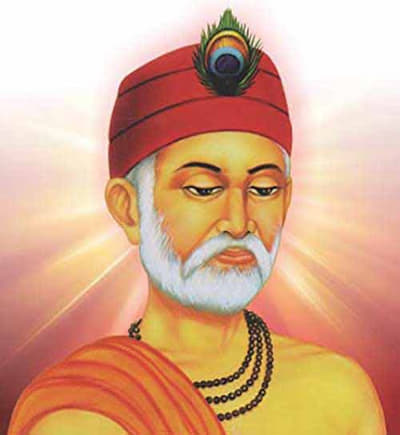
- He is one of the most revered Bhakti saints, and his teachings have influenced people from all walks of life.
- Through his views and conceptions about God, he sparked a massive reform movement.
- He was a Nirguna saint who publicly criticized major religions such as Hinduism and Islam for their traditional teachings.
- He had an inquisitive mind and learned a lot about Hinduism in Benaras.
- Ramananda initiated him into the deeper knowledge of Hindu and Muslim religious and philosophical principles, and he became conversant with Islamic teachings.
- He severely condemned idol worship, pilgrimages, ceremonies, and the caste system, particularly the practice of untouchability, and emphasized man's equality before God.
- Kabir's purpose was to preach a religion of love that would bring people of all castes and creeds together.
- He was well-versed in yogic techniques and believed that devotion to God was a powerful method of salvation. He exhorted his disciples to have a clean heart, free of harshness, deceit, dishonesty, and insincerity, in order to be saved.
- For actual understanding, he did not consider asceticism or book knowledge to be important. He also did not believe it was necessary to give up a householder's life in order to live a saintly life.
- Kabir's goal was to bring Hindus and Muslims together and promote peace between them.
- He described Hindus and Muslims as "pots of the same clay," emphasizing the intrinsic oneness of all religions. Rama and Allah, temple and mosque, were all the same to him.
- Kabir is the greatest mystic saint, and his devotees are known as Kabirpanthis.
- Some of his most significant students included Raidas (a tanner), Guru Nanak (a Khatri trader), and Dhanna (a Jat peasant).
- His writings are collected in the well-known book Bijak.
Poetry of Kabir
- Kabir's poems were written in a variety of dialects of Hindi, including Braj, Bhojpuri, and Awadhi.
- They cover a wide range of topics and encourage a passionate commitment to God.
- Kabir's lyrics were written in simple Hindi terms. The majority of his work dealt with dedication, mysticism, and discipline.
- Kabir Das, a famous mystic poet and one of India's top spiritual poets, has provided his philosophical thoughts to improve people's lives.
- People's attitudes toward kindness have shifted as a result of his theory of oneness with God and Karma as a true Dharma.
- Both Hindu Bhakti and Muslim Sufi concepts are fulfilled in his love and devotion to God.
- Kabir Bijak, Kabir Parachai, Sakhi Granth, Adi Granth (Sikh), and Kabir Granthawali(Rajasthan) are literary works featuring compositions credited to Kabir
Kabir Panth
- The Kabir Panth ("Path of Kabir"), a religious society that claims Kabir as its founder and is one of the Sant Mat sects, perpetuates Kabir's tradition.
- This society arose in various parts of India in the seventeenth and eighteenth centuries, centuries after Kabir's death.
- Kabir Panthis has an all-encompassing formula for Love, Humility, Compassion, and Unity-based on these basic ideas.
- A Bhakta is a Kabir Panthi layperson, while priests are addressed with the honorific title of Mahant.
- In Benares, there are two temples devoted to Kabir. One is kept by Hindus, while the other is maintained by Muslims.
- According to some researchers, this school is associated with Vaishnavism and has universalist overtones.
Conclusion
Kabir Das' writing style and language are both simple and elegant. His dohas, which are rich in meaning and significance, were written confidently and spontaneously by him. He penned his words from the depths of his soul. In his modest dohas and couplets, he has condensed the sense of the entire world. His words are both enlightening and encouraging.
| Other Relevant Links | |
|---|---|
| Indian Art and Culture | Bhakti Movement |
| Coins in Ancient and Medieval India | Cultural Institutions in India |
| Indian Theatre | Indian Festivals |
| Indian Puppetry | Indian Cinema |
FAQs
Question: Who was Kabir and what is he known for?
Answer: Kabir was a 15th-century Indian mystic poet and saint, known for his spiritual verses that emphasized devotion to a formless God, rejection of caste distinctions, and criticism of religious orthodoxy. He is considered one of the prominent figures of the Bhakti Movement.
Question: What is the central philosophy of Kabir’s teachings?
Answer: Kabir’s central philosophy was based on the unity of God, the equality of all human beings, and the rejection of ritualistic practices. He preached devotion to a formless God (Nirguna Bhakti) and emphasized moral conduct over religious orthodoxy.
Question: How did Kabir contribute to the Bhakti Movement?
Answer: Kabir’s poems and couplets, known as ‘Dohas,’ contributed significantly to the Bhakti Movement by promoting spiritual awakening among the masses. His teachings transcended religious boundaries, drawing followers from both Hindu and Muslim communities.
Question: What is the Kabir Panth, and who follows it?
Answer: The Kabir Panth is a religious community that follows the teachings of Kabir. Its followers, called Kabir Panthis, regard Kabir’s teachings as central to their spiritual life. The community is spread across India and Nepal and includes both Hindus and Muslims.
Question: In what languages did Kabir compose his poetry?
Answer: Kabir composed his poetry in a mix of languages, including Hindi, Avadhi, and Braj, which were accessible to the common people. His verses, primarily in the form of Dohas, are characterized by simplicity and deep philosophical insights.
MCQs
1. Kabir is best known for his association with which movement?
A) Sufi Movement
B) Bhakti Movement
C) Reform Movement
D) Jain Movement
Answer: B See the Explanation
Explanation: Kabir is most closely associated with the Bhakti Movement, a devotional movement that emphasized love and devotion to God while rejecting religious rituals and the caste system.
2. What form of God did Kabir advocate devotion to?
A) Saguna (God with form)
B) Nirguna (Formless God)
C) Polytheistic Gods
D) None of the above
Answer: B See the Explanation
Explanation: Kabir advocated devotion to Nirguna, or a formless God, rejecting idol worship and rituals associated with Saguna forms of God.
3. Which language did Kabir use to compose his famous couplets?
A) Sanskrit
B) Persian
C) Hindi, Avadhi, and Braj
D) Tamil
Answer: C See the Explanation
Explanation: Kabir composed his poetry in simple and accessible languages such as Hindi, Avadhi, and Braj, which resonated with the common people.
4. Kabir’s followers are called?
A) Kabir Panthis
B) Sufis
C) Jains
D) Bhaktas
Answer: A See the Explanation
Explanation: Kabir Panthis are the followers of Kabir's teachings. This community continues to practice his spiritual philosophies and teachings.
5. What did Kabir criticize in his teachings?
A) The Bhakti Movement
B) Religious orthodoxy and rituals
C) Nirguna Bhakti
D) Non-violence
Answer: B See the Explanation
Explanation: Kabir was critical of religious orthodoxy, rituals, and the caste system, and instead promoted a direct connection with God through devotion and good conduct.
GS Mains Questions and Answers
Q1: Analyze Kabir’s role in promoting social equality through the Bhakti Movement.
Answer: Kabir played a crucial role in promoting social equality through his teachings in the Bhakti Movement. He rejected the rigid caste system and religious rituals, advocating that all humans are equal in the eyes of God. Kabir’s poetry, particularly his ‘Dohas,’ reached a wide audience, crossing the boundaries of religion and caste. His emphasis on devotion to a formless God appealed to both Hindus and Muslims, further breaking social barriers. By focusing on moral behavior, spiritual devotion, and the intrinsic worth of every individual, Kabir’s teachings contributed to social cohesion and paved the way for future reform movements in India.
Q2: Discuss the philosophical significance of Kabir’s concept of Nirguna Bhakti in the Indian spiritual tradition.
Answer: Kabir’s concept of Nirguna Bhakti, or devotion to a formless and abstract God, holds profound philosophical significance in the Indian spiritual tradition. This idea contrasts with Saguna Bhakti, which involves devotion to a God with a form. Kabir’s Nirguna Bhakti emphasizes the inner spiritual experience over external rituals, idol worship, or pilgrimages. His teachings align with the Vedantic principle of an impersonal, ultimate reality (Brahman) and offer a path of self-purification, meditation, and ethical conduct. Kabir’s rejection of intermediaries, like priests, and his advocacy for personal devotion resonate with the core principles of individual spiritual autonomy and universalism.
Q3: How did Kabir’s teachings influence both Hinduism and Islam, and what were the challenges faced by his followers?
Answer: Kabir’s teachings had a profound impact on both Hinduism and Islam. His emphasis on Nirguna Bhakti appealed to Hindus dissatisfied with ritualism and caste hierarchies, while his monotheistic message resonated with the Sufi traditions in Islam. However, Kabir’s rejection of religious orthodoxy and institutionalized practices posed challenges for his followers. His insistence on moral behavior and equality often conflicted with the established norms of both religious communities. The Kabir Panth, which emerged after his death, faced challenges from conservative sections within both religions, as they were seen as dissenters. Despite these obstacles, Kabir’s legacy continues to thrive, transcending religious boundaries.
Previous Year Questions on Kabir
1. UPSC CSE Prelims 2017:
Question: Kabir was associated with which form of Bhakti?
A) Saguna Bhakti
B) Nirguna Bhakti
C) Advaita Vedanta
D) Sufi Mysticism
Answer: B
Explanation: Kabir is most closely associated with Nirguna Bhakti, advocating devotion to a formless, abstract God and rejecting idol worship.
2. UPSC CSE Mains 2020 (GS Paper 1):
Question: “Kabir’s teachings represented a bridge between Hinduism and Islam.” Elaborate with reference to his contributions to religious harmony in medieval India.
Answer: Kabir’s teachings transcended religious boundaries, fostering a sense of religious harmony between Hindus and Muslims. His emphasis on devotion to a formless God (Nirguna Bhakti) and criticism of rituals and dogma appealed to the common spiritual core of both religions. Kabir’s influence extended to both Bhakti and Sufi traditions, promoting the idea that true worship lies in one’s heart, not in external practices. His egalitarian philosophy helped bridge the gap between the two communities, encouraging mutual respect and tolerance in a time of religious and social division.
Download the PREPP App and attempt FREE IAS Exam Mock Tests and get complete study material!

Full Test - 04: UPSC CSE Prelims CSAT (Paper-II)
Full Test - 03: UPSC CSE Prelims CSAT (Paper-II)
UPSC CSE Prelims 2026 GS Paper 1 Question Paper (24-May-2026)
UPSC CSE Prelims 2026 CSAT Paper 2 Question Paper (24-May-2026)

17 February 2025 | The Hindu Must Read Articles | Current Affairs

16 February 2026 | The Hindu Must Read Articles | Current Affairs

13 February 2026 | The Hindu Must Read Articles | Current Affairs









Comments