Human Development - Geography Notes
Human development is the process of increasing people's freedoms and opportunities in order to improve their well-being. Human development focuses on improving people's lives rather than expecting everyone to be happier as a result of increased economic growth. This article will explain to you about Human Development which will be helpful in preparing Geography for the UPSC Civil service exam.
|
Table of Contents |
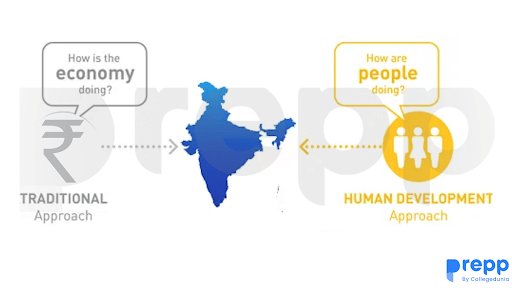
Human Development Approach
What exactly is Human Development?
- Human development is a process of enhancing people's choices, such as education, health care, income, and empowerment.
- It encompasses the full range of human choices, from a healthy physical environment to economic, social, and political liberty.
- As a result, expanding people's options is the most important aspect of human progress.
- People's choices may cover a wide range of topics, but living a long and healthy life, being educated, and having access to resources necessary for a decent standard of living, such as political freedom, guaranteed human rights, and personal self-respect, are all non-negotiable aspects of human development.
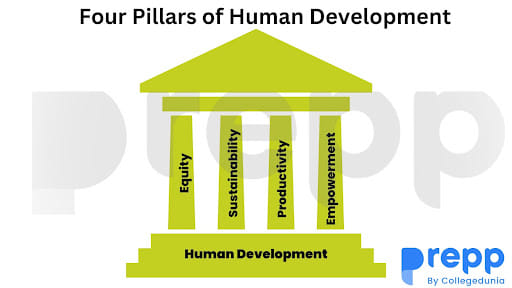
Four Pillars of Human Development
|
|
|
|---|---|
| Four Pillars of Development | Mortality rate and morbidity rate etc |
| Demographic Transition | Recent census |
| Demographics | Migration |
| Population Composition | Demographic dividend |
History of Human Development
- Human development is a concept that was first introduced by the economist from Pakistan, Mahbub ul Haqq.
- In the 1970s, Mahbub ul Haqq made the claim that current human progress was insufficient to account for the fundamental goal of development, which is enhancing people's lives.
- Human development, according to the United Nations Development Programme, is "expanding or increasing the richness of human life, followed by the simple richness of the economy in which humans live." This approach is centred on individuals, their opportunities, and their decisions.
- The primary objective of development is to create a setting where people can afford to lead fulfilling lives.
Concept of Growth Vs Development
- Growth simply means 'growing bigger,' whereas development means 'improving.'
- Growth refers to physical changes, whereas development refers to both physical and social or psychological changes.
- Growth is the gradual increase in one of the components of GDP: consumption, government spending, investment, and net exports.
- Growth of human capital, reductions in inequality, and structural changes that improve the population's quality of life are all examples of development.
Four Pillars of Human Development
Equity
- It refers to ensuring that all people have access to the same opportunities.
- People must have equal access to opportunities regardless of their gender, race, income, social class, or, in India's case, caste.
- However, this is not always the case, and it occurs in almost every society.
- For instance – It's fascinating to see which group accounts for the majority of school dropouts in any country.
- This should lead to a better understanding of why such behaviour occurs.
- In India, a large number of women and people from economically and socially disadvantaged backgrounds drop out of school.
- This demonstrates how a lack of access to knowledge limits the options available to these groups.
Sustainability
- It refers to the availability of opportunities remaining constant.
- To achieve long-term human development, each generation must have equal access to decision-making opportunities.
- Sustainable development necessitates the use of all environmental, financial, and human resources with the future in mind.
- If any of these resources are misused, future generations will have fewer opportunities.
- The importance of sending girls to school is an excellent example.
- If a community does not emphasise the importance of sending girls to school, these young women will miss out on many opportunities.
- Their career options will be limited, which will have an impact on other aspects of their lives.
- As a result, it is critical for each generation to ensure that future generations have access to choices and opportunities.
Productivity
- It refers to human labour productivity or productivity in terms of human work in this context.
- People's capabilities must be continually enhanced in order to maintain high levels of productivity.
- People are, in the end, a country's most valuable resource.
- As a result, efforts to improve their knowledge or provide better health facilities result in increased productivity.
Empowerment
- It refers to having the ability to make decisions.
- Increased freedom and capability to choose are the sources of such power.
- To empower people, good governance and people-centred policies are required.
- Empowerment of socially and economically marginalised groups is particularly important.
Approaches to Human Development
Basic Needs Approach
- This strategy was first advocated by the International Labour Organisation (ILO).
- Health, education, food, water supply, sanitation, and shelter were identified as the six basic needs.
- Individual choice is ignored, and the emphasis is instead placed on meeting the basic needs of specific groups.
Income Approach
- One of the oldest approaches to human development is this one.
- Human growth is thought to be linked to income. The idea is that a person's level of freedom is reflected in his or her earnings.
- The higher one's level of human development, the higher one's income.
Capability Approach
- Prof. Amartya Sen is associated with this approach.
- To achieve Economic Development Human capacities in the areas of health, education, and resource access are critical to human development.
- Amartya Sens capability approach is a development method that focuses on improving people's capabilities and thereby expanding their true freedoms.
- What counts most is the ability to perform efficiently, which goes well beyond the availability of commodities.
Welfare Approach
- Human beings are viewed as the beneficiaries or goals of all developmental efforts in this paradigm, which advocates for increased government spending on education, health, and basic needs.
- People are merely passive recipients rather than active participants.
- The government is solely responsible for increasing human development by increasing welfare spending.
Human Development Index
- Human Development Index (HDI) is a statistical tool that measures a country's overall accomplishment in social and economic dimensions.
- The United Nations Development Programme (UNDP) publishes the Human Development Index (HDI).
- The Human Development Index (HDI) combines indicators of life expectancy, education or access to knowledge, and income or standard of living to determine the level and changes in quality of life.
- The measure was created by two renowned economists from Pakistan and India, Mahbub ul Haq and Amartya Sen.
- It was developed as a supplement to GDP because it emphasises the importance of human development in the growth process.

Dimensions of Human Development Index
*To know more about this, click Human Development Index
Human Development Index And India
- India appears to have done a fantastic job of multiplying its GDP, but progress on the HDI front has been disappointing.
- With a population of over 1.20 billion people, India is ranked 130 out of 189 countries on the Human Development Index (HDI).
- With a composite HDI of 0.640, India is classified as a country with a medium level of human development.
- Low HDI scores are cause for concern, but some have expressed reservations about the approach as well as the indicators used to calculate the index values and rank the states/countries.
- As a result, if India is to achieve its goal of becoming a superpower, it will need to invest in reducing the burden of poverty on the poor.
Human Development Reports (HDR) in India
- Some Indian states have begun preparing sub-national HDRs in response to the Global HDRs and the human development paradigm introduced in the 8th Five Year Plan.
- In terms of area and population, India's major states are comparable to those of other countries.
- States are responsible for subjects such as education, health, and agriculture under the Indian constitution.
- State governments in India have been involved in the planning for economic and social development in their respective States since the 1950s.
- As a result, it's only natural that some state governments have started producing Human Development Reports on their own.
- The first State HDR was published in Madhya Pradesh in 1995.
- The first National Human Development Report was published in 2001 by the Planning Commission.
- It compares the human development status of India's states using approximately 70 development indicators for each state.
- The HDI and Gender-Equality Index (GEI),17 and HPI for the States of India are calculated, though the methodology used for computation of HDI differs slightly from the UNDP methodology.
- Kerala is ranked first with an HDI of 0.638 in 2001, and Punjab is ranked second with an HDI of 0.537, according to the National HDR 200118. With a score of 0.531, Tamil Nadu is ranked third.
- Bihar, with a score of 0.367, Assam, with a score of 0.386, and Uttar Pradesh, with a score of 0.388.19, round out the bottom three HDI states.
Challenges to Human Development Experienced by States
- One of the most difficult challenges for HD analysis at the district level is the lack of disaggregated data, particularly at the sub-district level.
- The new state of Chhattisgarh highlights a severe lack of resources at the sub district level, as well as HD disaggregated data, and a weak statistical capacity at the district level.
- Data on HD indicators is only available at the district/sub-district level, according to the State of Tamil Nadu, and a database at the basic unit level is needed.
- Furthermore, there are no poverty estimates at the sub-district level, as well as sex-disaggregated data on child mortality and nutritional indicators.
- Reorienting people and processes to human development is another challenge.
- The main challenge, according to West Bengal, is to change planners' attitudes from stereotype planning processes to reorient their focus on 'Homocentric' planning.
- Another issue for states is the apparent capacity constraint, particularly in terms of statistics collection and management.
Conclusion
It could be recommended that appropriate developments have failed to address issues such as social injustice, regional imbalances, and environmental degradation. On the contrary, it is widely regarded as the primary cause of social inequity, deterioration in the quality of life and human development, environmental crisis, and social unrest. As a result, it was thought to treat human development as a distinct issue, as opposed to the prevalent Western view of development, which sees development as a panacea for all ills, including human development, regional disparities, and environmental crises.
|
|
|
|---|---|
| Geography Notes | Human Geography |
| Human Resources | Human Settlements |
| Human Development | Neo - Determinism |
| Environmental Determinism | Population Composition |
| Possibilism | Economic Activities |
FAQs
Question: What is the Human Development Index (HDI)?
Answer: The Human Development Index (HDI) is a composite statistic used to rank countries based on their levels of human development. It evaluates three key dimensions: health (life expectancy at birth), education (mean years of schooling and expected years of schooling), and standard of living (Gross National Income per capita). The HDI provides a more comprehensive measure of development than economic indicators alone, highlighting the importance of human well-being and capabilities. Countries are classified into four tiers: very high human development, high human development, medium human development, and low human development, based on their HDI scores.
Question: Why is human development important?
Answer: Human development is crucial because it focuses on enhancing the quality of life for individuals rather than solely concentrating on economic growth. By prioritizing health, education, and equality, human development aims to reduce poverty and inequality, empower individuals, and foster sustainable progress. Improved health and education lead to a more skilled workforce, which can drive economic growth and innovation. Moreover, promoting human development helps create inclusive societies where all individuals have the opportunity to participate in decision-making processes and benefit from economic progress, ultimately contributing to a more stable and equitable world.
Question: What factors influence human development?
Answer: Several factors influence human development, including:
- Education: Access to quality education is vital for enhancing skills and capabilities, leading to better job opportunities and improved quality of life.
- Health Services: Availability of healthcare services, nutrition, and clean water is essential for maintaining health and well-being.
- Economic Resources: Economic growth and availability of resources can provide funding for social programs that enhance human development.
- Governance and Institutions: Strong governance and effective institutions can promote policies that support human rights, equality, and sustainable development.
- Social and Cultural Factors: Cultural values, gender equality, and social norms can impact individuals' access to education and healthcare, affecting overall human development.
Question: How can human development be measured besides HDI?
Answer: Besides the Human Development Index (HDI), human development can be measured using several other indicators, including:
- Multidimensional Poverty Index (MPI): This index assesses poverty based on multiple deprivations in health, education, and living standards.
- Gender Development Index (GDI): The GDI measures gender disparities in human development by comparing the HDI values of men and women.
- Gross National Happiness (GNH): GNH measures the collective happiness and well-being of a population, emphasizing mental well-being and cultural values.
- Quality of Life Index: This index considers factors such as environmental quality, safety, and access to services that impact individuals' overall quality of life.
- Human Development Reports: Published annually by UNDP, these reports provide comprehensive analyses of human development trends, challenges, and opportunities across countries.
Question: What are some challenges to achieving human development?
Answer: Achieving human development faces several challenges, including:
- Poverty: Persistent poverty limits access to education and healthcare, hindering human development efforts.
- Inequality: Economic and social inequalities can prevent marginalized groups from accessing opportunities and resources necessary for development.
- Conflict and Instability: Armed conflicts and political instability disrupt social services and hinder development efforts.
- Environmental Degradation: Environmental issues such as climate change can impact resources and living conditions, affecting health and economic opportunities.
- Governance Issues: Weak governance, corruption, and lack of accountability can impede effective implementation of development policies.
MCQs
1. What is the primary component of the Human Development Index (HDI)?
A) Economic Growth
B) Life Expectancy
C) Standard of Living
D) Social Equality
Answer: (B) See the Explanation
Explanation: The primary component of the HDI is life expectancy, which reflects the health dimension of human development.
2. Which of the following measures poverty in a multidimensional way?
A) Human Development Index
B) Gross Domestic Product
C) Multidimensional Poverty Index
D) Gender Development Index
Answer: (C) See the Explanation
Explanation: The Multidimensional Poverty Index (MPI) measures poverty by assessing multiple deprivations in health, education, and living standards.
3. What does the Gender Development Index (GDI) compare?
A) Economic growth between countries
B) HDI values of men and women
C) Life expectancy in different regions
D) Literacy rates across nations
Answer: (B) See the Explanation
Explanation: The GDI compares the HDI values of men and women to assess gender disparities in human development.
4. Which factor is NOT typically associated with human development?
A) Economic stability
B) Access to healthcare
C) Environmental degradation
D) Educational opportunities
Answer: (C) See the Explanation
Explanation: Environmental degradation is a challenge to human development but is not a factor positively associated with it.
5. The Human Development Index was developed by which organization?
A) World Bank
B) United Nations Development Programme (UNDP)
C) International Monetary Fund (IMF)
D) World Health Organization (WHO)
Answer: (B) See the Explanation
Explanation: The Human Development Index (HDI) was developed by the United Nations Development Programme (UNDP) to measure human development across countries.
GS Mains Questions and Model Answers
Q1: Evaluate the significance of human development as a measure of progress in a country.
Answer: Human development is a significant measure of progress as it goes beyond mere economic growth to encompass the overall well-being of individuals. It emphasizes the importance of health, education, and quality of life as key indicators of a nation's advancement. By focusing on human capabilities and empowerment, human development ensures that growth is inclusive and equitable, addressing issues of poverty and inequality. This approach fosters social cohesion and stability, as individuals are equipped with the skills and opportunities necessary to contribute to society. Consequently, human development serves as a holistic framework for assessing progress and guiding policy decisions that promote sustainable development.
Q2: Discuss the challenges faced in achieving human development in developing countries.
Answer: Developing countries face numerous challenges in achieving human development, including high levels of poverty, inadequate healthcare infrastructure, and limited access to quality education. Economic instability and political unrest can further hinder progress, as resources are diverted from development initiatives. Additionally, social inequalities, including gender disparities, can limit opportunities for marginalized groups. Environmental challenges, such as climate change and resource depletion, pose significant threats to sustainable development. Addressing these challenges requires comprehensive strategies that integrate economic, social, and environmental considerations to promote equitable growth and enhance human capabilities.
Q3: Analyze the role of education in promoting human development.
Answer: Education plays a pivotal role in promoting human development by enhancing individuals' skills, knowledge, and capabilities. Access to quality education empowers people to make informed decisions, improves their employment prospects, and fosters economic growth. Education also contributes to better health outcomes, as educated individuals are more likely to engage in healthy behaviors and seek medical care when needed. Furthermore, education promotes social cohesion by fostering tolerance, critical thinking, and civic engagement. In this context, investing in education is essential for achieving sustainable human development, as it lays the foundation for a more skilled and capable population.
Previous Year Questions on Human Development
1. UPSC CSE Prelims 2021:
Question: The Human Development Index (HDI) is designed to measure which of the following?
A) Economic growth
B) Quality of life
C) Political stability
D) Industrial output
Answer: (B)
Explanation: The Human Development Index (HDI) measures quality of life by evaluating health, education, and standard of living.
2. UPSC CSE Mains 2019 (GS Paper 1):
Question: "Discuss the factors that influence human development and their implications for policy-making."
Answer: Several factors influence human development, including education, health services, economic resources, and governance. Education enhances individual capabilities, while healthcare availability ensures well-being. Economic resources are crucial for funding social programs, and good governance promotes effective implementation of development policies. Understanding these factors is essential for policymakers to design targeted interventions that address barriers to human development. By focusing on these determinants, policymakers can foster sustainable growth and improve overall quality of life.
Download the PREPP App and attempt FREE IAS Exam Mock Tests and get complete study material!
UPSC IAS : CSAT - Mini Live Test

Live Test : UPSC CSE Prelims CSAT (Paper-II) (Oct 20 - 23)
Full Test - 04: UPSC CSE Prelims CSAT (Paper-II)
Full Test - 03: UPSC CSE Prelims CSAT (Paper-II)
UPSC CSE Prelims 2026 GS Paper 1 Question Paper (24-May-2026)
UPSC CSE Prelims 2026 CSAT Paper 2 Question Paper (24-May-2026)

17 February 2025 | The Hindu Must Read Articles | Current Affairs

16 February 2026 | The Hindu Must Read Articles | Current Affairs

13 February 2026 | The Hindu Must Read Articles | Current Affairs









Comments