Environmental Determinism - Geography Notes
Environmental determinism is one of three human geography methods to explain the connection between Humans and the Environment. The study of how the physical environment predisposes societies and states to specific growth trajectories is known as environmental determinism. The concept, which can be traced back to Greek and Arabic thinkers, is that the environment influences the path of human growth across multiple areas and dimensions spanning from the individual to nations. This article will explain to you about Environmental determinism which will be helpful in Geography preparation.
|
Table of Contents |
Environmental Determinism - Definition
- Environmental determinism is the view that the environment, particularly its physical elements such as terrain and temperature, dictates patterns of human culture and social evolution.
- Environmental determinists think that ecological, climatic, and geographical variables alone are accountable for human societies and individual choices. Furthermore, social circumstances have little influence on cultural growth.
- Environmental determinism, also known as climatic determinism or geographical determinism, is based on the idea that people are influenced by their surroundings, particularly the weather.
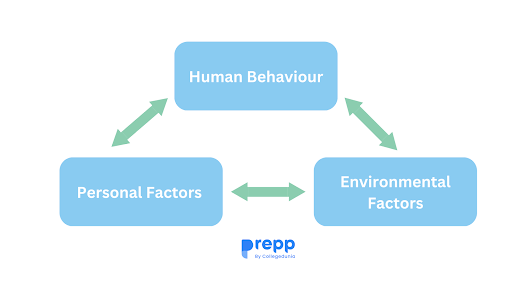
- These physical geographies shape human behaviour, the presence of various types of communities, and so on.
- The primary argument of environmental determinism is that physical features of an area, such as temperature, have a significant influence on the psychological perspective of its people.
- These various perspectives then spread throughout a community, helping to determine a society's general behaviour and culture.
|
|
|
|---|---|
| Possibilism | Neo - Determinism |
| Human Resources | Migration |
Environmental Determinism - Origin of the Concept
- The concept of environmental determinism dates back to the 15th century, when Greek and Arabic thinkers thought that the environment shaped human growth in various areas.
- Plato and Aristotle believed that the climate affected and created Greek civilisations, and that climatic variables were accountable for human growth.
- Greek geographers expanded on this idea, proposing that the differences in skin tone are also caused by environmental factors.
- The idea acquired popularity in the nineteenth and twentieth centuries. With his discipline theory, Friedrich Ratzel, a German cartographer, saved this idea.
- In 1859, Charles Darwin's Origin of Species followed and presented that the growth of a person was primarily affected by evolutionary biology.
- Geographers think that physical aspects of the surroundings affect a person's psychological behaviour.
- The presumption is that people living in tropical areas are lazy because of the weather, which makes life easier and less evolved than people living in higher latitudes.
Environmental Determinism - Characteristics
- Environmental determinism is characterised by climatic, ecological, and spatial variables.
- These various variables are said to have an impact on human aspects in society. They are as follows:
- Economic Development - It refers to a community's fiscal growth.
- Cultural development - It occurs when a community has a diverse range of cultural pursuits. The more varied the activities, the greater the cultural growth within civilization.
- Societal development - The quality of living in a community is used to assess societal development. As a result, if a community's quality of living is high, the community's social growth is also high.
Environmental Determinism - Examples
- Climate, according to environmental or climatic determinism, can influence civilization as a whole. Individuals' psychological actions and the culture of the complete community can be influenced by the physical surroundings.
- Here are some instances of environmental determinism:
- Jamaicans in the tropical environment have a sluggish settlement as a result of the climatic impact. People in the Netherlands live in a distinct climate, so they are more dedicated and have superior work standards.
- According to Max Weber, an economist, the importance of an economy for the motive of a society's cultural characteristics and economic growth is critical.
- Mongolians evolved an aggressive mindset as a result of the harsh environment and scarcity of resources in Mangole.
- People who live in sweltering, humid, and harsh climes are indolent, inept, fearful, and distrustful.
- Some environmental variables that affect environmental determinism are the types of landscapes such as mountains, plains, and so on, as well as river systems such as twisting or fast-flowing rivers vs. wide or slow-flowing rivers.
- Climate determinism is demonstrated by environmental variables such as world climate, regional climate, or local climate.
- It is thought that each result has a main cause, or that something always originates from a cause; for example, the sun's presence is due to the cause of a nuclear reaction.
Difference between Environmental Determinism and Environmental Possibilism
| Environmental Determinism | Environmental Possibilism |
|---|---|
| It refers to the idea that physical elements can influence a person's behaviour and society. | It refers to the idea that humans can now adapt to their surroundings based on their needs; however, physical variables limit human actions to some degree. |
| People relied on natural variables and resided in temperate climates. | People gained independence from nature and started to choose and conduct tasks on their own terms. |
| This idea was popularised by Greek and Roman academics. | Vidal de la Blanche and Lucien Febvre were the scholars accountable for advancing possibilism. |
| Example: climatic and physical obstacles that affect society, such as deserts, mountains, and so on. | Example: Humans fight the environment by creating roadways or extreme communities in familiar circumstances. |
Criticism of Environmental Determinism
- Humans were deemed inert animals by environmental determinism, but humans are not passive animals; they can make and alter their natural surroundings.
- The following is an example of how humans alter the natural world.
- Dam construction.
- River linking.
- Artificial Raining.
- Green Revolution.
- Soilless cultivation, also known as hydroculture.
- Agriculture in a greenhouse.
- According to environment determinism, the environment is the sole determinant of human culture/behaviour, but this is not the case. Two ethnic/racial groups can coexist in the same area and environment.
- For example, despite having virtually identical temperature and environmental circumstances, northeastern India is home to a diverse range of ethnic groups.
- The same environment can signify various things to different people, and it is up to them how they use it.
- Examples: The locations and climates of Israel and Jordan are the same, but Israel is more evolved due to invention and people's views, whereas Jordan is underdeveloped.
- Natural and natural resources are limited in Japan, but they are being exploited.
- Africa is endowed with abundant natural wealth, but it is impoverished.
|
|
|
|---|---|
| Geography Notes | Human Geography |
| Human Development | Human Settlements |
| Agglomeration Economies | Economic Activities |
Conclusion
The idea of environmental determinism states that physical variables decide and affect a person's economic, political, and social development and growth. A person's psychic and societal conduct is influenced by ecological, regional, and social factors. Environmental factors such as river system classification, landforms, global temperature, regional climate, and local climate are instances of environmental determinism. Through the influence of physical forces, this idea gives birth to the social and cultural growth of individuals. Simultaneously, possibilism is the idea that enables humans to utilise their tangible surroundings for their own benefit.
FAQs
Question: What is Environmental Determinism?
Answer: Environmental Determinism is a geographical theory that suggests human behavior, culture, and societal development are heavily influenced or determined by the physical environment, particularly climate and geography.
Question: Who were the major proponents of Environmental Determinism?
Answer: Key proponents include Ellsworth Huntington, Friedrich Ratzel, and Ellen Churchill Semple, who argued that climatic and geographic factors shape human societies and development.
Question: Why is Environmental Determinism criticized?
Answer: Environmental Determinism is criticized for oversimplifying human behavior, ignoring cultural and social influences, and justifying colonialism by implying that certain regions are naturally predisposed to be "less developed."
Question: How is Environmental Determinism different from Possibilism?
Answer: While Environmental Determinism suggests the environment dictates human actions, Possibilism proposes that humans can adapt and modify their environment through cultural and technological innovations.
Question: What are examples of Environmental Determinism in history?
Answer: Examples include the theory that tropical climates promote laziness or that the mountainous terrain of Greece led to the development of city-states due to isolation.
MCQs
1. Environmental Determinism primarily focuses on:
A) Cultural adaptations
B) Human control over nature
C) Influence of the physical environment on humans
D) Economic factors
Answer: (C) See the Explanation
Explanation: Environmental Determinism emphasizes the impact of physical and environmental factors on human behavior and societal development.
2. Which of the following thinkers is associated with Environmental Determinism?
A) Carl Sauer
B) Ellen Churchill Semple
C) Vidal de la Blache
D) Paul Vidal
Answer: (B) See the Explanation
Explanation: Ellen Churchill Semple was a key proponent of Environmental Determinism and believed that the physical environment shapes human societies.
3. A major criticism of Environmental Determinism is:
A) It lacks historical examples
B) It ignores environmental factors
C) It oversimplifies human-environment relationships
D) It supports cultural diversity
Answer: (C) See the Explanation
Explanation: Environmental Determinism is criticized for oversimplifying complex interactions between culture, society, and environment, often overlooking social and cultural factors.
4. Which concept argues that humans can overcome environmental constraints?
A) Environmental Determinism
B) Possibilism
C) Sustainable Development
D) Neodeterminism
Answer: (B) See the Explanation
Explanation: Possibilism suggests that humans have the capability to adapt to or modify the environment using technology and culture, unlike the rigid perspective of Environmental Determinism.
5. Which of these is an example of Environmental Determinism?
A) Urbanization
B) Technological innovations
C) Harsh climate causing lower productivity
D) Industrial development
Answer: (C) See the Explanation
Explanation: Environmental Determinism argues that factors like climate can limit or determine productivity, illustrating how environment shapes human activities.
GS Mains Questions and Model Answers
Q1: Discuss the concept of Environmental Determinism and its influence on geographical thought. How has it shaped the study of human-environment interactions?
Answer: Environmental Determinism asserts that physical geography shapes human societies, behaviors, and development, impacting early geographical thought by emphasizing environment's dominance over human agency. Prominent during the early 20th century, it shaped studies by linking environment to societal characteristics. Although widely criticized for ignoring cultural factors, Environmental Determinism laid the groundwork for modern geography’s focus on human-environment interactions and spurred alternative theories like Possibilism, fostering nuanced understanding of adaptability in diverse settings.
Q2: Analyze the criticisms of Environmental Determinism and explain how it was replaced by Possibilism. What are the main differences between the two concepts?
Answer: Critics argue Environmental Determinism oversimplifies human actions, promotes determinism, and justifies inequality, as it attributes societal differences to environment alone. This led to the rise of Possibilism, which highlights human agency, cultural innovation, and adaptation. Unlike Determinism, Possibilism sees the environment as one factor among many, allowing flexibility in human response. This shift marked a critical evolution in geography, valuing human capability over rigid environmental constraints and fostering a balanced view on nature and culture.
Q3: Evaluate the legacy of Environmental Determinism in contemporary geography. How has modern geography addressed the limitations of this concept?
Answer: Environmental Determinism’s legacy persists in the study of human adaptation to environments, but modern geography addresses its limitations through concepts like human-environment interaction, cultural ecology, and sustainability. By acknowledging human agency, contemporary geography emphasizes adaptability and innovation, utilizing data to understand diverse cultural practices. While Determinism laid the groundwork for environmental geography, modern approaches integrate socio-economic and technological factors, offering a comprehensive perspective on how environments and societies influence each other.
Previous Year Questions on Environmental Determinism
1. UPSC CSE Prelims 2021:
Question: Environmental Determinism is primarily associated with:
A) Economic theories
B) Human adaptation
C) Physical geography shaping societies
D) Political ideology
Answer: (C)
Explanation: Environmental Determinism suggests that physical geographic factors, like climate and terrain, directly shape human societies, determining their cultural and social development.
2. UPSC CSE Mains 2020 (GS Paper 1):
Question: "Critically examine Environmental Determinism and discuss its relevance in contemporary geographical studies."
Answer: Environmental Determinism linked environmental conditions with societal traits, but its deterministic nature is criticized for oversimplifying human responses. Modern geography sees it as a foundation but focuses on interactions and adaptation, making it a limited but influential perspective that shaped understanding of environment-society relations.
Download the PREPP App and attempt FREE IAS Exam Mock Tests and get complete study material!
Live Test : UPSC IAS : GS - Modern History - Subject Knowledge Test

Live Test : UPSC CSE Prelims CSAT (Paper-II) (Oct 14 - 17)
Full Test - 04: UPSC CSE Prelims CSAT (Paper-II)
Full Test - 03: UPSC CSE Prelims CSAT (Paper-II)
UPSC CSE Prelims 2026 GS Paper 1 Question Paper (24-May-2026)
UPSC CSE Prelims 2026 CSAT Paper 2 Question Paper (24-May-2026)

17 February 2025 | The Hindu Must Read Articles | Current Affairs

16 February 2026 | The Hindu Must Read Articles | Current Affairs

13 February 2026 | The Hindu Must Read Articles | Current Affairs









Comments