An Under-Discussed Facet Of Colonial History
Relevance: Prelims: GS2 - Effect of policies and politics of developed and developing countries on India’s interests, Indian diaspora.
(Source: The Hindu, 11/09/2023)
Click here for Daily Current Affairs
Why in the news?
- This article discusses the practice of indentured labor under British colonial rule and the conditions faced by these laborers.
- The Plantation Tamils of Sri Lanka who were taken by the British to work on their plantations since the 19th century still suffer from a lack of inclusion, housing, and rights.
Table of Contents
- How did the British colonial project affect the colonies and their people?
- A new form of bondage
- How did the indentured labor suffer?
- Case study: Sri Lankan tea and the Indian Tamils
- Transfer of Tamils from India to Sri Lanka
- Sufferings of the Plantation Tamils
- Identity and Integration
- Conclusion
- FAQs
- MCQs
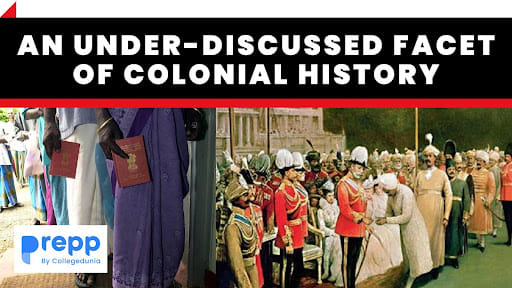
How did the British colonial project affect the colonies and their people?
- The British imperial project began in the form of licensed looting in order to fulfill crude capitalistic goals.
- To this end, Britain drained its colonies of their wealth, resources, economic strengths, and political freedom.
- Consider India for example, the local textile industry was destroyed in order to promote the Britain-based textile industry, leaving millions unemployed.
- Farmers were pushed into a vicious cycle of poverty and debt after being forced into opium cultivation.
- This resulted in the colonies being transformed from thriving and wealthy territories to desolate and poor colonies under imperial subjugation.
- Consequently, abject poverty, landlessness, unemployment, and hunger affected people in these colonies.
A new form of bondage
- Around the same time as the British domination over India, Europe began to experience a new wave of liberal humanism.
- Liberal humanism was a philosophical and literary movement that recognized the value of the human being as an individual and his right to liberty and happiness.
- Europeans began to see slavery as reprehensible and began to ban it in their colonies.
- However, slavery was replaced by another form of bonded labor which was known as “indentured labor”.
- Indentured labor was necessary as the British colonial economy was heavily dependent on slaves for labor and following the Abolition, the colonies were affected by a labor crisis.
- There was a huge demand for labor in the plantations and infrastructure projects in British colonies such as the Caribbean, Fiji, Réunion, Natal, Malaysia, Singapore, and Sri Lanka.
- Indians were sent to these colonies as indentured labor, often by force and deceit, to meet the demand.
How did the indentured labor suffer?
- These Indians were discriminated against and provided little to no wages and dilapidated housing.
- Furthermore, they arrived at the colonies suffering under huge debt as they had to pay for their own fares until 1922.
- On arrival, they were confined to their workplaces i.e. plantations and construction sites.
- In Sri Lanka, they were forced to trek from the coast to the Central highlands which resulted in the deaths of many while those that survived were subjected to dismal living conditions.
- They were deprived of access to sanitation, running water, medical facilities, schools, and housing.
- These oppressive conditions led to the indentured labor system being described as a “new kind of slavery” by British historian Hugh Tinker.
Case study: Sri Lankan tea and the Indian Tamils
- Initially, Sri Lanka was dominated by coffee plantations. However, a blight caused by fungal disease led to the crop disappearing from the island country during the 1870s.
- Coffee was replaced by tea which was more fertile and profitable. Therefore, the number of tea plantations in the country rose.
Transfer of Tamils from India to Sri Lanka:
- While coffee requires three workers for every 10 hectares of cultivation, tea requires eight workers for the same. Moreover, tea requires intensive and perennial labor for its cultivation.
- Therefore, there was an increase in demand for labor at Sri Lankan plantations which was compounded by the abolition of slavery which eliminated an easy and cheap source of labor.
- In order to meet this shortfall, British colonial authorities began to transfer Tamilians to Sri Lanka to work at the tea plantations.
Sufferings of the Plantation Tamils
- Discrimination and segregation: The Plantation Tamils (Malaiyaha Tamils) were denied even their basic rights and services by the British and were subjected to discrimination.
- Although they developed a distinct Sri Lankan identity, they were deemed foreigners by colonial practices and policies.
- They were called “Indian Tamils” by the colonial state and classified as “aliens and resident strangers” in order to prevent their assimilation within the larger Sri Lankan society.
- Post-Independence: These sufferings continued even after Sri Lankan independence in 1948.
- The Citizenship Act of 1948 rendered them stateless.
- The majority of the Plantation Tamils were denied a fair wage and basic rights to privacy including basic sanitation facilities.
- They were constantly displaced and disenfranchised even under a sovereign and independent regime.
- Exploitation in the labor market: They were exploited by the prevalent labor system in Sri Lanka which was dominated by sub-contractors called kanganies, labor recruiters, and overseers.
- The recruited worker forfeited his autonomy to the kangani, who accompanied him on the voyage to the plantations, and acted as the intermediary between him and estate managers.
- Unlike indentured workers who were technically entitled to demand passage home after the end of the indenture period, these plantation workers lacked basic rights even after the end of their service period.
- Their contracts with the kanganies were vague and they were forced into vicious and unrepeatable debt.
- They were also restricted from buying land and building houses as land-holding rights were exclusive to those domiciled in Ceylon according to colonial law.
Identity and Integration
- The Plantation Tamils created an identity anchored in Tamil linguistic, literary traditions, values, and ideals in Sri Lanka.
- They preferred their linguistic and regional identities to the pan-Indian nationality and attempted to integrate themselves within mainstream Sri Lankan society.
- However, they faced numerous challenges in the form of legislation (Citizenship Act), social stigma, and executive action which ultimately left them stateless.
- Over time they have through democratic action obtained the right to vote and influenced the government to divide plantations in a way that makes the laborers the owners of the land.
- They have undertaken a subaltern struggle for equality and self-determination which reaffirms their identity as descendants of those dispatched to Sri Lanka from India and equal and prominent citizens of Sri Lanka.
Conclusion
- Post-colonial countries must take effective steps to de-colonize themselves from the practices, laws, and attitudes of the imperial era instead of continuing with the systematically oppressive practices of the colonial era.
- Decolonization is key to Sri Lanka’s economic and social revival in order to build its post-colonial, inclusive identity and complete the nation-building process by integrating all its communities as one.
To know more about the Sri Lankan financial crisis and Malaiyaha Tamils, click the link
(*Click this link to read prelims specific weekly current affairs articles)
FAQs
Question: What is abolitionism?
Answer:
Abolitionism, or the abolitionist movement, was the movement that aimed to end slavery and liberate enslaved people. It was started in 1830 and demanded the immediate abolition of slavery all over the United States of America. Although France was the first country to abolish slavery in 1315, it continued to be used in its colonies.
Question: What is nation-building?
Answer:
Nation-building is the construction of a national identity using the power of the state. It aims to unify the people of the state and develop its underlying institutions and community in order to ensure its long-term political stability and viability.
UPSC Mains Practice Question:
|
MCQs
Question: With reference to the British colonial rule in India, consider the following statements : [2019-I]
- Mahatma Gandhi was instrumental in the abolition of the system of 'indentured labor'.
- In Lord Chelmsford's War Conference', Mahatma Gandhi did not support the resolution on recruiting Indians for World War.
- Consequent upon the breaking of Salt Law by Indian people, the Indian National Congress was declared illegal by the colonial rulers.
Which of the statements given above are correct?
(a) 1 and 2 only
(b) 1 and 3 only
(c) 2 and 3 only
(d) 1, 2 and 3
Answer: (b) See the Explanation
- Mahatma Gandhi was instrumental in the abolition of the indentured labor system throughout the British Empire. Hence statement 1 is correct.
- Mahatma Gandhi supported the resolution on the recruitment of Indians for World War In Lord Chelmsford's War Conference.
- He believed that this would help build trust with the Empire and thus help India attain swaraj. Hence statement 2 is incorrect.
- As a result of Indians breaking the Salt Law in support of Gandhiji’s Salt March, the British administration declared the Indian National Congress illegal in January 1932. Hence statement 3 is correct.
Therefore, option (b) is the correct answer.
Question: Consider the following statements: (UPSC 2020)
- The value of Indo-Sri Lanka trade has consistently increased in the last decade.
- “Textile and textile articles” constitute an important item of the trade between India and Bangladesh.
- In the last five years, Nepal has been the largest trading partner of India in South Asia.
Which of the statements given above is/are correct?
(a) 1 and 2 only
(b) 2 only
(c) 3 only
(d) 1, 2 and 3
Answer: (b) See the Explanation
- India’s export to Sri Lanka was >34000 crore in 2015, and >26000 crore in 2016, and >28000 crore in 2017. This represents a zigzag increase. Hence statement one is incorrect.
- Textiles contributed 31.3% of Indian exports to Bangladesh in 2016-17. The other prominent products of export were engineering products (around 25% of exports), Chemical products (9% of exports), and vegetable products such as fresh vegetables (8% of exports). Hence statement 2 is correct.
- India’s trade relations with South Asian countries account for less than 4% of its global trade since the 1980s. Hence statement 3 is incorrect.
Therefore, option (b) is the correct answer.
Download the PREPP App and attempt FREE IAS Exam Mock Tests and get complete study material!

Full Test - 04: UPSC CSE Prelims CSAT (Paper-II)
Full Test - 03: UPSC CSE Prelims CSAT (Paper-II)
UPSC CSE Prelims 2026 GS Paper 1 Question Paper (24-May-2026)
UPSC CSE Prelims 2026 CSAT Paper 2 Question Paper (24-May-2026)

17 February 2025 | The Hindu Must Read Articles | Current Affairs

16 February 2026 | The Hindu Must Read Articles | Current Affairs

13 February 2026 | The Hindu Must Read Articles | Current Affairs









Comments