
Which one of the following statement is NOT correct?
The process of heat transfer from a body at higher temperature to a body at lower temperature without heating the space between them is known as radiation
Understanding Heat Transfer Modes and Heat Capacity
This question asks us to identify the statement that is NOT correct among the given options related to heat transfer and heat capacity. Let's carefully examine each statement to determine its accuracy based on the principles of physics.
Analyzing Statement 1: Conduction in Solids
The first statement says: "In the conduction mode of transference of heat, the molecules of solid pass heat from one molecule to another without moving from their positions".
- Conduction is a primary mode of heat transfer, especially prevalent in solids.
- In solids, particles (atoms or molecules) are held in relatively fixed positions and vibrate about their mean positions.
- When one part of a solid is heated, its particles vibrate more vigorously.
- These vibrations are transferred to neighboring particles through inter-particle forces, passing the thermal energy along the material.
- Crucially, the particles themselves do not move from their positions across significant distances during conduction; only the vibrational energy is transferred.
Based on this understanding, Statement 1 provides an accurate description of heat conduction in solids. The heat energy is transferred through vibrations without bulk movement of the material's particles.
Analyzing Statement 2: Definition of Heat Capacity
The second statement says: "The amount of the heat required to raise the temperature of a substance is called its heat capacity".
- Heat capacity is a physical property of a substance.
- It is defined as the amount of heat energy required to raise the temperature of a given amount of the substance by one degree Celsius (or Kelvin).
- The formula for heat capacity (C) is often given as \(C = \frac{Q}{\Delta T}\), where \(Q\) is the heat added and \(\Delta T\) is the change in temperature.
Statement 2 aligns perfectly with the standard definition of heat capacity. It correctly describes it as the amount of heat needed to cause a specific temperature change.
Analyzing Statement 3: Convection in Liquids and Gases
The third statement says: "The process of heat transfer in liquid and gases is through convection mode".
- Convection is a major mode of heat transfer in fluids, which include liquids and gases.
- Convection involves the movement of the fluid itself, carrying thermal energy from one place to another.
- When a part of the fluid is heated, it often becomes less dense and rises, while cooler, denser fluid sinks.
- This circulation of the fluid creates convection currents, transferring heat throughout the volume.
- While conduction also occurs in fluids, convection is typically the dominant mode of heat transfer in these states of matter, especially in situations involving significant temperature differences and fluid movement.
Statement 3 accurately states that convection is the process of heat transfer in liquids and gases. This mode relies on the bulk motion of the fluid, unlike conduction.
Analyzing Statement 4: Radiation Heat Transfer
The fourth statement says: "The process of heat transfer from a body at higher temperature to a body at lower temperature without heating the space between them is known as radiation".
- Radiation is a mode of heat transfer that does not require a medium.
- Heat is transferred via electromagnetic waves (such as infrared radiation).
- These waves can travel through a vacuum (like the space between the Sun and Earth) or through transparent or semi-transparent media (like air or glass).
- Radiation is emitted by all objects above absolute zero temperature.
- The energy is carried by the waves and is absorbed by the receiving object, increasing its thermal energy.
- The statement says radiation transfers heat "without heating the space between them". While radiation itself passes through space (especially a vacuum) without heating *it* directly, if there is a medium present (like air), that medium can absorb some of the radiation and get heated. For example, sunlight heats the Earth's atmosphere to some extent as it passes through.
Although radiation does not *require* a medium and can pass through empty space without heating it, saying it transfers heat "without heating the space between them" is not universally true if a medium is present and absorbs radiation. The statement might be considered less precise or potentially incorrect compared to the other statements, which are direct and accurate definitions/descriptions.
Identifying the Incorrect Statement
Comparing the statements:
- Statement 1 on conduction in solids is correct.
- Statement 2 on heat capacity definition is correct.
- Statement 3 on convection in fluids is correct.
- Statement 4 on radiation is mostly correct in principle (no medium required), but the phrase "without heating the space between them" is not always true if an absorbing medium is present.
Given the options and the common understanding of these concepts, Statement 4 is the one that is NOT universally correct due to the potential for the intervening space (if containing an absorbing medium) to be heated by the radiation passing through it.
| Statement | Concept | Accuracy | Reasoning |
|---|---|---|---|
| 1 | Conduction in Solids | Correct | Heat transfer via vibrations, particles don't move significantly. |
| 2 | Heat Capacity | Correct | Definition of heat required to raise temperature. |
| 3 | Convection in Fluids | Correct | Heat transfer via bulk movement of liquid or gas. |
| 4 | Radiation | Not Correct (in all cases) | Radiation can heat the space between objects if an absorbing medium is present. |
Therefore, the statement that is NOT correct is the one describing radiation as transferring heat without heating the space between bodies.
Revision Table: Heat Transfer & Heat Capacity
| Term | Definition / Description | Medium Required? | Primary State(s) | Mechanism |
|---|---|---|---|---|
| Conduction | Transfer of heat through direct contact or vibration of particles. | Yes | Solids (most common), also liquids and gases | Vibrations passed between adjacent particles. |
| Convection | Transfer of heat through the bulk movement of a fluid (liquid or gas). | Yes (Fluid) | Liquids and Gases | Movement of warmer, less dense fluid rising and cooler, denser fluid sinking (convection currents). |
| Radiation | Transfer of heat via electromagnetic waves. | No | Vacuum, transparent/semi-transparent media | Emission and absorption of electromagnetic radiation. |
| Heat Capacity | Amount of heat energy required to raise the temperature of a substance by 1 degree Celsius (or Kelvin). | N/A (Property of substance) | All states of matter | Measure of how much heat energy a substance can store per unit temperature change. |
Additional Information on Heat Transfer Concepts
Understanding heat transfer modes is fundamental in thermodynamics and many practical applications. Here are some extra points:
- Thermal Conductivity: Materials differ in how well they conduct heat. Good conductors (like metals) transfer heat efficiently via conduction, while insulators (like wood or plastic) are poor conductors.
- Specific Heat Capacity: Often, heat capacity is given per unit mass (specific heat capacity, \(c\), in J/kg·K) or per mole (molar heat capacity). The relationship is \(Q = mc\Delta T\), where \(m\) is the mass.
- Factors Affecting Radiation: The rate of heat transfer by radiation depends on the temperature, surface area, and emissivity (how effectively a surface emits thermal radiation) of the object. Hotter objects radiate much more energy.
- Examples:
- Conduction: Holding a hot metal rod, heat transferring through a wall.
- Convection: Boiling water (currents transfer heat), heating a room with a radiator, wind.
- Radiation: Feeling warmth from the sun, heat from a fireplace, a light bulb emitting heat.
- In many real-world scenarios, heat transfer occurs through a combination of these modes. For example, a pot on a stove heats water via conduction (stove to pot), conduction and convection (within the water), and radiation (from the stove/pot to the surroundings).
Being able to distinguish between conduction, convection, and radiation, and understanding heat capacity, is crucial for solving problems in heat transfer.
Similar Questions
A Kelvin thermometer and a Fahrenheit thermometer both give the same reading for a certain sample. What would be the corresponding reading in a Celsius thermometer?
A pressure cooker cooks food faster by
The absolute zero temperature is 0 Kelvin. In °C unit, which one of the following is the absolute zero temperature?
The coefficient of areal expansion of a material is 1.6 × 10 -5 K-1 . Which one of the following gives the value of coefficient of volume expansion of this material?
The temperature of a place on one sunny day is 113 in Fahrenheit scale. The Kelvin scale reading of this temperature will be
Radiations coming from the Sun are mostly in the form of
A solid is melted and allowed to cool and solidify again. The temperature is measured at equal interval of time. The graph below shows the change of temperature with time.
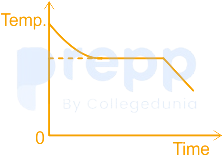
The part of the curve that is practically horizontal is due to
Perspiration cools the body because
In which of the following phenomena do heat waves travel along a straight line with the speed of light?
Which one of the following statement with regard to expansion of materials due to heating is not correct?
Important Questions from Temperature and heat
A Kelvin thermometer and a Fahrenheit thermometer both give the same reading for a certain sample. What would be the corresponding reading in a Celsius thermometer?
Which of the following gases has highest value of critical temperature ?
- For carbon dioxide ($CO_2$), which is commonly used in industrial processes as a supercritical fluid, what is its critical temperature? Above this temperature, $CO_2$ cannot be liquefied regardless of how much pressure is applied, existing only as a supercritical fluid.
- Where does the heat energy go when the solid melts but its temperature remains the same?
A pressure cooker cooks food faster by



