
In which of the following phenomena do heat waves travel along a straight line with the speed of light?
Thermal radiation
Understanding Heat Transfer Phenomena
Heat transfer is the process by which thermal energy moves from a region of higher temperature to a region of lower temperature. There are three primary modes of heat transfer: thermal conduction, thermal convection, and thermal radiation.
Analyzing the Modes of Heat Transfer
Let's examine each option presented in the question:
- Thermal Conduction: This mode of heat transfer occurs through direct contact between particles (like atoms or molecules). When a hotter object touches a colder object, the faster-moving particles in the hotter object collide with the slower-moving particles in the colder object, transferring kinetic energy. Conduction requires a material medium (solid, liquid, or gas) for heat to flow. Heat transfer via conduction does not involve waves traveling at the speed of light.
- Thermal Convection: This mode of heat transfer takes place through the movement of fluids (liquids or gases). When a fluid is heated, it becomes less dense and rises, while cooler, denser fluid sinks. This creates a flow or current within the fluid that transfers heat. Convection also requires a material medium (a fluid). Heat transfer via convection does not involve waves traveling at the speed of light.
- Thermal Radiation: This mode of heat transfer involves the emission and absorption of electromagnetic waves. All objects above absolute zero temperature emit thermal radiation. These electromagnetic waves, which include infrared radiation, visible light, and others, can travel through a vacuum (like space) and in a straight line at the speed of light (approximately \(3 \times 10^8\) meters per second in a vacuum). When these waves are absorbed by an object, they transfer thermal energy to it. This mechanism perfectly matches the description in the question.
- Both, thermal conduction and radiation: As explained above, thermal conduction does not involve waves traveling at the speed of light. Only thermal radiation does. Therefore, this option is incorrect.
Comparing Heat Transfer Modes
Here's a brief comparison of the three modes of heat transfer:
| Mode | Mechanism | Medium Required? | Speed |
|---|---|---|---|
| Thermal Conduction | Particle collision | Yes (Solid, Liquid, Gas) | Relatively slow |
| Thermal Convection | Fluid movement | Yes (Liquid, Gas) | Varies with fluid flow |
| Thermal Radiation | Electromagnetic waves | No (Can travel through vacuum) | Speed of light (\(c\)) |
Conclusion on Heat Wave Travel
Based on the characteristics of the different heat transfer mechanisms, thermal radiation is the phenomenon where heat energy is transferred in the form of waves (electromagnetic waves) that travel along a straight line with the speed of light. Examples include heat from the sun reaching the Earth, or heat felt from a fire without touching it.
Revision Table: Heat Transfer Concepts
| Concept | Description | Key Feature related to Question |
|---|---|---|
| Heat Transfer | Movement of thermal energy. | Occurs via conduction, convection, or radiation. |
| Thermal Conduction | Heat transfer via direct contact/collision. | Requires medium, not wave-based at speed of light. |
| Thermal Convection | Heat transfer via fluid movement. | Requires medium, not wave-based at speed of light. |
| Thermal Radiation | Heat transfer via electromagnetic waves. | Travels at speed of light, no medium needed. |
Additional Information on Thermal Radiation
Thermal radiation is a crucial concept in many areas of physics and engineering. Some key points include:
- It is emitted by all objects with a temperature above absolute zero (\(0\) K or $-273.15 \degree$C).
- The amount and type of radiation emitted depend on the object's temperature and surface properties (like emissivity). Hotter objects emit more radiation and at shorter wavelengths.
- The net heat transfer by radiation between two objects depends on their temperatures, surface areas, and the distance and orientation between them.
- Radiation is responsible for energy transfer from the sun to the Earth, heat loss from buildings through windows, and how we feel the warmth of a fire without touching it.
Similar Questions
A Kelvin thermometer and a Fahrenheit thermometer both give the same reading for a certain sample. What would be the corresponding reading in a Celsius thermometer?
A pressure cooker cooks food faster by
The absolute zero temperature is 0 Kelvin. In °C unit, which one of the following is the absolute zero temperature?
The coefficient of areal expansion of a material is 1.6 × 10 -5 K-1 . Which one of the following gives the value of coefficient of volume expansion of this material?
The temperature of a place on one sunny day is 113 in Fahrenheit scale. The Kelvin scale reading of this temperature will be
Radiations coming from the Sun are mostly in the form of
A solid is melted and allowed to cool and solidify again. The temperature is measured at equal interval of time. The graph below shows the change of temperature with time.
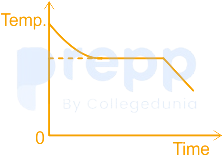
The part of the curve that is practically horizontal is due to
Perspiration cools the body because
Which one of the following statement is NOT correct?
Which one of the following statement with regard to expansion of materials due to heating is not correct?
Important Questions from Temperature and heat
A Kelvin thermometer and a Fahrenheit thermometer both give the same reading for a certain sample. What would be the corresponding reading in a Celsius thermometer?
Which of the following gases has highest value of critical temperature ?
- For carbon dioxide ($CO_2$), which is commonly used in industrial processes as a supercritical fluid, what is its critical temperature? Above this temperature, $CO_2$ cannot be liquefied regardless of how much pressure is applied, existing only as a supercritical fluid.
- Where does the heat energy go when the solid melts but its temperature remains the same?
A pressure cooker cooks food faster by



