
Radiations coming from the Sun are mostly in the form of
both short and long wavelength infrared.
Understanding Solar Radiation
The Sun is a powerful source of energy, radiating it into space in the form of electromagnetic waves. This energy covers a broad spectrum of wavelengths, including ultraviolet (UV) radiation, visible light, and infrared (IR) radiation. While all these forms of energy come from the Sun, the question asks about the form in which radiations mostly come from the Sun, focusing on the types mentioned in the options.
The solar spectrum incident on Earth's atmosphere is roughly composed of:
- About 7% ultraviolet radiation
- About 43% visible light
- About 49% infrared radiation
Infrared radiation itself is typically categorized into different wavelength ranges:
- Near-infrared (NIR) or short-wavelength infrared (SWIR): Wavelengths just longer than visible light, typically from 0.7 to 1.4 micrometers ($\mu$m).
- Mid-infrared (MIR): Wavelengths from 1.4 to 3.0 $\mu$m.
- Far-infrared (FIR) or long-wavelength infrared (LWIR): Wavelengths longer than 3.0 $\mu$m, extending up to perhaps 1000 $\mu$m. Thermal radiation from objects at room temperature is often in the far-infrared range.
The Sun emits radiation across the entire infrared spectrum, including both the shorter and longer wavelengths, although the peak intensity of solar radiation is actually in the visible light part of the spectrum.
Focus on Infrared Radiation from the Sun
Infrared radiation constitutes a significant portion, nearly half, of the total energy emitted by the Sun. Within this infrared portion of the solar spectrum, radiation is present at both shorter (near-infrared) and longer (mid and far-infrared) wavelengths.
Solar radiation at the Earth's surface has its peak power density at a wavelength of about 500 nanometers (nm), which is in the visible light spectrum. However, the total energy contribution from infrared is greater than that from visible light or ultraviolet radiation.
Analyzing the Options Based on Solar Radiation Forms
Let's consider the given options:
- Light only: This is incorrect because the Sun emits significant amounts of UV and infrared radiation in addition to visible light ('light').
- Light and long wavelength infrared: While the Sun emits both visible light and long wavelength infrared, it also emits short wavelength infrared.
- Light and short wavelength infrared: Similarly, the Sun emits both visible light and short wavelength infrared, but it also emits long wavelength infrared.
- Both short and long wavelength infrared: The Sun's infrared radiation spans both short and long wavelengths. Therefore, radiation in the form of both short and long wavelength infrared is indeed coming from the Sun, and infrared radiation as a whole is a substantial part of the solar output. Among the options specifically mentioning infrared wavelengths, this option correctly identifies the presence of both short and long wavelength infrared radiation in the Sun's emissions.
Given that the question asks about the form in which radiations are "mostly" present and the options focus on light and different types of infrared, and knowing that infrared constitutes nearly half of the solar energy and includes both short and long wavelengths, the option referring to "both short and long wavelength infrared" accurately describes the nature of a major component of solar radiation, specifically the infrared part, which is indeed a significant form of energy coming from the Sun.
Revision Table: Electromagnetic Spectrum and Solar Radiation
| Radiation Type | Wavelength Range (Approximate) | Key Characteristics | Presence in Solar Radiation |
|---|---|---|---|
| Ultraviolet (UV) | 10 nm to 400 nm | High energy, causes sunburn, absorbed by ozone layer | About 7% of total solar energy |
| Visible Light | 400 nm to 700 nm | Perceived as colours, peak intensity of solar radiation | About 43% of total solar energy |
| Infrared (IR) | 700 nm to 1000 $\mu$m | Felt as heat, causes warming | About 49% of total solar energy |
| Short Wavelength Infrared (SWIR) | 700 nm to 3 $\mu$m (subset of IR) | Closer to visible light | Present in solar radiation |
| Long Wavelength Infrared (LWIR) | 3 $\mu$m to 1000 $\mu$m (subset of IR) | Further from visible light, thermal radiation | Present in solar radiation |
Additional Information on Solar Energy
Solar radiation is fundamental to Earth's climate and energy systems. When solar radiation reaches Earth, some is reflected, some is absorbed by the atmosphere and clouds, and the rest reaches the surface. The absorption of infrared radiation by greenhouse gases in the atmosphere is a key process driving the greenhouse effect, which warms the planet.
Short wavelength solar radiation (UV and visible) passes through the atmosphere relatively easily and is absorbed by the Earth's surface. The warmed surface then re-emits energy primarily as long wavelength infrared radiation. These longer wavelengths are readily absorbed by greenhouse gases like water vapor, carbon dioxide, and methane, trapping heat in the lower atmosphere.
Understanding the different components of solar radiation, including short and long wavelength infrared, is crucial for studying Earth's energy balance, climate change, and technologies like solar power.
Similar Questions
A Kelvin thermometer and a Fahrenheit thermometer both give the same reading for a certain sample. What would be the corresponding reading in a Celsius thermometer?
A pressure cooker cooks food faster by
The absolute zero temperature is 0 Kelvin. In °C unit, which one of the following is the absolute zero temperature?
The coefficient of areal expansion of a material is 1.6 × 10 -5 K-1 . Which one of the following gives the value of coefficient of volume expansion of this material?
The temperature of a place on one sunny day is 113 in Fahrenheit scale. The Kelvin scale reading of this temperature will be
A solid is melted and allowed to cool and solidify again. The temperature is measured at equal interval of time. The graph below shows the change of temperature with time.
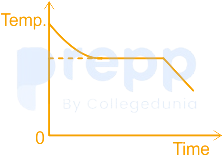
The part of the curve that is practically horizontal is due to
Perspiration cools the body because
In which of the following phenomena do heat waves travel along a straight line with the speed of light?
Which one of the following statement is NOT correct?
Which one of the following statement with regard to expansion of materials due to heating is not correct?
Important Questions from Temperature and heat
A Kelvin thermometer and a Fahrenheit thermometer both give the same reading for a certain sample. What would be the corresponding reading in a Celsius thermometer?
Which of the following gases has highest value of critical temperature ?
- For carbon dioxide ($CO_2$), which is commonly used in industrial processes as a supercritical fluid, what is its critical temperature? Above this temperature, $CO_2$ cannot be liquefied regardless of how much pressure is applied, existing only as a supercritical fluid.
- Where does the heat energy go when the solid melts but its temperature remains the same?
A pressure cooker cooks food faster by



