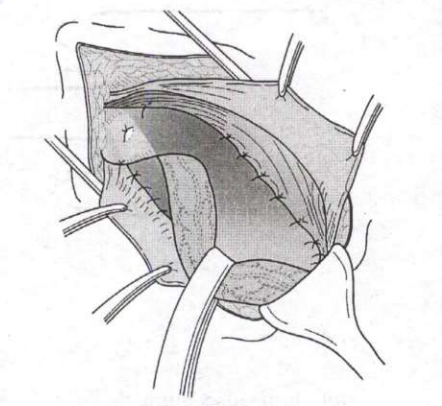
An infant is brought to the clinic by the parents with the history of a swelling in the neck since birth. On examination, the swelling is found to be soft, partially compressible and brilliantly trans-illuminant. The most likely diagnosis is
cystic hygroma
The correct answer is cystic hygroma, a macrocystic lymphatic malformation caused by failure of the jugular lymph sacs to connect with the venous system. About 65-75 percent arise in the posterior triangle of the neck and roughly half to two-thirds are evident at birth. Because the loculi contain clear lymph, the swelling is soft, fluctuant, partially compressible and brilliantly trans-illuminant, the key bedside sign. It may swell on crying and large lesions threaten the airway; associations include Turner and Noonan syndromes. Treatment is sclerotherapy with OK-432 (picibanil) or bleomycin, or excision.
A sternomastoid tumour is a firm, fusiform, non-transilluminant swelling in the sternocleidomastoid appearing at 2-3 weeks with torticollis. A branchial cyst lies at the anterior border of the upper sternocleidomastoid, contains turbid cholesterol-rich fluid so does not transilluminate, and presents in young adults. A thyroglossal cyst is midline and moves on deglutition and tongue protrusion.
Key point: A brilliantly trans-illuminant, compressible posterior triangle swelling present since birth is a cystic hygroma until proved otherwise.
Similar Questions
A 29-year-old lady presents with a history of discharge from the nipple of the left breast since 1 month duration. Which one of the following is not warranted in the initial assessment of this patient?
A 45-year-old lady presents with a hard lump in the left breast. On examination, the lump is found to be 4 cm x 6 cm in size, not fixed to the skin, but fixed to the underlying pectoralis major muscle. The T stage of this is
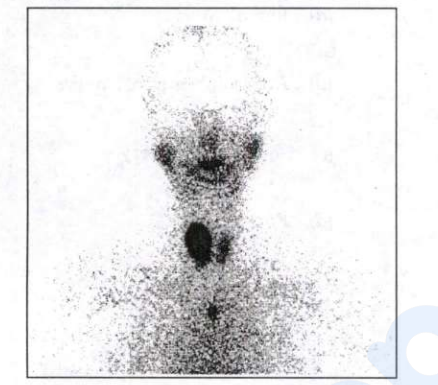
A 40-year-old female presents with symptoms of heat intolerance, excessive sweating and weight loss since 10-12 months. After clinical examination, the surgeon orders an investigation which is as shown in the image. The scan shown below is a/an
Important Questions from Neck & Breast Surgery
- Medical management of thyrotoxic crisis includes all of the following EXCEPT:
- First line hormone therapy for post-menopausal woman with metastatic carcinoma breast is:
- All of the following are major subtypes of breast cancer based on Gene array analysis EXCEPT:
- Which of the following statements regarding lymphoedema following breast cancer treatment are correct?
1. Incidence has decreased due to rarely combined therapy of axillary LN dissection and
radiotherapy
2. Precipitating cause like LN metastasis is a major determinant
3. The condition is often painful
4. Oedematous limb is susceptible to bacterial infection
Select the correct answer using the code given below: - No increased relative risk of invasive breast carcinoma based on histopathological examination of benign breast tissue is for all of the following EXCEPT: