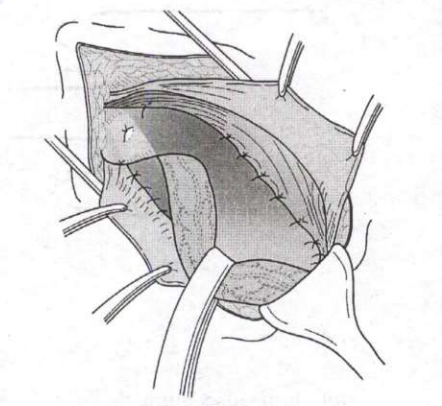
A 29-year-old lady presents with a history of discharge from the nipple of the left breast since 1 month duration. Which one of the following is not warranted in the initial assessment of this patient?
Histo/Cytopathology
The correct answer, that is the test not warranted initially, is histo/cytopathology. Nipple discharge in a 29-year-old woman is usually benign, the commonest causes being duct ectasia, periductal mastitis, intraductal papilloma and fibrocystic change, with drug-induced or prolactinoma-related galactorrhoea also considered. Initial assessment is history and clinical examination followed by imaging. Tissue sampling is not a routine first step: it is reserved for a discrete lump or a suspicious imaging finding, and is then a core biopsy of the lesion, since discharge cytology has poor sensitivity and a negative result cannot exclude carcinoma.
Clinical examination is mandatory in every breast complaint and is the first arm of triple assessment. Ultrasonography is the imaging of choice under 35-40 years because dense breast tissue limits mammographic sensitivity, and it shows dilated ducts and papillary lesions well. Mammography is still legitimately used in pathological discharge to exclude an underlying malignancy or suspicious microcalcification.
Key point: Work up nipple discharge with examination plus imaging first, adding pathology only if findings are suspicious. Red flags are unilateral, single-duct, spontaneous, blood-stained discharge with a mass.
Similar Questions
An infant is brought to the clinic by the parents with the history of a swelling in the neck since birth. On examination, the swelling is found to be soft, partially compressible and brilliantly trans-illuminant. The most likely diagnosis is
A 45-year-old lady presents with a hard lump in the left breast. On examination, the lump is found to be 4 cm x 6 cm in size, not fixed to the skin, but fixed to the underlying pectoralis major muscle. The T stage of this is
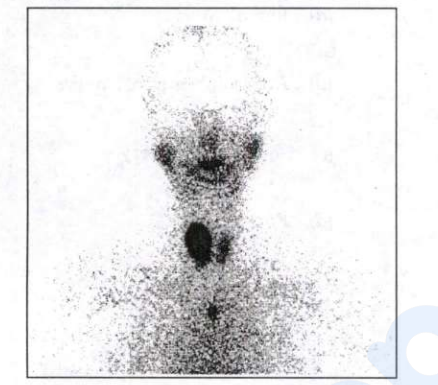
A 40-year-old female presents with symptoms of heat intolerance, excessive sweating and weight loss since 10-12 months. After clinical examination, the surgeon orders an investigation which is as shown in the image. The scan shown below is a/an
Important Questions from Neck & Breast Surgery
- Medical management of thyrotoxic crisis includes all of the following EXCEPT:
- First line hormone therapy for post-menopausal woman with metastatic carcinoma breast is:
- All of the following are major subtypes of breast cancer based on Gene array analysis EXCEPT:
- Which of the following statements regarding lymphoedema following breast cancer treatment are correct?
1. Incidence has decreased due to rarely combined therapy of axillary LN dissection and
radiotherapy
2. Precipitating cause like LN metastasis is a major determinant
3. The condition is often painful
4. Oedematous limb is susceptible to bacterial infection
Select the correct answer using the code given below: - No increased relative risk of invasive breast carcinoma based on histopathological examination of benign breast tissue is for all of the following EXCEPT: