What The Chip Industry And The Petroleum Sector Have In Common (UPSC Current Affairs)
Relevance: GS3 - Effects of liberalization on the economy, changes in industrial policy, and their effects on industrial growth.
(Source: Indian Express, 11/07/2022)
Click here for Daily Current Affairs
Why in the news?
- Recently, India has embarked on a journey to develop domestic chip fabrication facilities. Given the commonalities, the decision-makers involved with electronics might draw useful lessons from our ‘failed’ experience in petroleum.
- Both industries are dominated by a small number of countries and corporations, both are capital-intensive and cyclical, both are at the heart of interdependent global relations, both are in the crosshairs of international geopolitics, and both are characterized by technological dynamism.
International Geopolitics
- Petroleum: The supply of petroleum is dominated by the "cartel" OPEC and mega-sized public and private multinational corporations known as "supermajors."
- Weaponization: Every oil-importing country has traveled to the Middle East to secure access to petroleum, and their efforts have been "weaponized" at times to achieve this goal.
- The Saudi embargo on exports to the pro-Israeli Western world in 1973, the US intervention in Iraq in 2003, and the current Russian gas cutback to Europe are three examples of this phenomenon.
- Gas was previously limited to overland routes defined by pipeline infrastructure, but with the commercialization of gas liquefaction, cryogenic shipping, and regasification in recent years, this limitation has been lifted.
- Oil and gas prices are cyclical, reflecting the capital intensity and long lead times of the investment cycle.
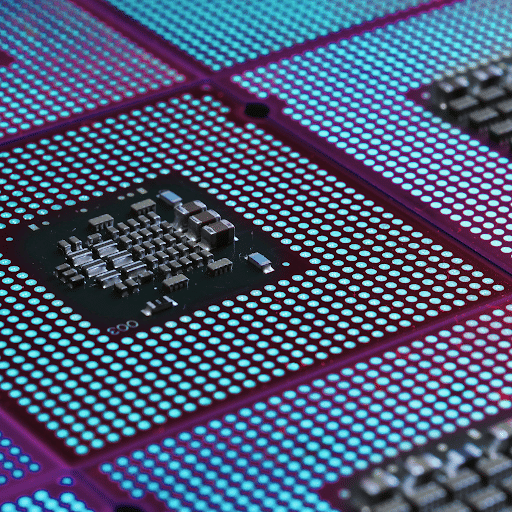
- Semiconductor: The semiconductor value chain is relatively close-knit. The United States is the most powerful player. Every chip produced in the world has a direct or indirect link to the country.
- Cadence, Synopsys, and Mentor, for example, provide chip software. ASML, the sole manufacturer of EUV (Extreme Ultraviolet Lithography) equipment, is a Dutch company that relies on its wholly-owned San Diego-based subsidiary Cymer for manufacturing tools.
- Samsung and Hynix, which together produce 44% of the world's memory chips, and TSMC, which manufactures 37% of the world's logic chips and 92% of the most advanced chips, are both Korean and Taiwanese. Both are covered by the US military's security blanket.
- Vulnerabilities faced by semiconductor: If TSMC's fabrication facilities gets destroyed due to human or natural causes. One-third of the world's computing power would halt, the 5G network would collapse, and the economic loss would be trillions of dollars.
- Technology Cold War: Semiconductors have been both a cause and a result of the "technology Cold War" between the United States and China.
- The United States has imposed sanctions on the physical and intellectual export of chip technology to China, prompting President Xi to call for a "full scale assault" to "rejuvenate" the country.
- The ramifications of these actions is fragmenting along the geopolitical fault lines.
- Currently, efforts are being made to cut a swath through this supply chain and "reshore" fabrication facilities. This is because of the Cold War in technology.
- The United States passed the Chips and Science Act, allocating $52 billion to the development of domestic chip fabrication.
Challenges in building semiconductors
- The investment to build a portion or all of this chain is in the billions of dollars, and the returns are dependent on engineering precision and technical talent.
- INTEL has laid the groundwork for a $20 billion fabrication plant. However, there are economic constraints on how far this process can be sustained.
- The cost of constructing a high-end semiconductor fabrication facility in the United States could be up to 44% higher than in Taiwan, Korea, or Singapore.
Role of India
- As the world's fifth-largest economy seeks to boost its domestic chip sector, India could play a significant role in the semiconductor industry.
- India, like other countries such as the United States, has been looking to form strategic alliances around semiconductors, a critical technology that is used in many of the devices we use, from smartphones to refrigerators.
- However, India has been making moves to bring chip manufacturing to the country and has laid out incentives for the industry.
Advantages
- India possesses a number of advantages that could support its bid to become a global chipmaking hub.
- Domestic Market: India's strength in semiconductors is its massive domestic consumption market as the world's second-largest economy.
- Low cost labor: India has a large number of English-speaking engineering talent and a lower labor force, making it cost effective.
- Well-educated and low-cost labor force could benefit India in a specific area of the semiconductor supply chain — chip design — which requires a large number of skilled workers.
Concerns
- The problem for many countries looking to improve their chipmaking capabilities is that the companies and countries that dominate the industry are few and far between.
- Taiwan and South Korea, for example, account for approximately 80% of the global foundry market (Foundries are facilities that manufacture chips designed by other companies).
- Historically, India has not been among the top semiconductor producing countries.
- As a result, there aren't many large Indian chip companies, and there aren't any cutting-edge manufacturing firms.
- The large amount of capital required, the time it takes to set up factories, and the uncertainty surrounding the business, tax, and trade environments have often discouraged companies from establishing themselves in India.
Way forward
- India has recently begun a journey to establish domestic chip fabrication facilities.
- Given the aforementioned similarities, decision-makers in the electronics industry may be able to learn from our "failed" experience in petroleum. They should remember two things.
- One, chip nationalism will be economically costly and may be technologically regressive. They should exercise caution when decoupling from the international supply chain.
- Second, government assistance should be limited to financial assistance, agile collaboration, and the creation of an innovative ecosystem. Bureaucratic intervention should be limited.
(*Click this link to read prelims specific weekly current affairs articles)
FAQs
Question: What is the petroleum industry?
Answer:
The petroleum industry, also known as the oil industry or the oil patch, encompasses the global processes of petroleum product exploration, extraction, refining, transportation, and marketing.
Question: What does OPEC do?
Answer:
The goal of OPEC (Organization of Petroleum Exporting Countries) is to coordinate and unify petroleum policies among member countries in order to ensure fair and stable prices for petroleum producers, an efficient, economic, and consistent supply of petroleum to consuming nations, and a fair return on capital for those investing in the industry.
MCQ
Question: Consider the following statements: (UPSC 2019)
- Petroleum and Natural Gas Regulatory Board (PNGRB) is the first regulatory body set up by the Government of India.
- One of the tasks of PNGRB is to ensure competitive markets for gas.
- Appeals against the decisions of PNGRB go before the Appellate Tribunals for Electricity.
Which of the statements given above are correct?
(a) 1 and 2 only
(b) 2 and 3 only
(c)1 and 3 only
(d) 1, 2 and 3
Answer: (b) See the Explanation
- The Petroleum and Natural Gas Regulatory Board (PNGRB) was constituted under the Petroleum and Natural Gas Regulatory Board Act, 2006. The independent regulator TRAI is the first independent regulator in India. Hence, statement 1 is not correct.
- The act provides for the establishment of Petroleum and Natural Gas Regulatory Board to protect the interest of consumers and entities. One of the tasks of PNGRB is to ensure a competitive market for gas. Hence, statement 2 is correct.
- The appellate tribunal established under section 110 of the Electricity Act, 2003 is the appellate tribunal for the purpose of Petroleum and Natural Gas Regulatory Board Act, 2006. Hence, statement 3 is correct.
Therefore, option (b) is the correct answer.
Download the PREPP App and attempt FREE IAS Exam Mock Tests and get complete study material!

Full Test - 04: UPSC CSE Prelims CSAT (Paper-II)
Full Test - 03: UPSC CSE Prelims CSAT (Paper-II)
UPSC CSE Prelims 2026 GS Paper 1 Question Paper (24-May-2026)
UPSC CSE Prelims 2026 CSAT Paper 2 Question Paper (24-May-2026)

17 February 2025 | The Hindu Must Read Articles | Current Affairs

16 February 2026 | The Hindu Must Read Articles | Current Affairs

13 February 2026 | The Hindu Must Read Articles | Current Affairs









Comments