U.S. FDA Approves Pair of Gene Therapies for Sickle Cell Disease
Primary Source: The Hindu
Click here for Daily Current Affairs
Why in the news?
- The U.S. Food and Drug Administration (FDA) has approved two gene therapies for sickle cell disease.
- The therapies include Lyfgenia by bluebird bio and Casgevy by Vertex Pharmaceuticals and CRISPR Therapeutics.
- These treatments are notable for being the first to use CRISPR gene editing technology in sickle cell disease treatment.
Table of Contents
What is Sickle Cell Disease?
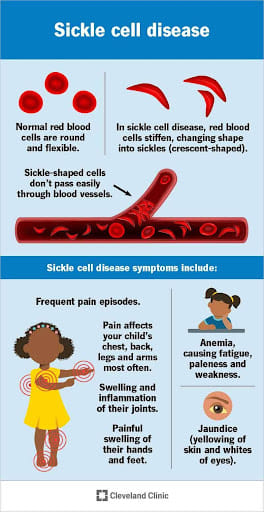
- Sickle Cell Disease (SCD) is a group of inherited red blood cell disorders. It's characterized by an abnormality in the oxygen-carrying protein hemoglobin found in red blood cells.
- Genetic Cause: SCD is caused by a mutation in the gene that tells the body to make hemoglobin, the protein in red blood cells that carries oxygen throughout the body. People with SCD inherit two abnormal hemoglobin genes, one from each parent.
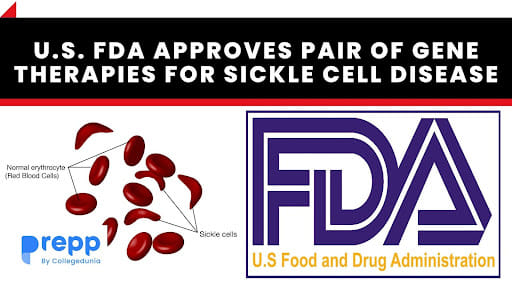
- Sickle-Shaped Red Blood Cells: In SCD, the abnormal hemoglobin causes red blood cells to become rigid and shaped like crescent moons or sickles, instead of the normal, round shape.
- These sickle cells can get stuck in small blood vessels, which can slow or block blood flow and oxygen to parts of the body.
- Symptoms:
- Painful Episodes: Known as sickle cell crises, these are caused by the obstruction of blood flow due to the sickle-shaped cells.
- Anemia: Due to the shorter lifespan of sickle cells (10-20 days compared to the normal 120 days), patients often suffer from anemia.
- Infections: People with SCD are more prone to infections, especially in childhood, due to the spleen damage caused by sickle cells.
- Delayed Growth: Children with SCD may experience slower growth and reach puberty at a later age.
- Vision Problems: Blockage of blood vessels in the eyes can lead to vision problems.
- Complications: SCD can lead to chronic pain, acute chest syndrome (a lung-related complication), stroke, organ damage, and increased risk for severe bacterial infections.
- Treatment: Treatment includes pain management, blood transfusions, and other interventions to relieve symptoms and prevent complications. Bone marrow or stem cell transplants may offer a cure for a small number of patients.
What is CRISPR Technology?
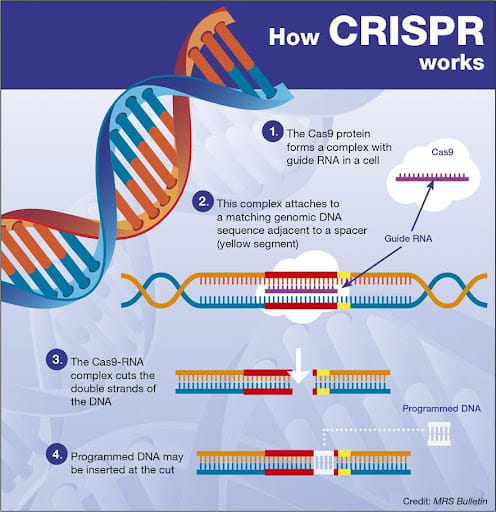
- Clustered Regularly Interspaced Short Palindromic Repeats (CRISPR) is a form of gene editing technology that mimics the defense strategies bacteria use against viruses, utilizing a special protein known as Cas9.
- This process, a type of genetic engineering, typically involves either introducing a new gene or inhibiting an existing one. However, CRISPR itself does not require adding any external genes.
- Often described as 'Genetic Scissors,' CRISPR-Cas9's functioning is comparable to the 'cut-copy-paste' or 'find-replace' features found in standard computer programs.
- In this process, a problematic segment of DNA, responsible for a disease or disorder, is identified, excised, and then substituted with a 'correct' sequence.
- The tools for this procedure are biochemical, consisting of specific proteins and RNA molecules.
- This technology mirrors a natural defense mechanism used by certain bacteria, which employs a similar approach to fend off viral attacks.
- The advent of CRISPR-Cas9 technology promised a transformative impact on healthcare, particularly in treating conditions like sickle cell anemia, and in the field of agriculture.
- This tool has significantly enhanced the resilience of crops by tweaking their genetic makeup to increase resistance to drought and pests.
- Additionally, the technology has been instrumental in developing novel cancer therapies, and many specialists anticipate its potential role in eradicating hereditary diseases.
Gene Therapies for Sickle Cell Disease
The U.S. Food and Drug Administration (FDA) has recently approved two groundbreaking gene therapies for the treatment of sickle cell disease (SCD) in patients aged 12 years and older. These therapies, named Casgevy and Lyfgenia, are the first cell-based gene therapies for SCD, marking a significant advancement in the field.
- Casgevy
- Casgevy, developed by Vertex Pharmaceuticals and CRISPR Therapeutics, is notable for being the first FDA-approved therapy that utilizes CRISPR/Cas9, a novel genome editing technology.
- This therapy works by editing the DNA in a patient's hematopoietic (blood) stem cells using CRISPR/Cas9.
- The modified stem cells, which are transplanted back into the patient, produce increased levels of fetal hemoglobin, preventing the sickling of red blood cells.
- Clinical trials have shown promising results, with a significant percentage of patients achieving freedom from severe vaso-occlusive crisis episodes for at least 12 consecutive months during the 24-month follow-up period.
- Lyfgenia
- Lyfgenia, developed by Bluebird Bio Inc., uses a different approach.
- It employs a lentiviral vector for gene delivery to modify the patient's blood stem cells to produce a gene-therapy derived hemoglobin that functions similarly to normal adult hemoglobin.
- This modification reduces the risk of sickling and obstruction of blood flow in red blood cells.
- Clinical trials for Lyfgenia also reported favorable outcomes, with a majority of patients treated showing complete resolution of vaso-occlusive events within a specified period following infusion.
Both Casgevy and Lyfgenia require the extraction of the patient's blood stem cells, which are then modified and re-infused back as a one-time treatment. This process is accompanied by myeloablative conditioning (high-dose chemotherapy) to prepare the body for the modified cells.
Significance of the Gene Therapies
- Innovative Use of Gene-Editing Technology: Casgevy, is the first FDA-approved therapy utilizing CRISPR/Cas9 gene-editing technology for SCD. CRISPR/Cas9 is a groundbreaking technology that allows for precise modifications to DNA.
- Targeting the Underlying Cause of SCD: Both therapies are designed to address the root cause of sickle cell disease. By modifying the patient's own stem cells, these treatments aim to produce healthier red blood cells that are less likely to sickle, which is a major problem in SCD.
- Potential for Long-Term Benefits: These therapies are considered a one-time treatment, potentially offering long-term relief from the symptoms and complications of SCD. This is a significant shift from the current standard treatments that primarily manage symptoms.
- Improvement in Quality of Life: Clinical trials have shown that these therapies can significantly reduce or eliminate painful vaso-occlusive crises, which are common in SCD and can lead to hospitalizations.
- Broader Implications for Genetic Diseases: The approval of these therapies is a milestone in the field of gene therapy and may pave the way for similar treatments for other genetic disorders.
Concerns regarding the Gene Therapies
- Accessibility and Cost: One of the primary concerns is the accessibility and cost of these treatments. Both therapies are expected to be quite expensive which poses a significant barrier to many patients.
- Eligibility and Availability: Not everyone with sickle cell disease may be eligible for these therapies. There are also concerns about the limited number of healthcare providers initially offering these treatments, which may restrict access for many patients.
- Potential Adverse Effects and Long-Term Outcomes: Both therapies involve complex processes, including chemotherapy, which can have its own side effects like infertility or secondary cancer.
- Equity Issues: There is recognition that while these treatments could be transformative, they might not be equally accessible to all, especially considering the majority of sickle cell patients are from marginalized communities.
- Scientific Differences Between the Therapies: Casgevy uses CRISPR-based gene editing, a novel approach in treating sickle cell disease, while Lyfgenia uses gene addition via a lentiviral vector. Each has its unique scientific methodology and potential issues.
- Scepticism: Experts express caution, preferring to call these therapies transformative rather than cures, as patients will still have sickle cell disease post-treatment.
Conclusion
The FDA's approval marks a significant advancement in treating sickle cell disease using gene editing technology. Despite the promising nature of these therapies, experts advise caution in viewing them as outright cures due to the chronic nature of sickle cell disease and limited data on long-term effects.
(*Click this link to read prelims specific weekly current affairs articles)
FAQs
Question: What is CRISPR gene editing technology?
Answer:
CRISPR (Clustered Regularly Interspaced Short Palindromic Repeats) is a revolutionary gene editing technology that allows for precise modifications to the DNA of living organisms. It works by using an enzyme (commonly Cas9) guided by a RNA sequence to cut the DNA at a specific location, allowing scientists to add, remove, or alter specific DNA sequences.
Question: What is sickle cell disease?
Answer:
Sickle cell disease is an inherited blood disorder characterized by the production of abnormal, sickle-shaped hemoglobin, leading to impaired oxygen delivery and various complications like pain, strokes, and organ failure.
Question: What are the recently approved gene therapies for sickle cell disease?
Answer:
The U.S. Food and Drug Administration (FDA) has recently approved two groundbreaking gene therapies for the treatment of sickle cell disease (SCD) in patients aged 12 years and older. These therapies, named Casgevy and Lyfgenia, are the first cell-based gene therapies for SCD, marking a significant advancement in the field.
UPSC Mains Practice Question:
|
MCQs
Question: In the context of vaccines manufactured to prevent COVID-19 pandemic, consider the following statements: (UPSC 2022)
- The Serum Institute of India produced COVID-19 vaccine named Covishield using mRNA platform.
- Sputnik V vaccine is manufactured using a vector based platform.
- COVAXIN is an inactivated pathogen based vaccine.
Which of the statements given above are correct?
(a) 1 and 2 only
(b) 2 and 3 only
(c) 1 and 3 only
(d) 1, 2 and 3
Answer: (b) See the Explanation
Covishield
- The Covishield vaccine is based on a chimpanzee adenovirus vector that is recombinant and replication-deficient, and that encodes the SARS-CoV-2 Spike (S) glycoprotein.
- The COVID-19 vaccine Covishield was created by the Serum Institute of India without the use of an mRNA platform.
- The viral vector platform has been used in its preparation.
- The chimpanzee adenovirus, ChAdOx1, has been altered in the vaccination to allow it to introduce the COVID-19 spike protein into human cells.
- This cold virus can train the immune system to build a defense against similar viruses, but it is essentially incapable of infecting the recipient.
- The vaccinations against viruses such as Ebola were created using the same approach. Hence, statement 1 is incorrect.
Sputnik V
- It is the first registered vaccination in the world based on a well-studied human adenovirus vector technology. Hence, statement 2 is correct.
- The Gamaleya National Research Institute of Epidemiology and Microbiology in Moscow created the Sputnik V vaccination.
- It employs two distinct viruses that produce the common cold in humans (adenoviruses).
- The adenoviruses have been attenuated to the point that they cannot reproduce in people and so cannot cause disease.
- The adenovirus gene that causes infection is deleted, and a gene with the instructions for a protein from another virus spike is introduced.
Covaxin
- An inactivated virus vaccine is called Covaxin.
- The Covaxin vaccine was created on a separate platform by Bharat Biotech, located in Hyderabad, and the National Institute of Virology.
- The SARS-CoV-2 virus is used in the "inactivated" vaccine known as Covaxin, which only stimulates the immune system after injection and has no capacity to spread or reproduce. Hence, statement 3 is correct.
- They include inactivated viruses, which are incapable of causing disease in humans but can nonetheless instruct the immune system on how to build a defense against the live virus.
- It is created using technology derived from whole-virion inactivated vero cells.
Therefore, option (b) is the correct answer.
Question: With reference to recent developments regarding ‘Recombinant vector Vaccines’, consider the following statements: (UPSC 2021)
- Genetic engineering is applied in the development of these vaccines.
- Bacteria and viruses are used as vectors.
Which of the statements given above is/are correct?
(a) 1 only
(b) 2 only
(c) Both 1 and 2
(d) Neither 1 nor 2
Answer: (c) See the Explanation
Recombinant vector Vaccines are genetically altered, and the vaccine is being created to resemble the real virus through genetic engineering. Hence, statement 1 is correct.
Live replicating viruses that have been modified to carry additional genes from a pathogen—proteins that we aim to develop protection against—are known as recombinant vector vaccines. Hence, statement 2 is correct.
Therefore, option (c) is the correct answer.
Question: What is the importance of using Pneumococcal Conjugate Vaccines in India? (UPSC 2020)
- These vaccines are effective against pneumonia as well as meningitis and sepsis.
- Dependence on antibiotics that are not effective against drug-resistant bacteria can be reduced.
- These vaccines have no side effects and cause no allergic reactions.
Select the correct answer using the code given below:
(a) 1 only
(b) 1 and 2 only
(c) 3 only
(d) 1, 2 and 3
Answer: (b) See the Explanation
Pneumococcal disease is caused by bacteria and it can lead to infections in the lungs, blood, and brain. It causes health difficulties in children under the age of five.
Children under the age of two, individuals over the age of 65, people with specific medical conditions, and cigarette smokers are at the highest risk of infection.
Pneumonia, meningitis, sepsis, blood infections, and ear infections are all among these disorders. Pneumococcal conjugate vaccine (PCV13) and pneumococcal polysaccharide vaccine (PPSV23) both provide protection against pneumococcal infections. Hence, statement 1 is correct.
The increasing resistance of S. pneumoniae to widely prescribed antibiotics highlights the necessity of using vaccines to manage pneumococcal illness. Antibiotic resistance occurs when bacteria, fungi, and other microorganisms learn to withstand the medications meant to eradicate them. It is possible to lessen reliance on antibiotics that are ineffective against germs that are resistant to drugs. Hence, statement 2 is correct.
Most persons who receive a pneumococcal immunization have no major side effects. These are often moderate and resolve on their own within a few days, although severe reactions are possible. Hence, statement 3 is incorrect.
Therefore, option (b) is the correct answer.
Question: RNA interference (RNAi)’ technology has gained popularity in the last few years. Why? (UPSC 2019)
- It is used in developing gene silencing therapies.
- It can be used in developing therapies for the treatment of cancer.
- It can be used to develop hormone replacement therapies.
- It can be used to produce crop plants that are resistant to viral pathogens.
Select the correct answer using the code given below:
(a) 1, 2 and 4
(b) 2 and 3
(c) 1 and 3
(d) 1 and 4 only
Answer: (a) See the Explanation
RNAi is a biological process in which RNA molecules suppress gene expression or translation. Hence, statement 1 is correct.
Since the discovery of RNAi and its regulatory potentials, it has become clear that RNAi has enormous potential for gene silencing (the suppression of desired genes). Hence, statement 2 is correct.
Numerous studies have shown that RNAi can give a more precise approach to tumor growth inhibition by targeting cancer-related genes (i.e., oncogenes).
Novel crops such as nicotine-free tobacco, decaffeinated coffee, nutrient-fortified vegetation, and hypoallergenic crops have been developed as a result of RNAi. Hence, statement 4 is correct.
In 2015, the FDA approved genetically modified Arctic apples.
Therefore, option (a) is the correct answer.
Question: What is the Cas9 protein that is often mentioned in the news? (UPSC 2019)
(a) A molecular scissors used in targeted gene editing
(b) A biosensor used in the accurate detection of pathogens in patients
(c) A gene that makes plants pest-resistant
(d) A herbicidal substance synthesised in genetically modified crops
Answer: (a) See the Explanation
CRISPR-Cas9 is a novel technology that allows geneticists and medical researchers to edit regions of the genome by removing, inserting, or changing DNA sequences.
The acronym CRISPR stands for "Clustered Regularly Interspaced Short Palindromic Repeats."
Cas9 is an enzyme that, like a pair of scissors, is used to cut two strands of DNA at a precise spot in order to add, remove, or repair sections of DNA.
Therefore, option (a) is the correct answer.
Question: Recombinant DNA technology (Genetic Engineering) allows genes to be transferred: (UPSC 2013)
- Across different species of plants
- From animals to plants
- From microorganisms to higher organisms
Select the correct answer using the codes given below:
(a) 1 only
(b) 2 and 3 only
(c) 1 and 3 only
(d) 1, 2 and 3
Answer: (d) See the Explanation
Genetic engineering is the technique of changing the chemistry of genetic material and then introducing it into the host organism to change the phenotypic of the host organism.
Genetic engineering combines three processes: DNA recombination, gene cloning, and gene transfer.
Recombinant DNA technology, as the name implies, is a technique that combines DNA from multiple sources to generate a new DNA sequence.
The recombined DNA from various species is then introduced into a host organism, resulting in a new genetic makeup that outperforms the original DNA.
The recombined DNA is inserted in such a way that it forms the section of the chromosome with a specific sequence known as the replication origin.
Restriction Enzymes (molecular scissors), Cloning Vectors, and Competent Host are examples of Recombinant DNA technology tools.
Isolation of Genetic Material, Cutting of DNA at Specific Locations, Amplification of Gene of Interest Using PCR are all steps in Recombinant DNA technology. The introduction of
Recombinant DNA entering the Host Cell/Organism, Obtaining the Foreign Gene Product, and Downstream Processing.
The approach is used in a variety of disciplines, including research, agriculture, medicine, and industry.
Therefore, option (d) is the correct answer.
Question: Which gene editing technology, recently used in a therapy for sickle cell disease, won the Nobel Prize in 2020?
(a) TALEN
(b) Zinc Finger Nuclease
(c) CRISPR
(d) RNAi
Answer: (c) See the Explanation
CRISPR technology, used in the Casgevy therapy for sickle cell disease, won the Nobel Prize in Chemistry in 2020 for its groundbreaking approach to gene editing.
Therefore, option (c) is the correct answer.
Question: What is the primary pathological feature of sickle cell disease?
(a) Overproduction of white blood cells
(b) Production of sickle-shaped hemoglobin
(c) Lack of insulin production
(d) Excessive clotting factors
Answer: (b) See the Explanation
Sickle cell disease is characterized by the production of defective, sickle-shaped haemoglobin, leading to various complications due to impaired oxygen transport and blood flow.
Therefore, option (b) is the correct answer.
Download the PREPP App and attempt FREE IAS Exam Mock Tests and get complete study material!

Full Test - 04: UPSC CSE Prelims CSAT (Paper-II)
Full Test - 03: UPSC CSE Prelims CSAT (Paper-II)
UPSC CSE Prelims 2026 GS Paper 1 Question Paper (24-May-2026)
UPSC CSE Prelims 2026 CSAT Paper 2 Question Paper (24-May-2026)

17 February 2025 | The Hindu Must Read Articles | Current Affairs

16 February 2026 | The Hindu Must Read Articles | Current Affairs

13 February 2026 | The Hindu Must Read Articles | Current Affairs









Comments