Types of Virtues – Ethics Notes
Virtue is defined as a person's moral superiority.Morally great persons have a character made up of good virtues. They do the right thing and do not act on impulses, wants, or desires, but rather on beliefs and principles. Virtues, being positive personality traits, can and must be purposefully developed. Because virtues may be nurtured, they can also be regarded as the acquired dispositions of a virtuous person. These values serve as the foundation of public service and influence civil servants’ behaviour and activities. In this article we will discuss Types of Virtues which will be helpful for UPSC exam Ethics, Integrity & Aptitude (GSIV) preparation.
Table of Contents
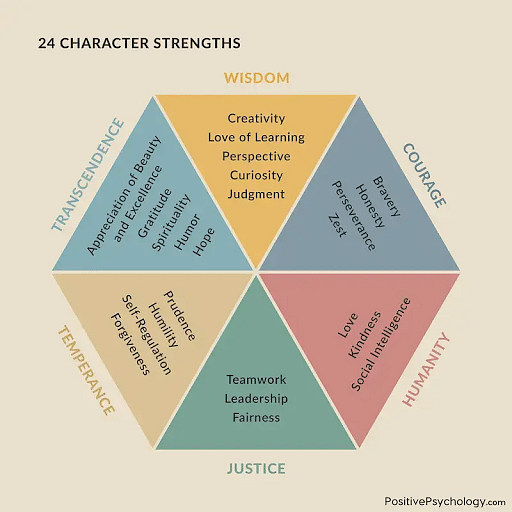
What is a Virtue?
- Virtue is a morally good characteristic or quality.
- It incorporates elements of ethics and morals because it is an evaluation of a person's morality as determined by a group of people.
- Chastity, for example, is a virtue as defined by some cultures, yet hard labor is a virtue as defined by others.
- There are also virtues established by entities in positions of power, such as religious scriptures or organizational leaders.
- Virtues are fundamentally attitudes, dispositions, or character qualities that enable a person to be and act in ways that are consistent with established ideals.
| Other Relevant Links | |
|---|---|
| Codes and Laws | Professional Ethics |
| Professional Responsibility | Goodness of Character |
| Civil Services Ethics in Different Schools of Thought | Communitarianism |
| New Public Administration | Public Choice Theory |
| Ethical Responsibility | Roots of Corruption |
| Systemic Reforms for Curbing Corruption | Administrative Structure and Procedures for Curbing Corruption |
| Political Corruption | Avoiding Breach of Trust |
| Vices | The Athenian Code |
| Observing Social Laws and Cultural Norms | Public Service Bill |
What is Virtue Ethics?
- This is an approach to ethics that considers the concept of virtue (typically understood as excellence) to be fundamental.
- The enumeration of obligations is secondary to virtue ethics, which is concerned with character attributes that are necessary to human happiness.
- It believes that morality consists in growing excellent character attributes rather than sticking to certain beliefs (such as hedonism). According to virtue ethics, nurturing good character can lead to an ideal moral life.
- It is more similar to deontological ethics in that it considers morally correct behaviours to be constitutive of the end itself rather than merely instrumental means to the purpose.
- Moral people, according to virtue ethics, are individuals who sincerely enjoy doing the right thing. They are not compelled to do good by a dismal feeling of obligation or stoic resignation. Such behaviour comes naturally to them.
- In this sense, virtue ethics enhances the appeal of good people's actions.
- While it is necessary to follow moral paths, it is even more important to be a truly moral person.
Types of Virtues
1) Cardinal Virtues
- Prudence: It is the ability to recognize the most appropriate, politic, or advantageous course of action in actual behaviour; it also denotes practical wisdom and discretion.
- A good example is the ancient king Chanakya, whose prudent strategies and policies helped establish the Maurya Dynasty.
- Fortitude: Fortitude is moral strength or moral courage in the face of misfortune or pain.
- Soldiers enduring difficult fighting scenarios are frequently connected with fortitude.
- Temperance: It represents the ability to keep one's wrath, emotions, and wants under control. It is a form of sensible self-control.
- Justice: It refers to standing for fairness and giving each their due. More narrow concepts, such as 'social justice' and 'economic justice,' must be clearly defined by highlighting their specific elements.
2) Theological Virtues
These virtues have religious roots and are associated with divine grace.
- Faith: A strong belief in the divine. India, with its plethora of religions and spirituality, is a melting pot of faith.
- Hope: A positive outlook and trust in a brighter future. Despite adversities, Indians have demonstrated unwavering hope, be it during natural disasters or economic challenges.
- Charity: Altruistic love for all. Mother Teresa's service to the destitute in Kolkata exemplifies charity.
3) Civic Virtues
These are virtues essential for a responsible and active participant in civil society.
- Respect: Recognizing the worth of others. The Indian principle of 'Atithi Devo Bhava' – treating the guest as God – reflects deep-rooted respect for others.
- Responsibility: Fulfilling one's duties and obligations. The tireless work of civil servants in remote parts of India showcases responsibility towards their duties and the people they serve.
4) Intellectual Virtues
These virtues are related to the mind's exercise and growth.
- Wisdom: Deep understanding and realization of people, things, and events. Adi Shankaracharya's teachings, which bridge different philosophical schools, highlight the depth of Indian wisdom.
- Knowledge: Grasping truths about the world. Ancient Indian universities like Nalanda and Taxila were centers of knowledge that attracted scholars from across the world.
Administrative Virtues of a Civil Servant
Administrative virtues are critical attributes that civil servants need to cultivate in order to ensure efficient, effective, and ethical administration. These virtues guide civil servants in their decision-making processes, help them navigate complex administrative scenarios, and enable them to maintain public trust.
Here are some of the fundamental administrative virtues that civil servants need to cultivate:
1) Integrity: This is about consistently adhering to moral and ethical principles. A civil servant with integrity is honest, trustworthy, and incorruptible, ensuring that their decisions are always in the best interest of the public.
- Example: A procurement officer refuses to accept gifts from vendors to avoid any conflict of interest and ensures that contracts are awarded strictly based on merit and requirements.
2) Accountability: Civil servants must take responsibility for their decisions and actions. Being accountable means answering to the public, superiors, and peers for one's actions, especially when things go wrong.
- Example: Vikram Sarabhai accepted the failure of ISRO's maiden mission without blaming the mission head (APJ Abdul Kalam). As a result, he accepts full responsibility for his team's failure.
3) Transparency: This virtue entails being open and clear about decisions, policies, and actions. It builds trust and allows the public to scrutinize and understand the workings of the administration.
- Example: The Right to Information (RTI) Act, introduced in India, serves as a platform for this virtue, enabling citizens to scrutinize government actions.
4) Impartiality: Civil servants should be unbiased and neutral, making decisions based on facts and merit rather than personal interests or external influences.
- Example: The Election Commission of India, which conducts elections with impartiality, stands as a testament to the importance of this virtue.
5) Professionalism: This involves maintaining a high standard of knowledge and skills relevant to one's administrative role. It also means behaving in a manner that upholds the dignity and reputation of the civil services.
- Example: A health officer, when faced with an outbreak of a rare disease, undertakes a rigorous study to understand its nuances and collaborates with experts to tackle it efficiently.
6) Dedication: Being committed to the role and serving with perseverance ensures that tasks are seen through to completion and public needs are addressed.
- Example: Armstrong Pame, known as the "Miracle Man," who, without any governmental aid, built a 100 km road in Manipur, connecting remote villages.
7) Empathy: Understanding and addressing the feelings and needs of the public ensures policies and actions resonate with them. It's about putting oneself in the shoes of those being served.
- Example: Recognizing the struggles of the homeless during winter, a city administrator initiates a program to provide them with warm shelters and necessary supplies.
8) Courage: This virtue allows civil servants to take bold decisions, stand up for what is right, and face adversity or challenges head-on, especially when faced with difficult situations or external pressures.
- Example: An anti-corruption officer continues to investigate and expose high-profile corrupt officials despite receiving threats to their personal safety.
9) Adaptability: The dynamic nature of public administration means that civil servants should be flexible and open to change, ensuring they can respond effectively to evolving scenarios.
- Example: In the wake of the COVID-19 pandemic, a district administrator quickly shifts from traditional governance models to incorporate digital tools and remote working facilities to ensure uninterrupted public services.
10) Collaboration: Working effectively with peers, other departments, and the public ensures holistic decision-making and the pooling of resources and expertise.
- Example: Recognizing the multi-faceted challenges of drug abuse, a civil servant collaborates with health departments, law enforcement, educational institutions, and NGOs to address both supply and demand aspects of the issue.
11) Confidentiality: Respecting and protecting sensitive information is paramount in maintaining public trust and ensuring the security of administrative processes.
- Example: A financial regulator, having access to sensitive banking data, ensures it remains protected and divulges information only under strict legal circumstances, ensuring public trust in the banking system.
Views on Ethics for Civil Servants
Views of Stephen K. Bailey
- Stephen K. Bailey has outlined three critical attitudes and moral traits that government officials should have.
- These can assist bureaucrats in resolving the moral quandaries that they frequently face.
- Moral quandaries are situations in which two or more moral standards clash.
- It is impossible to make a decision that meets both moral requirements. If one criterion is accepted, the other must be rejected.
- In terms of attitudes, civil employees should be aware of three aspects of their work environment.
- Moral uncertainty exists in both individual behaviour and public policies.
- In government, moral priorities are frequently determined by the needs of specific situations rather than abstract universal ideals.
- Administrative procedures ensure that choices are made correctly. However, methods are contradictory.
- The three attitudes listed above are cognitive or intellectual in nature.
- They must be accompanied by three moral qualities: optimism, courage, and fairness tempered by charity.
- Bureaucratic institutions are intrinsically rigid, conservative, and slow. Furthermore, there is a strong stream of cynicism in many people. Even under these conditions, civil servants must remain positive.
- Bureaucrats must be courageous in order to stand up for their convictions and resist immoral or illegal influences. In this regard, the distinction between a good and a strong character is crucial.
- Good intentions will not yield fruit unless they are accompanied by strong character. It is a common complaint that decent people often lack conviction.
- In practice, virtues without courage are meaningless. According to WB Yeats, "the best lack all conviction, while the worst are full of passionate intensity."
- As previously stated, bureaucratic decision making is governed by rules.
- Rules, as much as politicians and the general public despise them, maintain objectivity and fair play by excluding personal preconceptions and preferences from decision-making.
- However, because regulations can never cover all scenarios, they sometimes exclude really deserving individuals. In such circumstances, necessary exceptions must be made while applying rules.
- Second, depending on the circumstances of the case, the penalty may be severe. As a result, rules must be implemented with care.
Views of Kathryn Denhardt
- According to Kathryn Denhardt, the pillars of morals in public administration are honour, compassion, and justice.
- The most important of these is honour, which underpins people's faith and confidence in government.
- Honour as a virtue includes magnanimity or broad-mindedness, honesty, and always acting morally.
- Benevolence is the tendency to do good for others, as well as sympathy, enthusiasm, and devotion to service.
- Concern for others enables men to rise above their selfish and narrow interests.
- Justice, according to Kathryn Denhardt, is respect for and appreciation for the worth and dignity of every human.
- Civil employees must not only safeguard individual citizens' equality and dignity, but also actively encourage their engagement in the governance process.
Views of Terry L. Cooper
- Terry L. Cooper discusses the internal and exterior attributes that should characterize excellent public administration in Hierarchy, Virtue, and the Practice of Public Administration.
- He refers to three broad categories of responsibility (duties) imposed on public officials.
- The first commitment is to achieve the public interest; the second is to authorize suitable methods and procedures; and the third is to colleagues.
- It is self-evident that civil workers must act in the public interest. They should not promote party agendas or the interests of specific industrial or business groupings.
- Powerful lobbyists frequently exert influence over public systems. Politicians are particularly vulnerable to such demands. Public workers must protect the public interest and overall societal well-being.
- We have seen that suitable procedural norms are required in public institutions to ensure that judgments are made objectively and without personal bias.
- Procedures must be flexible in order for unique but deserving cases to be examined.
Views of David K Hart
- The terms 'benevolent bureaucrat' and 'moral exemplar' were coined by David K Hart.
- A moral exemplar is someone who provides an example of good moral behaviour.
- Hart contrasts between public administration and commercial enterprise. In comparison to commercial managers, public servants strive for a greater cause.
- They also require different personal characteristics and greater moral standards than corporate managers.
- Hart considers public management to be a moral endeavour and therefore public employees must have a distinct moral character and a strong commitment to particular moral tasks.
- Superior prudence, moral heroism, love of humanity, trust in ordinary people, and a continuous commitment toward moral progress are among the moral attributes mentioned by Hart.
- Superior prudence is a theory based on Adam Smith's ideas, the pioneer of economics.
- Superior prudence entails infusing the duty of a virtuous citizen into one's behaviour and then beyond it by pursuing nobler goals than merely individual achievement.
- This enhanced caution necessitates that the public servant controls his will and develop self-command. The key characteristic of an honourable bureaucrat is self-directed exceptional prudence.
- In addition, an honourable bureaucrat must acquire four other virtues.
- To begin, moral heroism or courage is required so that a civil servant can remain firm in his moral convictions and resist unfair pressures or oppose immoral policies.
- Second, love of people will allow public employees to give services and care for people. They will always be prepared to serve the best interests of the people within their jurisdiction.
- Third, public employees must have faith in the people they serve. Even when they are trying to help people, many bureaucrats have little faith in the common people's judgment.
- Fourth, ongoing moral self-culture pursuit is required since higher positions in civil service require greater moral refinement. Character nobility is achieved through consistently improving one's moral behaviour.
- It is vital to act consciously and voluntarily in order to have moral integrity in public administration. Such activities are exemplary when they stem from real moral character.
- Exemplary or ideal public workers exhibit four characteristics.
- Moral behaviour is not a one-time occurrence; it is a consistent aspect of the character of an ideal government worker.
- A good public servant must behave voluntarily and of his own free will; his actions should not be dictated by rules or compelled by higher levels of administration.
- While not flawless, the ideal public worker will have minimal character flaws.
- His activities should not be light-hearted and devoid of substance.
Conclusion
Cultivating these administrative virtues equips civil servants to handle the diverse and challenging scenarios they encounter in their roles, ensuring they act in the best interest of the public and uphold the values of their profession.
| Other Relevant Links | |
|---|---|
| Virtue ethics | Gandhian Ethics |
| Aspects of Morals | Definition of Ethics |
| Ethical Ideals in Life | Ethical Ideas in Indian Philosophical Tradition |
| Lessons From The Lives Of Great Indian Leaders, Reformers And Administration | Moral Thinkers of the Twentieth Century |
FAQs
Question: What are virtues in ethics?
Answer: Virtues are positive traits or qualities deemed to be morally good. They guide individuals to act in ways that benefit society and promote ethical behavior.
Question: What are the main types of virtues in ethics?
Answer: The main types of virtues include moral virtues (e.g., honesty, courage), intellectual virtues (e.g., wisdom, understanding), and theological virtues (e.g., faith, hope, charity).
Question: How do moral virtues differ from intellectual virtues?
Answer: Moral virtues are habits that help individuals act ethically, while intellectual virtues relate to intellectual excellence and the pursuit of truth and understanding.
Question: What role do virtues play in ethical decision-making?
Answer: Virtues guide individuals to make morally right decisions by cultivating good habits, fostering moral integrity, and promoting societal well-being.
Question: Can virtues be developed or are they innate?
Answer: Virtues can be developed through practice and habituation. They are not solely innate but can be cultivated over time through conscious effort and reflection.
MCQs
1. Which of the following is NOT a type of virtue in ethics?
A) Moral virtues
B) Intellectual virtues
C) Social virtues
D) Theological virtues
Answer: (C) See the Explanation
Explanation: Social virtues are not typically classified as one of the primary categories in ethical philosophy. The main types are moral, intellectual, and theological virtues.
2. What is an example of a moral virtue?
A) Wisdom
B) Honesty
C) Faith
D) Hope
Answer: (B) See the Explanation
Explanation: Honesty is a moral virtue, as it refers to the ethical behavior of truthfulness and transparency in one's actions and words.
3. Which of the following virtues is considered a theological virtue?
A) Courage
B) Patience
C) Faith
D) Wisdom
Answer: (C) See the Explanation
Explanation: Faith is considered a theological virtue, as it is related to spiritual belief and trust in a higher power, according to many ethical frameworks.
4. Which virtue is primarily concerned with making sound decisions and gaining knowledge?
A) Intellectual virtue
B) Moral virtue
C) Theological virtue
D) Civic virtue
Answer: (A) See the Explanation
Explanation: Intellectual virtues, such as wisdom and understanding, are concerned with the pursuit of knowledge and making sound decisions based on that knowledge.
5. How can virtues impact an individual's ethical decision-making process?
A) They guide individuals to make morally right decisions
B) They focus on legalistic behavior only
C) They discourage personal growth
D) They prioritize individual goals over societal well-being
Answer: (A) See the Explanation
Explanation: Virtues help guide individuals to make morally right decisions by fostering ethical behavior, promoting integrity, and aligning individual actions with societal well-being.
GS Mains Questions and Model Answers
Q1: Discuss the importance of virtues in ethical decision-making. How can virtues be developed?
Answer: Virtues are essential in ethical decision-making as they shape an individual's character and guide their behavior towards moral excellence. They help individuals navigate complex moral dilemmas by promoting integrity, honesty, and courage. Virtues like justice, temperance, and wisdom enable people to make decisions that contribute to the common good and personal well-being. Virtues are not innate but can be cultivated through practice, reflection, and habit. By consistently choosing the right course of action, individuals can strengthen their moral character and develop virtues over time. Educational systems, societal influences, and personal experiences play significant roles in shaping virtues, fostering a culture of ethical behavior and decision-making.
Q2: How do moral virtues differ from intellectual virtues, and why are both important in ethical philosophy?
Answer: Moral virtues and intellectual virtues serve distinct but complementary roles in ethical philosophy. Moral virtues, such as honesty, courage, and compassion, relate to an individual's character and behavior. They guide individuals to act ethically and promote societal well-being. Intellectual virtues, like wisdom, understanding, and critical thinking, are concerned with the cultivation of knowledge and sound reasoning. Together, both types of virtues are essential for a well-rounded ethical philosophy. While moral virtues direct individuals to act rightly, intellectual virtues help them make informed, reasoned decisions. In an ethical context, both virtues work together to shape responsible, thoughtful individuals who contribute positively to society.
Q3: What are theological virtues, and how do they differ from other types of virtues in ethical theory?
Answer: Theological virtues are a unique category of virtues in ethical theory, often associated with spiritual or religious belief systems. These include faith, hope, and charity (or love). They are considered gifts from a higher power and are central to many religious teachings. Theological virtues differ from moral and intellectual virtues in that they are not merely concerned with human behavior or reasoning but with an individual's relationship to the divine. While moral virtues focus on how one should act toward others and intellectual virtues on how to reason effectively, theological virtues center on cultivating spiritual and religious aspects of one's life. They emphasize trust in a higher power, hope for salvation, and love for others in the context of religious teachings.
Previous Year Questions on Virtues and Ethics
1. UPSC CSE Mains 2017 (GS Paper 4):
Question: "Discuss the significance of virtues in ethical theory. How can they guide an individual's decision-making process?"
Answer: Virtues, as central elements of ethical theory, help shape individuals’ moral character and actions. By cultivating virtues like honesty, courage, and empathy, individuals can align their behavior with ethical standards. These virtues guide individuals in making decisions that promote the greater good, enhance personal integrity, and contribute to a morally sound society. For example, virtues such as justice and wisdom enable individuals to consider the long-term consequences of their actions, while temperance ensures balanced decisions. Through the development of virtues, ethical decision-making becomes a habitual part of one's character, leading to a more ethical society overall.
2. UPSC CSE Mains 2016 (GS Paper 4):
Question: "Explain the difference between moral and intellectual virtues. Why are both necessary for ethical leadership?"
Answer: Moral virtues, such as honesty, integrity, and courage, are crucial for ethical leadership because they guide leaders in making decisions that benefit society and uphold ethical standards. Intellectual virtues, including wisdom, knowledge, and critical thinking, help leaders analyze situations, solve problems, and make informed decisions. While moral virtues direct actions in alignment with ethical principles, intellectual virtues ensure that decisions are well-informed, reasoned, and effective. Both types of virtues are necessary for ethical leadership because they provide a balance between doing what is right and understanding how to act in complex, dynamic situations. A leader with both moral and intellectual virtues is equipped to lead with integrity, insight, and wisdom, fostering trust and respect in their followers.
Download the PREPP App and attempt FREE IAS Exam Mock Tests and get complete study material!

Full Test - 04: UPSC CSE Prelims CSAT (Paper-II)
Full Test - 03: UPSC CSE Prelims CSAT (Paper-II)
UPSC CSE Prelims 2026 GS Paper 1 Question Paper (24-May-2026)
UPSC CSE Prelims 2026 CSAT Paper 2 Question Paper (24-May-2026)

17 February 2025 | The Hindu Must Read Articles | Current Affairs

16 February 2026 | The Hindu Must Read Articles | Current Affairs

13 February 2026 | The Hindu Must Read Articles | Current Affairs









Comments