Robert Clive (1754 - 1767) – Governor of Bengal – Modern India History Notes
Major General Robert Clive, also known as Clive of India(29 September 1725 – 22 November 1774), was the first British Governor of the Bengal Presidency. Robert Clive was instrumental in establishing British power in India. He served as Governor of Bengal twice, from 1757 to 1760 and from 1765 to 1767. He and Warren Hastings are credited with laying the groundwork for British rule in India. In this article, we will discuss the background and activities of Robert Clive in India which will be useful for UPSC exam preparation.
|
Table of Contents |
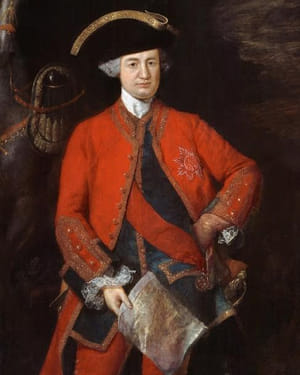
Robert Clive - Background
- Robert Clive (1725-74) began his career in the East India Company's civil service at Madras as a Writer (clerk). This came to an end in 1746, when the French took over.
- The following year, Clive was promoted to the rank of ensign in the Company's service. In 1749, he briefly returned to civil life before rejoining the military as a brevet captain in 1751.
- Clive didn't have any formal military training. In October 1751, he rose to prominence for his valiant defense of Arcot, the Carnatic capital, against the French. This aided the establishment of British power in southern India.
- Clive was granted a jaghire of £30,000 (equivalent to £4,100,000 in 2020) per year in exchange for his support of the Nawab of Bengal Mir Jafar on the throne, which was the rent the EIC would otherwise pay to the Nawab for tax farming concession.
- He had a fortune of £180,000 (equivalent to £24,700,000 in 2020) when he left India, which he remitted through the Dutch East India Company.
|
|
|
|---|---|
| Lord Minto-I (1807-1813) | Lord Cornwallis (1786-1793) |
| Francis Rawdon Hastings (1813-1823) | Sir John Shore (1793-1798) |
| Lord Amherst (1823-28) | Lord Arthur Wellesley (1798-1805) |
Robert Clive’s First Journey to India
- Clive's father obtained a position as a "factor" or company agent in the service of the East India Company for him in 1744, and Clive set sail for India.
- After his ship ran aground off the coast of Brazil, he was held for nine months while repairs were made.
- As a result of the Portuguese center in Goa, he was able to learn some Portuguese, one of several languages in use in south India at the time.
- The East India Company had a small settlement at Fort St. George near the village of Madraspatnam, later Madras, now Chennai, as well as others in Calcutta, Bombay, and Cuddalore at the time.
- Clive arrived at Fort St. George in June 1744 and worked as little more than a glorified assistant shopkeeper for the next two years, tallying books and arguing with East India Company suppliers about the quality and quantity of their wares.
- He was granted access to the governor's library, where he quickly became a voracious reader.
Robert Clive’s Activities in India
- In December 1756, as a lieutenant-colonel, Clive led the expedition sent to reclaim Calcutta from Nawab Siraj-Ud-Daulah.
- The fortress of Baj-Baj was quickly conquered with few British casualties. Calcutta was captured shortly afterward, on 2 January 1757.
- Clive's greatest victory came on June 23, 1757, at Plassey. After resuming the war, the Nawab commanded 50,000 men. The army of the Company numbered around 3,000 men.
- Mir Jafar, the Nawab's cavalry commander, refused to fight. If Siraj was defeated, Clive and his Indian banker allies, the Jagat Seths, had secretly offered to make him the new Nawab of Bengal.
- By the end of the day, Clive had dispatched the Nawab's disheartened forces. Mir Jafar was named Nawab, despite being little more than a puppet ruler.
- Clive improvised a military expedition to prevent French mastery of India and eventual British expulsion from the continent, allowing the EIC to adopt the French strategy of indirect rule via puppet government.
- Clive was hired by the EIC to return to India a second time, and he plotted to secure the company's trade interests by overthrowing the ruler of Bengal, India's richest state.
- Clive's actions on behalf of the EIC have elevated him to the ranks of Britain's most controversial colonial figures.
- His accomplishments included putting a stop to French Imperial ambitions on the Coromandel Coast and establishing EIC control over Bengal, thereby establishing the British Raj, despite the fact that he worked only as an agent of the East India Company, not the British government.
- In Britain, he was vilified by his political opponents and put on trial before Parliament, where he was acquitted of all charges.
- Historians have criticized Clive's management of Bengal during his tenure as EIC, as well as his role in contributing to the Great Bengal Famine of 1770, which historians estimate killed over a million people.
Robert Clive’s Rule of Bengal
- Clive was the Governor of Bengal twice (1758-60 and 1764-67).
- His first administration witnessed the province's virtual plundering, and he returned to Britain to be denounced in Parliament as a corrupt 'nabob.'
- Despite the political backlash, he was created Baron Clive of Plassey in 1762 and knighted in 1764.
- During his first residency as Bengal's lead representative, under Nawab Mir Jaffar, debasement was uncontrolled.
- The organization's sole point was augmenting income to the detriment of the laborers.
- He amassed an extraordinary individual fortune in India and got back to Britain in 1760.
- During his second term, he established Company rule in Bengal.
- As a shrewd political operator, he obtained the right to collect land taxes and customs duties from Emperor Shah Alam II in 1765.
- This established British military dominance in the region, establishing the Company as ruler of India's richest province.
- The Company established a massive civil and military administration to collect taxes and police its territories.
- Clive served as Commander-in-Chief Bengal, with the local rank of major-general, as part of this process.
- Clive prohibited the organization's representatives from participating in a private exchange. He likewise banished them from tolerating blessings.
- He began a 'General public of Trade' in 1765 however it was later abrogated.
- Mir Jaffar's child-in-law Mir Qasim had climbed the seat of Bengal.
- He needed to wrest himself from English impact.
- The Battle of Buxar was fought between the British and the joined powers of Mir Qasim, Shuja Ud Daulah (the Nawab of Awadh), and the Mughal Emperor Shah Alam II. The British won this fight.
- Because of this fight, the Diwani (option to gather income) of Bengal, Bihar, and Odisha was conceded to the British by the Mughal Emperor as a trade-off for a yearly amount of cash and Allahabad and Kora locale.
- Robert Clive, who might have had Awadh too, shunned attaching it. He proposed to utilize it as a 'cradle' state between the British and the Marathas.
- The Nizamat (regional purview) of Bengal stayed with the Nawab. Actually, the English held this force.
- This was Clive's Dual System where the organization was the Diwan and the Nawab held the Nizamat.
- He was instrumental in organizing and training the Company's army along European lines, transforming it into a formidable force.
Legacy of Robert Clive
- He has been upbraided by numerous individuals in India for the barbarities he loaded upon its working class by forcing high duties and constraining them to develop just money crops, prompting starvations.
- Robert Clive confronted blame in England upon his return because of the mass measurement of the individual fortune he collected during his stay in India.
Conclusion
Robert Clive was instrumental in establishing British power in India. He served as Governor of Bengal twice, first from 1757 to 1760 and then again from 1765 to 1767. He administered Bengal under a dual government system until his return to England in 1774 when he allegedly committed suicide.
FAQs
Q1: What were Robert Clive's major achievements in Bengal?
Answer: Robert Clive was instrumental in securing British control over Bengal. His significant achievements include the victory at the Battle of Plassey (1757), which established British dominance in Bengal, and securing the Diwani rights (1765), granting the East India Company control over Bengal’s revenues.
Q2: How did Robert Clive influence the East India Company's expansion?
Answer: Clive played a crucial role in the expansion of the East India Company by establishing military and political dominance through strategic alliances with local rulers and suppressing opposition. His victories laid the foundation for British expansion throughout India.
Q3: What is the significance of the Battle of Plassey in Robert Clive’s career?
Answer: The Battle of Plassey (1757) marked a turning point in Indian history. Clive's victory over Siraj-ud-Daulah led to the establishment of British supremacy in Bengal, which became the foundation for further colonial expansion in India.
Q4: What controversies surrounded Robert Clive’s administration in Bengal?
Answer: Clive faced criticism for corruption and mismanagement, as many Company officials enriched themselves during his tenure. His second tenure (1765-1767) ended with allegations of misconduct, and he was later investigated by the British Parliament.
Q5: How did Robert Clive contribute to the dual government system in Bengal?
Answer: Clive’s acquisition of the Diwani (revenue collection rights) in 1765 led to the establishment of the dual government system in Bengal. The system allowed the Company to control revenues while the nominal authority remained with the Nawab, creating administrative confusion and corruption.
MCQs
- The Battle of Plassey was fought in which year?
A) 1754
B) 1757
C) 1764
D) 1767
Answer: (B) See the Explanation
- Which rights did the East India Company acquire under Robert Clive in 1765?
A) Judicial rights
B) Military rights
C) Diwani (revenue collection) rights
D) Trade monopoly
Answer: (C) See the Explanation
- What was the significance of the dual government system introduced by Robert Clive?
A) Centralized power under the East India Company
B) Division of revenue and military administration
C) Company collected revenue, while Nawab handled administration
D) Complete withdrawal of British from governance
Answer: (C) See the Explanation
- Which British institution investigated Robert Clive's conduct in India?
A) British Parliament
B) East India Company Council
C) Royal Navy
D) House of Lords
Answer: (A) See the Explanation
- Which event marked the beginning of British political control in Bengal?
A) Battle of Buxar
B) Treaty of Allahabad
C) Battle of Plassey
D) Acquisition of Diwani rights
Answer: (C) See the Explanation
GS Mains Questions and Model Answers
Q1. Examine the impact of Robert Clive’s administration on the political landscape of Bengal.
Answer: Robert Clive’s administration significantly altered the political dynamics of Bengal. His victory at the Battle of Plassey (1757) ended the rule of Nawab Siraj-ud-Daulah and paved the way for British control over Bengal. Clive strategically installed Mir Jafar as a puppet Nawab, ensuring British dominance without direct rule.
Clive’s tenure was also marked by the acquisition of Diwani rights in 1765, which allowed the East India Company to collect revenues. This shift from political influence to economic control signaled the beginning of colonial governance. The dual government system introduced by Clive created administrative confusion, as the Nawab retained nominal authority while real power rested with the Company. This arrangement fostered corruption and inefficiency, as both the Company and local officials exploited the system.
Clive’s policies laid the foundation for British expansion in India but also contributed to political instability and discontent in Bengal, influencing the course of Indian history for years to come.
Q2. Discuss the role of Robert Clive in transforming the East India Company from a trading organization to a political power.
Answer: Robert Clive’s victories and political maneuvering transformed the East India Company into a dominant political power in India. The shift began with the Battle of Plassey (1757), where Clive's strategic use of alliances with Indian elites secured a decisive victory, ending the independent rule of Bengal's Nawab.
Clive’s influence was further cemented when he secured the Diwani rights in 1765, allowing the Company to control Bengal’s revenue system. The acquisition of financial control marked the beginning of British political dominance, as the Company now had the resources to maintain its military presence and expand its influence across India.
Clive’s actions demonstrated how the Company could use military strength and political manipulation to gain power. His policies not only altered the Company’s role in India but also set the precedent for the colonial exploitation that would follow. His tenure is a key example of how economic interests evolved into political control during British imperialism.
Q3. Analyze the consequences of the dual government system established by Robert Clive in Bengal.
Answer: The dual government system introduced by Robert Clive in Bengal had profound consequences for governance and administration. This system, established after the acquisition of Diwani rights in 1765, allowed the East India Company to control revenue collection while leaving nominal administrative power with the Nawab.
One of the immediate consequences was administrative confusion, as the Nawab lacked the resources to govern effectively, while the Company focused solely on revenue extraction. The system fostered corruption, as both Company officials and local administrators exploited the arrangement for personal gain. This led to mismanagement, economic decline, and widespread discontent among the population.
The dual government system also weakened the traditional governance structure, as the Nawab’s authority was eroded. This administrative model, driven by profit motives, prioritized revenue collection over public welfare, contributing to economic stagnation and social unrest. The inefficiency and exploitation under this system ultimately set the stage for direct British rule in Bengal.
Previous Year Questions on Robert Clive
1. UPSC CSE 2019
Question. Critically evaluate the impact of the Battle of Plassey on the establishment of British rule in India.
Answer: The Battle of Plassey (1757) was a turning point in Indian history, marking the beginning of British political control. Robert Clive’s victory over Nawab Siraj-ud-Daulah enabled the East India Company to install a puppet Nawab, Mir Jafar, ensuring British influence over Bengal. This victory gave the Company access to Bengal’s wealth, which financed its military expansion across India.
The battle demonstrated the effectiveness of British alliances with Indian elites, setting a precedent for the use of political manipulation to consolidate power. The Company’s influence in Bengal not only expanded its trade monopoly but also allowed it to interfere in regional politics, leading to further conquests. However, the battle’s immediate aftermath resulted in political instability in Bengal, with frequent changes of Nawabs. The growing resentment against British interference eventually culminated in conflicts like the Battle of Buxar (1764), which further solidified British dominance.
2. UPSC CSE 2020
Question. How did Robert Clive’s policies shape the course of British imperialism in India?
Answer: Robert Clive’s policies played a pivotal role in shaping British imperialism in India by establishing a model of political dominance through economic control. His victories at Plassey (1757) and Buxar (1764) demonstrated the strategic importance of alliances with local rulers, enabling the British to extend their influence with minimal direct conflict.
The acquisition of Diwani rights in 1765 allowed the East India Company to control Bengal’s revenues, transforming the Company from a trading entity into a political power. Clive’s dual government system ensured that the Company could extract resources without direct administrative responsibilities. This system, however, fostered corruption and mismanagement, weakening local governance and creating conditions for direct British rule.
Clive’s policies laid the groundwork for the expansion of British imperialism, setting a pattern of economic exploitation and political manipulation that would define colonial rule in India. His actions highlight how early British interventions in Bengal shaped the trajectory of India’s colonial history.
Download the PREPP App and attempt FREE IAS Exam Mock Tests and get complete study material!
UPSC IAS : GS - Indian Geography - Subject Knowledge Test

Live Test : UPSC CSE Prelims CSAT (Paper-II) (July 28 - 31)
UPSC CSE Prelims 2026 GS Paper 1 Question Paper (24-May-2026)
UPSC CSE Prelims 2026 CSAT Paper 2 Question Paper (24-May-2026)

17 February 2025 | The Hindu Must Read Articles | Current Affairs

16 February 2026 | The Hindu Must Read Articles | Current Affairs

13 February 2026 | The Hindu Must Read Articles | Current Affairs









Comments