Researchers Identify A New Mushroom Species From The Western Ghats
Relevance: GS3 - Biodiversity & Conservation; Prelims: Species in News
(Source: The Hindu, 10/31/2023)
Click here for Daily Current Affairs
Why in the news?
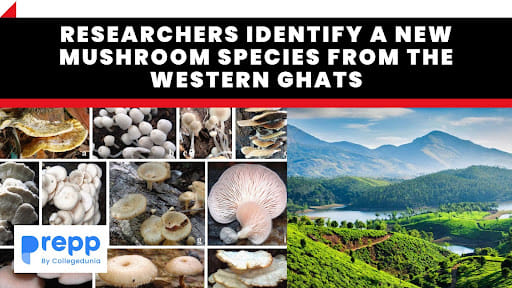
- Recently, a new species of mushroom has been discovered on the campus of the Jawaharlal Nehru Tropical Botanic Garden and Research Institute (JNTBGRI) at Palode in Kerala, India.
- This discovery highlights the remarkable biodiversity of the Western Ghats region and the need for further research on its fungal diversity.
Table of Contents
What are Mushrooms?
- Mushrooms are a diverse group of fungi which come in various shapes, sizes, and colors, and they can be found in a wide range of habitats around the world.
- Mushrooms are fungi, which means they are not plants or animals. They belong to the kingdom Fungi.
- Mushrooms play essential roles in ecosystems. They are important decomposers, breaking down dead organic matter and recycling nutrients.
- Certain mushrooms have been used for medicinal purposes in various cultures, and some are known for their potential health benefits.
Discovery of a New Mushroom Species
- Genus Candolleomyces: The mushroom has been named as Candolleomyces albosquamosus. It is tiny, delicate, and has a honey-yellow cap. It is part of the genus Candolleomyces, which has only 35 species worldwide.
- Structure: It has a white woolly scale-like structure on its cap. It is a small mushroom, reaching a height of approximately 58 mm, with a bell-shaped cap that changes color from honey-yellow to brownish-gray with age. The stem is cylindrical and white.
- Habitat: Candolleomyces albosquamosus is typically found in its natural habitat on decaying logs or bamboo culms in forested areas.
Significance for Biodiversity in the Western Ghats
- Biodiversity Documentation: The identification of a new mushroom species adds to the growing documentation of the diverse flora and fauna in the Western Ghats, a biodiversity hotspot. It showcases the richness of this region and the need for its preservation.
- Fungal Diversity: Fungi, like Candolleomyces albosquamosus, are often understudied compared to more prominent species. This discovery underscores the presence of a wide variety of fungi in the Western Ghats, contributing to a more comprehensive understanding of the region's biodiversity.
- Endemism: The Western Ghats is known for its high levels of endemism, with many species found only in this region. Discovering new species, such as this mushroom, emphasizes the unique and specialized nature of the area's ecosystems.
- Ecological Role: Fungi play a crucial role in forest ecosystems, particularly in the decomposition of plant litter. The discovery highlights the importance of understanding and conserving these organisms, as they contribute to nutrient cycling and ecosystem health.
- Research and Conservation: This finding encourages further research and conservation efforts in the Western Ghats to protect the various fungal species and their habitats. It underscores the need to preserve the entire ecosystem for a balanced and healthy environment.
About Western Ghats
Jawaharlal Nehru Tropical Botanic Garden and Research Institute (JNTBGRI)
|
(*Click this link to read prelims specific weekly current affairs articles)
FAQs
Question: What is Candolleomyces?
Answer:
Candolleomyces is a genus of fungi in the family Psathyrellaceae. These are small to medium-sized mushrooms with brittle, fragile basidiomata (fruiting bodies). They have pale or dark brown spores and lack pleurocystidia (cystidia on the gill face). There are currently 35 species of Candolleomyces recognized worldwide.
Question: What is Western Ghats?
Answer:
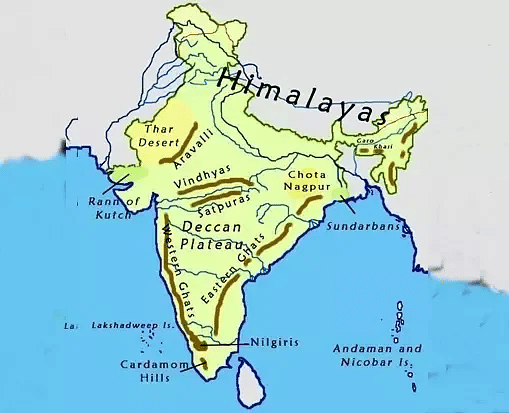
The Western Ghats is one of the world's eight biodiversity hotspots, spanning six states: Gujarat, Maharashtra, Goa, Karnataka, Tamil Nadu, and Kerala. It is designated as a UNESCO World Heritage Site. It is one of the world's eight "hottest hotspots" of biological variety.
Question: What is Fungi?
Answer:
Fungi can be single celled or very complex multicellular organisms. They are found in just about any habitat but most live on the land, mainly in soil or on plant material rather than in sea or freshwater.
MCQ
Question: Consider the following statements: (UPSC 2023)
- Some mushrooms have medicinal properties.
- Some mushrooms have psycho- active properties.
- Some mushrooms have insecticidal properties.
- Some mushrooms have biolumi- nescent properties.
How many of the above statements are correct?
(a) Only one
(b) Only two
(c) Only three
(d) All four
Answer: (d) See the Explanation
- Medicinal Properties: Certain mushrooms contain compounds with proven medicinal value. These compounds can have diverse effects on the human body, such as enhancing the immune system, reducing inflammation, or combating infections. They are increasingly studied for their potential in treating various health conditions.
- Psychoactive Properties: Specific mushroom species are known to contain psychoactive compounds, leading to hallucinations and altered states of consciousness when ingested. These mushrooms are often colloquially known as "magic mushrooms" due to their psychedelic effects, which have been used in various cultural and therapeutic contexts.
- Insecticidal Properties: Some mushrooms produce natural compounds that possess insecticidal properties. These compounds act as organic insecticides, serving to manage insect pests in agriculture and providing eco-friendly alternatives to synthetic pesticides.
- Bioluminescent Properties: A select group of mushrooms has the unique ability to emit light through bioluminescence, a process involving the enzyme luciferase. These mushrooms produce a soft, eerie glow in the dark, creating enchanting natural light displays.
Therefore, option (d) is the correct answer.
Question: With reference to “Gucchi” sometimes mentioned in the news, consider the following statements: (UPSC 2022)
- It is a fungus.
- It grows in some Himalayan Forest areas.
- It is commercially cultivated in the Himalayan foothills of north-eastern India.
Which of the statements given above is/are correct?
(a) 1 only
(b) 3 only
(c) 1 and 2
(d) 2 and 3
Answer: (c) See the Explanation
- Grown in the foothills of the Himalayas, Gucchi mushrooms are the costliest among fungi in the world. They are also known as Morel Mushrooms, and are a rare variety that cannot be cultivated commercially. Hence, statement 1 is correct.
- Gucchi mushrooms grow in clusters on logs in decaying wood and are mostly cultivated in parts of India like Himachal Pradesh, Uttarakhand and Jammu and Kashmir. Hence, statement 2 is correct.
- The fresh morel mushroom season is limited to a barely few weeks in the spring. It is collected from the wild habitats in northwestern Himalayas by the locals. Hence, statement 3 is not correct.
Therefore, option (c) is the correct answer.
Download the PREPP App and attempt FREE IAS Exam Mock Tests and get complete study material!

Full Test - 04: UPSC CSE Prelims CSAT (Paper-II)
Full Test - 03: UPSC CSE Prelims CSAT (Paper-II)
UPSC CSE Prelims 2026 GS Paper 1 Question Paper (24-May-2026)
UPSC CSE Prelims 2026 CSAT Paper 2 Question Paper (24-May-2026)

17 February 2025 | The Hindu Must Read Articles | Current Affairs

16 February 2026 | The Hindu Must Read Articles | Current Affairs

13 February 2026 | The Hindu Must Read Articles | Current Affairs









Comments