Recognising The Impact Of Climate Change On Health
Relevance: GS3 - Conservation, environmental pollution and degradation GS2 - Issues relating to development and management of Social Sector/Services relating to Health, Bilateral, regional and global groupings and agreements involving India and/or affecting India’s interests.
(Source: The Hindu, 11/22/2023)
Click here for Daily Current Affairs
Why in the news?
- This article discusses the impact of climate change on health in the lead-up to COP 28 hosted by the UAE.
- Climate change has been found to have both direct (illness, death), and indirect (increased stress, malnutrition, poor working hours) effects on life.
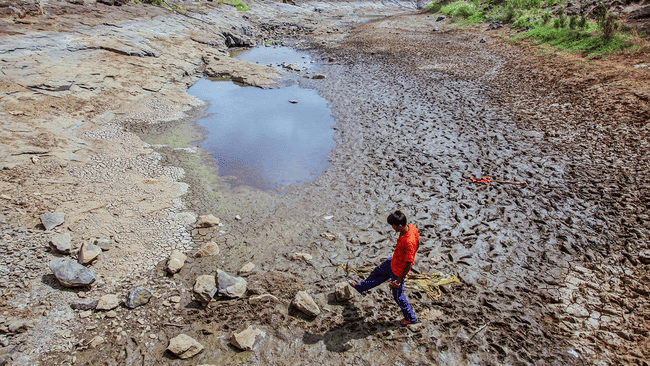
What are the major health impacts posed by climate change for India?
- Climate change can have both direct and indirect effects on the health of people in India.
- Direct: Increase in people affected by illnesses, emergence of new pathogens, and increased morbidity.
- Indirect: Climate change can affect nutrition systems, employment opportunities, and working hours and lead to climate-induced stress.
Double burden
- India faces a double burden of mortality from communicable and non-communicable diseases which will be worsened as a result of climate change.
- Communicable diseases: Climate change will facilitate the growth of disease-carrying vectors such as mosquitos, flies, ticks, etc.
- The seasonality of communicable infections caused by vectors could also change as a result of the effects of climate change.
- Climate change can also lead to the introduction of vectors and pathogens into newer areas such as mosquitos in the Himalayas.
- Climate change-induced global warming has led to an increase in the virulence of most pathogens.
- As a result of climate change, there has been a significant drop in the availability of food and water along with a decrease in the nutritional quality of food. This has increased the vulnerability of people to diseases.
- Epidemics are common in the aftermath of adverse weather events like floods and heatwaves, as they promote the spread of food- and water-borne pathogens.
- According to the Global Fund to Combat AIDS, TB, and Malaria, the world is likely to miss the target of putting an end to AIDS, TB, and malaria by 2030 due to the increasing challenges of climate change and conflict.
Non-communicable diseases:
- Increases in temperature as a result of climate change have led to increased physical exertion and dehydration among physical laborers in India.
- This has led to an increase in renal conditions which were already widespread due to high diabetes among Indians.
- Air pollution which has increased in strength and frequency due to climate change has exacerbated the occurrence of Chronic Obstructive Pulmonary Disease.
- The risk of death from pulmonary disease was found to increase by 1.8-8.2% during a heat wave.
- Similarly, hospitalization rates rise by 8% for every 1% increase in temperature above 29°C.
- Climate emergencies have been found to be a major cause behind the occurrence of mental illnesses like depression and Post Traumatic Stress Disorder.
- Despite this, the impact of climate change on non-communicable diseases and mental health has not been adequately recognized or addressed in India.
Impact of climate change on health in urban areas
- Although urbanization in India has been occurring at a rapid pace, it has not been properly and scientifically planned.
- Many urban spaces in India lack green cover and open spaces and are dominated by asphalt roads and heat-retaining infrastructure.
- As a result, the air circulation in these urban spaces is physically blocked by the buildings, leading to the intensification of the urban heat island effect.
- As a result of the lack of open spaces, people residing in urban regions were found to be less inclined towards physical activities.
- Since urban areas are subject to the worst effects of air pollution, climate change puts pressure on the already weak urban primary health system.
Mitigation efforts
- Health information systems in India are not equipped to understand the direct and indirect impacts of climate change on healthcare.
- It is, therefore, necessary to implement adequate systems for social support and health services as the impact of climate change can be worsened by the prevalent socio-economic conditions.
- The benefits associated with upstream interventions focussing on better urban planning, green cover, water conservation, and public health interventions will be greater for public health in the region.
- Action against climate change has to be taken at the global, regional, and local levels with the level chosen depending on the impact of climate change.
What can India do going forward?
- The first step to tackling climate change and associated health crises in India is for the country to recognize the effects of climate change and understand its effects on public healthcare.
- Therefore, climate researchers must develop policies that recognize these effects and act on them.
- The results of this research must be used by national, state, and local governments to develop policy options to respond to the crisis.
- In order to ensure a meaningful response to the climate crisis, the three streams - problematization, policy options, and political decision-making - must be synchronized.
(*Click this link to read prelims specific weekly current affairs articles)
FAQs
Question: What is climate change?
Answer:
Climate change refers to long-term shifts in temperatures and weather patterns which can be caused by natural factors such as volcanic eruptions as well as man-made factors like vehicular and industrial emissions.
Question: What is the Global Fund to Combat AIDS, TB, and Malaria?
Answer:
It is an international financing and partnership organization that was created in 2000 with its secretariat in Geneva. It aims to attract, leverage, and invest additional resources towards the goal of ending the epidemics of AIDS, tuberculosis, and malaria.
|
UPSC Mains Practice Questions Q.1) Discuss global warming and mention its effects on the global climate. Explain the control measures to bring down the level of greenhouse gases which cause global warming, in the light of the Kyoto Protocol, 1997. (GS3 2022) Q.2) Appropriate local community-level healthcare intervention is a prerequisite to achieve ‘Health for All ‘ in India. Explain. (UPSC GS2 2018) |
MCQs
Question: Consider the following pairs:
International agreement/set-up Subject
- Alma-Ata Declaration Healthcare of the people
- Hague Convention Biological and chemical weapon
- Talanoa Convention Global climate change
- Under2 Coalition Child rights
Which of the pairs given above is/are correctly matched? (UPSC CSE 2020)
(a) 1 and 2 only
(b) 4 only
(c) 1 and 3 only
(d) 2, 3 and 4 only
Answer: (c) See the Explanation
- Alma-Ata Declaration: It was adopted at the International Conference on Primary Health Care held in Alma-Ata, USSR in 1978 and recognized the importance of primary healthcare and called for urgent action by all governments, health and development workers, and the world community to protect and promote the health of all people.
- Hague Convention: The Hague Convention on the Prohibition of the Development, Production and Stockpiling of Bacteriological (Biological) and Toxin Weapons and on their Destruction is an international treaty that prohibits the production, stockpiling, and use of biological weapons.
- Talanoa Dialogue: It is a process designed to help countries increase ambition and accelerate action on climate change by creating a safe and inclusive space for countries to share stories and experiences about climate change.
- Under2 Coalition: It is a global community of sub-national governments committed to ambitious climate action in line with the Paris Agreement.
Therefore, option (c) is the correct answer.
Question: Consider the following statements:
Statement-I: India’s public sector health care system largely focuses on curative care with limited preventive, promotive and rehabilitative care.
Statement-II: Under India’s decentralized approach to health care delivery, the States are primarily responsible for organizing health services.
Which one of the following is correct in respect of the above statements? (UPSC CSE 2023)
- Both Statement-I and Statement-II are correct and Statement-II is the correct explanation for Statement-I
- Both Statement-I and Statement-II are correct and Statement-II is not the correct explanation for Statement-I
- Statement-I is correct but Statement-II is incorrect
- Statement-I is incorrect but Statement-II is correct
Answer: (c) See the Explanation
- As per the National Health Policy, 2017, India’s public sector healthcare system focuses on improving health status through coordinated policy action in all sectors.
- It also focuses on expanding preventive, promotive, curative, palliative, and rehabilitative services through the public health sector which focuses on the quality of these services. Hence statement 1 is correct.
- The states are primarily in charge of organizing health services under India’s decentralized system for providing healthcare.
- Ayushman Bharat-Pradhan Mantri Jan Arogya Yojana, or PM-JAY, is the government’s tax-financed National Health Protection Scheme, which enables low-income individuals to receive cashless secondary and tertiary care at private facilities. Hence statement 2 is correct.
Therefore, option (c) is the correct answer.
Download the PREPP App and attempt FREE IAS Exam Mock Tests and get complete study material!

Full Test - 04: UPSC CSE Prelims CSAT (Paper-II)
Full Test - 03: UPSC CSE Prelims CSAT (Paper-II)
UPSC CSE Prelims 2026 GS Paper 1 Question Paper (24-May-2026)
UPSC CSE Prelims 2026 CSAT Paper 2 Question Paper (24-May-2026)

17 February 2025 | The Hindu Must Read Articles | Current Affairs

16 February 2026 | The Hindu Must Read Articles | Current Affairs

13 February 2026 | The Hindu Must Read Articles | Current Affairs









Comments