Rapid Financing Instrument (RFI) – Indian Economy Notes
Rapid Financing Instrument means the financing system used by the International Monetary Fund (IMF) for its member countries. The main aim of the Rapid Financing Instrument (RFI) is to increase the flexibility of the IMF's financial assistance to meet the various needs of member nations and can be applied in a variety of situations. The topic “Rapid Financing Instrument” is an important part of the UPSC/IAS Exam Economy syllabus which is discussed in this article in detail.
|
Table of Contents |
Rapid Financing Instrument - Background
- Not only does a common man experiences financial crisis but also nations, especially developing ones.
- In the same situation, the International Monetary Fund (IMF) comes into the picture.
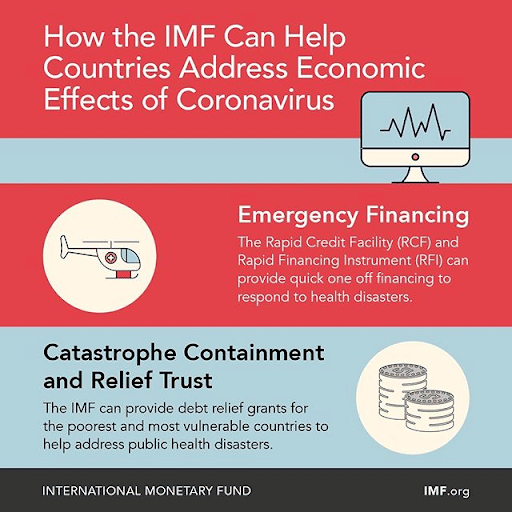
- The IMF provides financial assistance to low-income countries (LICs) in times of emergency such as natural disasters, pandemics, conflict, etc in the name of a Rapid Financing Instrument.
- However, the Rapid Financing Instrument is applicable only to the member nations that come under the Poverty Reduction and Growth Trust (PRGT) with limited conditionality.
|
|
|
|---|---|
| World Bank | Evolution of WTO |
| Viability Gap Funding | Take-Out Financing |
Rapid Financing Instrument - Meaning
- Rapid Financing Instrument is a financing tool used by the International Monetary Fund (IMF) for its members, especially the low-income countries (LICs) who are in need of urgent balance of payments.
- The IMF takes this instrument in a situation where there will be a drastic and rapid economic impact if the RFI was absent.
- The situations include natural disasters, conflict and post-conflict scenarios, commodity price shocks, food shocks, and fragility-related emergencies.
- The RFI is designed for instances in which a full-fledged economic programme is not required because the requirement is temporary and limited in scope, or is not practical due to a country's limited capabilities for designing or implementing policies.
- The Rapid Financing Instrument replaced the emergency assistance policy of the IMF.
Rapid Financing Instrument - Three Windows
Under the Rapid Financing Instrument, there are three windows. They are the regular window, the large natural disaster window, and the food shock window.
Regular Window
- The regular window is for BoP (Balance of Payments) demands that are urgent and brought on by a variety of factors, such as fragility, exogenous shocks, and domestic instability.
- Access is limited to 50 % of the annual quota and 150 % of the annual quota cumulatively.
- If the time-bound food shock window is implemented, a higher cumulative access limit (175 % of quota) would be put in place.
Large Natural Disaster Window
- The Large Natural Disaster window is for immediate BoP needs brought on by natural disasters if the estimated loss is equal to or greater than 20% of the member's GDP.
- Access to up to 80% of the quota annually and 183.330% of the quota cumulatively.
Food Shock Window
- The Food Shock Window is for immediate BoP needs brought on by severe food insecurity, a sudden spike in the cost of importing food or fertilizer, or a shock to cereal exports.
- Access to up to 50% of the quota from September 30, 2022, to September 29, 2023, for a 12-month period.
- The annual access limits of the other windows' windows will not apply to access under the food shock window.
Rapid Financing Instrument - Significance
- Financial Safety Net: The Rapid Financing Instrument enhances the financial safety net for developing nations.
- Immediate Guarantee: The RFI acts as an immediate cushion or guarantee in wake of extreme situations.
- Urgent Financial Needs: As it provides quick financial assistance, the RFI is a boon to low-income countries (LICs) for their urgent needs.
Conclusion
The RFI also provides financial assistance to high-income countries using another financial tool. Financial support granted under the RFI is subject to the same financing conditions as the Flexible Credit Line (FCL), the Precautionary and Liquidity Line (PLL), and Stand-By Arrangements (SBA), and should be repaid within 3¼ to 5 years.
FAQs
Question: What is the Rapid Financing Instrument (RFI)?
Answer: The Rapid Financing Instrument (RFI) is a financial assistance mechanism offered by the International Monetary Fund (IMF) to provide quick financial support to member countries facing urgent balance of payments needs. It aims to address short-term economic challenges without requiring a full-fledged economic program.
Question: When is the RFI typically used?
Answer: The RFI is used in situations of economic crisis caused by factors such as natural disasters, commodity price shocks, or global financial instability. It provides rapid assistance to stabilize economies and address urgent funding gaps.
Question: How is RFI different from other IMF programs?
Answer: Unlike standard IMF programs that require extensive policy commitments and structural reforms, the RFI provides swift financial support with less stringent conditions. This makes it suitable for countries facing immediate crises but unable to commit to long-term policy changes.
Question: What are the conditions for receiving assistance under the RFI?
Answer: While the RFI has fewer conditions compared to other IMF programs, countries must still demonstrate the need for urgent financial assistance due to an economic crisis. The IMF assesses the situation to ensure that the assistance will help stabilize the economy.
Question: Which countries have recently availed themselves of the RFI?
Answer: Various countries, particularly those affected by economic shocks due to the COVID-19 pandemic, have availed themselves of the RFI. Examples include nations facing economic downturns and urgent balance of payments needs due to global crises.
MCQs
- The Rapid Financing Instrument (RFI) is provided by:
A) World Bank
B) International Monetary Fund (IMF)
C) Asian Development Bank (ADB)
D) World Trade Organization (WTO)
Answer: (B) See the Explanation
The RFI is a financial assistance mechanism offered by the IMF to member countries facing urgent economic challenges.
- The primary purpose of the RFI is to:
A) Provide long-term loans for development projects
B) Offer rapid financial assistance during economic crises
C) Promote international trade agreements
D) Fund military operations
Answer: (B) See the Explanation
The RFI is designed to provide quick support to countries facing urgent balance of payments needs.
- Compared to other IMF programs, the RFI:
A) Requires extensive policy reforms
B) Has fewer conditions and provides swift support
C) Focuses exclusively on infrastructure projects
D) Targets only developed economies
Answer: (B) See the Explanation
The RFI offers rapid assistance with fewer conditions, making it suitable for countries facing immediate economic crises.
- RFI assistance is most commonly used during:
A) Long-term economic stability
B) Global financial crises and natural disasters
C) Routine policy reviews
D) Normal trade operations
Answer: (B) See the Explanation
The RFI provides quick support to countries facing crises such as natural disasters or global economic shocks.
- One of the key features of the RFI is:
A) Long-term policy monitoring
B) No need for any repayment
C) Rapid disbursement of funds to address urgent needs
D) Exclusive availability to developed nations
Answer: (C) See the Explanation
The RFI focuses on quickly disbursing funds to help countries manage economic crises.
GS Mains Questions and Model Answers
Q1: Discuss the role of the Rapid Financing Instrument (RFI) in addressing urgent balance of payments needs of countries during economic crises.
Answer: The Rapid Financing Instrument (RFI) plays a crucial role in providing swift financial assistance to IMF member countries facing urgent balance of payments needs due to crises such as natural disasters, economic shocks, or pandemics. Unlike traditional IMF programs, the RFI has fewer conditionalities, allowing for rapid disbursement of funds to stabilize economies and address immediate financial gaps. This quick intervention helps countries mitigate the impact of crises, restore economic stability, and maintain public confidence. By offering timely support, the RFI enables governments to address pressing economic challenges without committing to extensive long-term policy reforms, making it an effective tool for crisis response.
Q2: Analyze the importance of flexibility in IMF programs like the Rapid Financing Instrument (RFI) during global crises.
Answer: Flexibility in IMF programs such as the Rapid Financing Instrument (RFI) is critical during global crises, as it allows for timely and targeted responses to economic shocks. Traditional IMF programs often require extensive policy commitments, which may not be feasible during periods of economic instability. The RFI provides financial assistance quickly, with fewer conditions, enabling countries to stabilize their economies, address urgent funding needs, and mitigate the negative effects of crises. This flexibility is especially important for developing countries that may lack the capacity to implement complex reforms during emergencies. By adapting to the unique needs of each situation, the RFI ensures effective and responsive international support.
Q3: Evaluate the challenges and limitations of using the Rapid Financing Instrument (RFI) as a crisis management tool.
Answer: While the Rapid Financing Instrument (RFI) offers swift financial assistance to countries facing crises, it has certain limitations. The reduced conditionalities may lead to concerns about the effective use of funds and long-term economic sustainability. Countries receiving RFI support may also face difficulties in addressing underlying structural issues, as the instrument focuses on immediate stabilization rather than comprehensive reforms. Additionally, rapid disbursement of funds may not be sufficient to address deep-rooted economic problems, requiring follow-up measures or more extensive IMF programs. Balancing the need for quick relief with long-term stability remains a challenge in using the RFI effectively.
Previous Year Questions on Rapid Financing Instrument RFI
1. UPSC CSE 2020
Question: Assess the significance of the Rapid Financing Instrument (RFI) in supporting countries during the COVID-19 pandemic.
Answer: The Rapid Financing Instrument (RFI) played a significant role in supporting countries during the COVID-19 pandemic by providing swift financial assistance to address urgent balance of payments needs. Many countries faced economic disruptions, declining revenues, and increased healthcare expenditures due to the pandemic. The RFI offered quick relief, enabling governments to stabilize their economies, support healthcare systems, and address critical financial gaps without committing to extensive reforms. Its rapid disbursement and flexibility made it a vital tool for crisis management, ensuring timely international support. However, long-term recovery required additional measures, highlighting the need for sustained economic strategies.
2. UPSC CSE 2019
Question: Discuss the advantages and challenges of using the Rapid Financing Instrument (RFI) during global economic crises.
Answer: The Rapid Financing Instrument (RFI) offers several advantages during global economic crises, including rapid disbursement of funds, fewer conditionalities, and the ability to stabilize economies quickly. It allows countries to address urgent financial needs without undergoing extensive policy commitments, making it particularly useful in times of crisis. However, the RFI also faces challenges, such as ensuring the effective use of funds and addressing structural issues that may not be resolved through short-term financial assistance alone. Balancing immediate relief with long-term economic stability requires coordinated efforts and, in some cases, follow-up programs to address deeper economic concerns.
Indian Polity Notes Indian Economy Notes Art and Culture Notes Governance Notes Ancient India History Notes Medieval India History Notes Modern India History Notes Geography Notes Science And Technology Notes Environment And Ecology Notes Post Independence Notes Society Notes Internal Security Notes Ethics Notes Disaster Management Notes World History International Relations Social Justice Notes CSAT Notes Government Scheme Notes
Download the PREPP App and attempt FREE IAS Exam Mock Tests and get complete study material!

Full Test - 04: UPSC CSE Prelims CSAT (Paper-II)
Full Test - 03: UPSC CSE Prelims CSAT (Paper-II)
UPSC CSE Prelims 2026 GS Paper 1 Question Paper (24-May-2026)
UPSC CSE Prelims 2026 CSAT Paper 2 Question Paper (24-May-2026)

17 February 2025 | The Hindu Must Read Articles | Current Affairs

16 February 2026 | The Hindu Must Read Articles | Current Affairs

13 February 2026 | The Hindu Must Read Articles | Current Affairs









Comments