PM Modi Announces Pradhan Mantri PVTG Development Mission ₹24,000-Crore Scheme For Tribals
Relevance: GS2 - Government policies and interventions for development in various sectors and issues arising out of their design and implementation, Welfare schemes for vulnerable sections of the population by the Centre and States and the performance of these schemes; mechanisms, laws, institutions and Bodies constituted for the protection and betterment of these vulnerable sections GS1 - The Freedom Struggle — its various stages and important contributors/contributions from different parts of the country.
(Source: The Hindu, 11/15/2023)
Click here for Daily Current Affairs
Why in the news?
- Recently, the Prime Minister announced that the Union government will launch a ₹24,000 crore scheme - “Pradhan Mantri PVTG Development Mission”- for the welfare of tribal people on the occasion of Janjatiya Gaurav Divas.
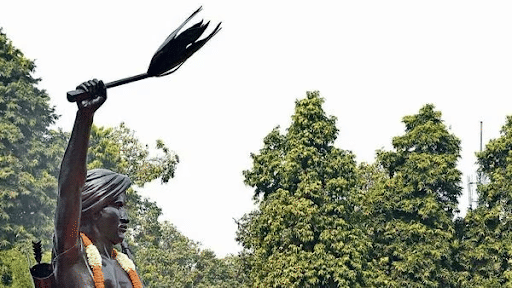
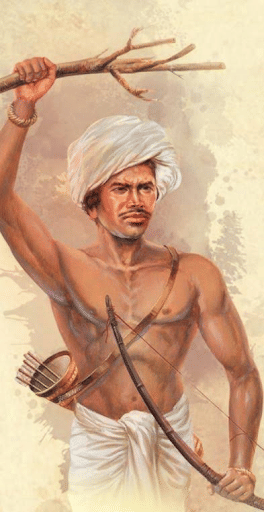
- Janjatiya Gaurav Divas is celebrated on November 15 every year to mark the birth anniversary of tribal freedom fighter and activist Birsa Munda.
What is the Pradhan Mantri PVTG Development Mission?
- The Pradhan Mantri Particularly Vulnerable Tribal Groups Development Mission is a ₹24,000-crore project that aims to assist in the development of the Particularly Vulnerable Tribal Groups (PVTG) in the country.
- It was launched on November 15th, 2023 by the Prime Minister of India to commemorate Janjatiya Gaurav Divas.
- It was announced by the Government of India in the 2023-24 Budget and will implement targeted schemes for socially and economically backward Scheduled tribes.
- It is part of ‘Reaching The Last Mile’, one of the seven Saptarishi priorities mentioned in the Budget.
- Features:
- It aims to improve the socio-economic conditions of the PVTGs by providing basic facilities such as road and telecom connectivity, electricity, safe housing, clean drinking water, and sanitation to areas where the PVTG communities live.
- It also includes improved access to education, health and nutrition, and sustainable livelihood opportunities in these areas.
- The Mission will be implemented through the convergence of 11 interventions of 9 Ministries such as the Pradhan Mantri Gram Sadak Yojana, Pradhan Mantri Gramin Awas Yojana, and Jal Jeevan Mission.
- Additionally, the Mission will seek to ensure saturation for PMJAY, Sickle Cell Disease Elimination, TB Elimination, 100% immunization, PM Surakshit Matritva Yojana, PM Matru Vandana Yojana, PM Poshan, PM Jan Dhan Yojana etc.
- Funds: According to information provided to the Rajya Sabha, the mission envisages the availability of ₹15,000 crore from the Development Action Plan for the Scheduled Tribes, for activities to be undertaken in the next three years under the Mission.
What are the PVTGs?
- The Particularly Vulnerable Tribal Groups (PVTG) refer to the tribal groups that are most vulnerable and generally inhabit remote localities with poor infrastructure and administrative support.
- In 1973, the Dhebar Commission introduced a new category titled Primitive Tribal Groups to classify tribal groups that were less developed.
- In 2006, the government of India renamed this category as Particularly Vulnerable Tribal Groups (PVTG).
- Characteristics of PVTG:
- Declining or stagnant population,
- Low levels of literacy
- Pre-agricultural level of technology and
- Economic backwardness.
- Number and distribution of PVTGs in India: Out of the 705 Scheduled Tribes in India, 75 have been identified and categorized as PVTGs.
- According to the 2011 census, PVTGs are distributed over 18 states and one Union Territory (UT).
- There are around 22,544 PVTG villages in the country.
- Odisha has the highest number of PVTGs in the country with more than 2.5 lakhs.
- Government Schemes for PVTGs
- Development of Particularly Vulnerable Tribal Groups (PVTGs) Scheme: It is a Centrally Sponsored Scheme of the Union Ministry of Tribal Affairs.
- It provides 100% central assistance to 18 states and the UT of the Andaman and Nicobar Islands.
- It is aimed at achieving the comprehensive socio-economic development of PVTGs while retaining their culture and heritage.
- Under the scheme, state governments implement projects in sectors such as education, health, and livelihood schemes.
- Prioritization in schemes: The PVTGs are accorded priority status under schemes of the Special Central Assistance to Tribal Sub-Scheme, grants under Article 275(1), and Grants-in-aid to voluntary organizations working for the benefit of tribal communities.
- Conservation-cum-Development plan: Each state and the Andaman and Nicobar Islands’ administration are required to prepare a long-term Conservation-cum-Development (CCD) plan for each PVTG within its territory.
- The CCD plan must include the initiatives to be undertaken, related financial planning, and the responsible agencies.
- The CCD plan has a validity period of five years.
- Forest Rights Act: The forest and habitat rights of the PVTGs have been recognized under the Scheduled Tribes and Other Traditional Forest Dwellers (Recognition of Forest Rights) Act 2006 (FRA).
- In October 2023, the Baigas, a PVTG of Chhattisgarh became the second community to get habitat rights in the state, after the Kamar PVTG.
Major challenges faced by PVTGs
- Exploitation: PVTGs generally practice activities such as collection of food and non-timber forest produce, hunting, shifting cultivation, livestock farming, and artwork.
- The collection of forest produce is primarily for consumption with any excess sold to middlemen who exploit the PVTGs.
- Legislation and livelihood loss: Changes in the environment and subsequent legislation for conservation have affected the lifestyle and livelihoods of the PVTGS.
- Poor socio-economic conditions: The living conditions of the PVTGs are generally characterized by extreme poverty, lack of access to healthcare facilities, low literacy rates, economic backwardness, unsafe drinking water, malnutrition, poor sanitation, etc.
- As a result, they are vulnerable to diseases such as anemia, respiratory illness, malaria, gastrointestinal infections, and skin infections.
|
Birsa Munda
|
(*Click this link to read prelims specific weekly current affairs articles)
FAQs
Question: What is the Forest Rights Act?
Answer: The Forest Rights Act (FRA), 2006, recognizes the rights of tribal communities that live in the forest and other traditional forest dwellers to the forest resources that were essential to their ability to meet a range of needs, including subsistence, habitation, and other sociocultural requirements.
Question: What are the Saptarishi promises?
Answer: The Saptarishi promises are the seven priorities of the Union Budget 2023-24. They consist of Inclusive development, Reaching the last mile, Infrastructure and investment, Unleashing potential, Green growth, Youth Power, and the Financial Sector. These priorities will help guide the country through the Amrit Kaal
UPSC Mains Practice Question:
|
MCQs
Question: Consider the following statements about particularly Vulnerable Tribal Groups (PVTGs) in India: (UPSC 2019)
- PVTGs reside in 18 states and one union Territory.
- A stagnant or declining population is one of the criteria for determining PVTG status.
- There are 92 PVTGs officially notified in the country so far.
- Irular and Konda Reddi tribes are included in the list of PVTGs.
Which of the statements given above are correct?
(a) 1,2 and 3
(b) 2,3 and 4
(c) 1, 2 and 4
(d) 1,3 and 4
Answer: (c) See the Explanation
- Particularly Vulnerable Tribal Groups (PVTGs) are centrally recognized special categories from among the Scheduled Tribe.
- PVTGs are found in 18 States and UT of A&N Islands. Hence, statement 1 is correct.
- The Dhebar Commission report identified such groups on the basis of one or more of the following features:
- Pre-agricultural level of technology,
- Low level of literacy
- Economic backwardness
- A declining or stagnant population. Hence, statement 2 is correct.
- A total of 75 tribal groups have been categorized by the Ministry of Home Affairs as Particularly Vulnerable Tribal Groups (PVTG). Hence, statement 3 is incorrect.
- Konda Reddy of Khammam district of Telangana and Irular of Tamil Nadu are on the list of PVTGs. Hence, statement 4 is correct.
Therefore, option (c) is the correct answer.
Question: With reference to the history of India, “Ulgulan” or the Great Tumult is the description of which of the following events?
(a) The Revolt of 1857
(b) The Mappila Rebellion of 1921
(c) The Indigo Revolt of 1859-60
(d) Birsa Munda’s Revolt of 1899-1900
Answer: (d) See the Explanation
- The Great Tumult or Ulgulan was a movement started by Birsa Munda against the exploitation and discrimination of tribals by the local authorities.
- Although the movement failed post his death, it did lead to the passage of the Chotanagpur Tenancy Act which forbade tribal lands from passing to non-tribals, protecting their land rights for the foreseeable future.
Therefore, option (d) is the correct answer.
Question: Match List-I with List-II and select the correct answer using the codes given below the lists: [1997]
List-I List-II
- Moplah revolt 1. Kerala
- Pabna revolt 2. Bihar
- Eka movement 3. Bengal
- Birsa Munda revolt 4. Awadh
Codes:
(a) A – 1; B – 3; C – 4; D – 2
(b) A – 2; B – 3; C – 4; D – 1
(c) A – 1; B – 2; C – 3; D – 4
(d) A – 3; B – 4; C – 1; D – 2
Answer: (a) See the Explanation
- The Moplah revolt took place in the Malabar region in Kerala in 1921.
- The Pabna revolt took place in East Bengal (now in Bangladesh) in 1873
- The Eka movement occurred in 1921-22 in districts of Uttar Pradesh.
- The Birsa Munda revolt took place in 1899 in Ranchi, Bihar, which is now part of Jharkhand.
Therefore, option (a) is the correct answer.
Download the PREPP App and attempt FREE IAS Exam Mock Tests and get complete study material!

Full Test - 04: UPSC CSE Prelims CSAT (Paper-II)
Full Test - 03: UPSC CSE Prelims CSAT (Paper-II)
UPSC CSE Prelims 2026 GS Paper 1 Question Paper (24-May-2026)
UPSC CSE Prelims 2026 CSAT Paper 2 Question Paper (24-May-2026)

17 February 2025 | The Hindu Must Read Articles | Current Affairs

16 February 2026 | The Hindu Must Read Articles | Current Affairs

13 February 2026 | The Hindu Must Read Articles | Current Affairs









Comments