Non Conventional Energy Resources in India - Geography Notes
Non-conventional energy sources, also known as Renewable energy sources, are sources that are continuously replenished by natural processes. Solar energy, wind energy, bio-energy (sustainably grown bio-fuels), hydropower, and other renewable energy sources are examples. A renewable energy system converts energy from the sun, wind, falling water, sea waves, geothermal heat, or biomass into usable heat or electricity. The majority of non-conventional energy comes from the sun and wind, either directly or indirectly, and can never be depleted, thus the term "renewable." This article will explain to you the Conventional Energy in India which will be helpful in Geography preparation for the UPSC Civil service exam.
|
Table of Contents |
Non-Conventional Energy Resources in India
- India is endowed with non-traditional energy sources such as sunlight, water, wind, and biomass.
- Furthermore, the growing demand for energy has led to the country's reliance on fossil fuels such as oil, coal, and gas. In this regard, the potential shortage of gases and oil has raised concerns as a result of rising energy prices.
- The growing demand for energy has made the country reliant on fossil fuels such as coal, oil, and gas.
- Potential oil and gas shortages due to price increases and over-exploitation of energy, raising concerns about the future security of energy supply.
- Furthermore, the increased use of fossil fuels causes serious environmental issues.
- As a result, there is an urgent need to use renewable energy sources such as solar energy, wind energy, tide energy, biomass, and waste energy.
- These are referred to as non-conventional energy sources.
- It has the most extensive programs for the development of renewable energy resources.
- Non-Conventional Energy Resources are:
- Solar Energy
- Wind power
- Biogas
- Tidal Energy
- Geothermal Energy
|
|
|
|---|---|
| Natural Resources in India | Wind Energy in India |
| Conventional Energy in India | Geothermal in India |
| Solar Energy in India | Nuclear Energy Resources |
| Tidal Energy in India | HydroPower Energy Sources in India |
Solar Energy
- India is a tropical country. It has enormous potential for harnessing solar energy. Photovoltaic technology directly converts sunlight into electricity.
- Solar energy is quickly gaining popularity in rural and remote areas. Madhapur, near Bhuj, is home to India's largest solar plant, where solar energy is used to sterilise milk cans.
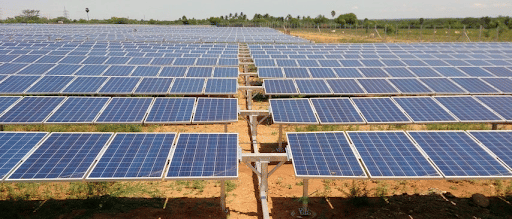
Solar plant
- The use of solar energy is expected to reduce rural households' reliance on firewood and dung cakes, contributing to environmental conservation and an adequate supply of manure in agriculture.
- The capacity of the National Thermal Power Corporation Limited (NTPC) project would be nearly double that of Rajasthan's Bhadla solar park, which is currently the country's largest single-location solar power plant.
- NTPC hopes to have built 60 GW (gigawatts) of renewable energy capacity by 2032.
- Several solar-powered devices are available on the market and are widely used in rural India.
- Among them are:
- Solar Cooker
- Water heater
- Dryer
- Lantern
- Pumps
- Lighting
Wind power
- India is now regarded as a global "wind superpower."
- Winds are formed when air moves from warmer to colder areas, and these airflows are captured in windmills and wind turbines to generate electricity.
- Wind energy is not a new discovery; it has been used for millennia in the form of traditional windmills to grind maize, pump water, and sail ships.
- Wind power can now be used to generate energy on a larger scale thanks to advances in technology.
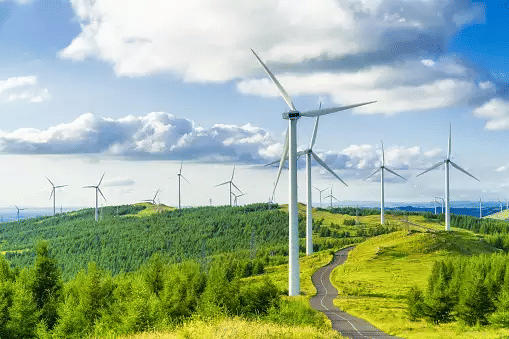
Windmills
- Tamil Nadu has the largest wind farm cluster, stretching from Nagercoil to Madurai.
- Apart from these, important wind farms can be found in Andhra Pradesh, Karnataka, Gujarat, Kerala, Maharashtra, and Lakshadweep.
- Nagarcoil and Jaisalmer are well-known in the country for their effective use of wind energy.
- According to the Indian Meteorological Department, the average annual wind velocity in peninsular India is 6.5-8 m/s along the coastlines of Gujarat, the Western Ghats, and some parts of central India.
- According to a CSE report: With a total installed capacity of 37.7 GW (as of March 2020), India currently ranks fourth in the world, generating approximately 52.66 billion units in 2017-18.
- According to a recent Crisil study, wind installations could reach 45 GW by March 2022.
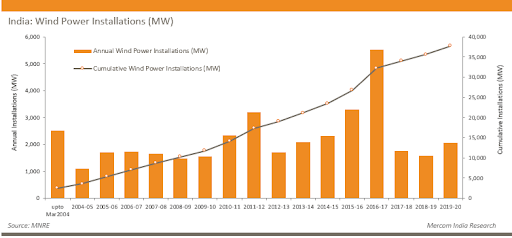
Crisil study - Wind power Installations
Biogas
- In rural areas, shrubs, farm waste, animal and human waste are used to generate biogas for domestic consumption.
- Organic matter decomposition produces gas, which has a higher thermal efficiency than kerosene, dung cake, and charcoal.
- Municipal, cooperative, and individual biogas plants exist. In rural India, plants that use cattle dung are known as 'Gobar gas plants.'
- These provide the farmer with two benefits: energy and improved manure quality. By far the most efficient use of cattle dung is biogas.
- It improves manure quality while reducing tree and manure loss from the combustion of fuel wood and cow dung cakes.
- The Indian government intended to build approximately 5,000 Compressed Biogas (CBG) plants across the country by 2023, with the following feedstock.
- Biogas is an excellent and effective way to promote rural development in developing countries such as India.
- The following are some of the applications for biogas: -
- Cooking, heating, lighting, and electricity generation
- Biogas slurries can produce organic manure, which can be used in place of chemical fertilisers in agriculture.
- Sanitation issues can be addressed because toilets are directly linked to biogas plants.
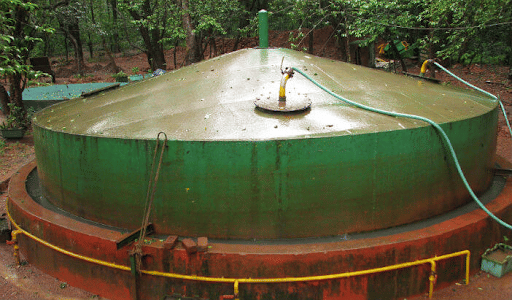
Biogas plant
Tidal Energy
- Tides in the ocean can be used to generate electricity. Floodgate dams are constructed across inlets.
- Water flows into the inlet during high tide and becomes trapped when the gate is closed.
- When the tide falls outside the flood gate, the water retained by the floodgate flows back to the sea via a pipe that passes through a turbine that generates electricity.
- The Gulf of Kachchh in India provides ideal conditions for utilising tidal energy.
- The National Hydropower Corporation is constructing a 900 MW tidal energy power plant here.
- According to a 2014 study conducted by the Indian government, India has a tidal power potential of 12.5 gigatonnes spread across the coastlines of Gujarat, Tamil Nadu, and West Bengal.
- However, due to the high costs associated with the installation of tidal power plants, this plan has been put on hold until further notice.
- However, from 5 gigawatt-hours in 2009 to 45 gigawatt-hours in 2019, many European countries increased their tidal power generation capacity.

Tidal energy plant - west bengal
Hydropower
- Hydropower is water-based energy that uses kinetic energy to generate electricity.
- Free-flowing water (from reservoirs and dams) spins a turbine, which generates electricity in a manner similar to wind energy.
- India has the most hydropower reserves, which can meet a demand of approximately 85 GW.
- According to an International Hydropower Association report, India will have a total installed capacity of 50 Gigawatts by 2020, surpassing Japan to become the world's fifth-largest hydropower producer.
- India's northern and northeastern regions have enormous hydropower potential.
- With 47 GW of untapped hydropower potential, Arunachal Pradesh has the most, followed by Uttarakhand with 12 GW.
- Certain remote and hilly areas in India are difficult to electrify, and power transmission is expensive.
- Small hydropower (SHP) plants with station capacities of up to 25 megawatts (MW) are advantageous for these locations because they run on small turbines and do not necessitate the construction of a dam on a river.
- The Indian government prioritizes SHP over large hydropower plants because the former is more environmentally friendly.
- Small hydropower plants are further classified as micro hydro (up to 100 kW), mini-hydro (101-2000 kW), and SHP produces a total of 4688 MW of power by June 2020.
- However, hydropower plants are losing favor as solar plants become more affordable.
Geothermal Energy
- Geothermal energy is the heat and electricity generated by using heat from the Earth's interior.
- Geothermal energy exists because the Earth's temperature increases with depth. High temperatures are found at shallow depths where the geothermal gradient is steep.
- In such areas, groundwater absorbs heat from the rocks and becomes hot. It's so hot that when it reaches the earth's surface, it condenses into steam. This steam powers turbines and generates electricity.
- In India, there are hundreds of hot springs that could be used to generate electricity.
- In India, two pilot projects to harness geothermal energy have been established.
- The first is in the Parvati Valley near Manikaran in Himachal Pradesh, and the second is in the Puga Valley in Ladakh.
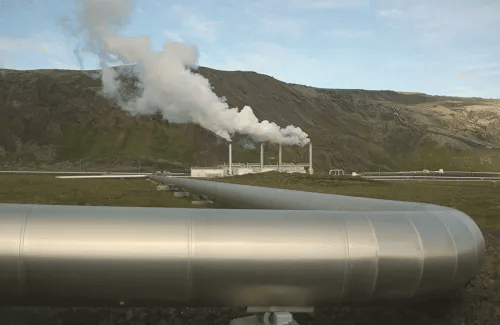
Geothermal plant
- Italy, the United States, New Zealand, Japan, Mexico, the Philippines, and Indonesia are currently among the countries that use geothermal energy for electricity generation and other thermal applications.
- The Geological Survey of India (GSI) conducted various studies and identified 350 geothermal energy locations in the country, with a potential capacity of approximately 10,000 MW.
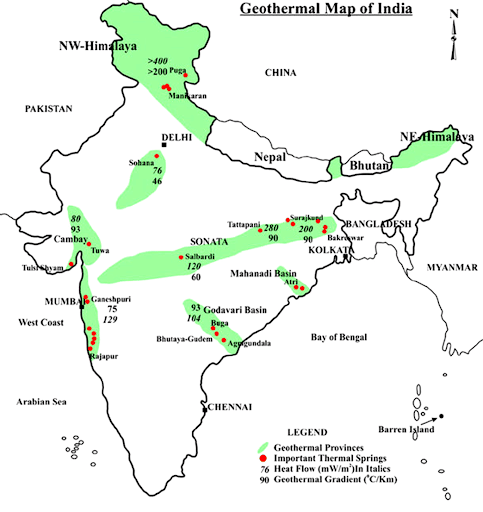
Geothermal map
Gasohol
- When used as a fuel, gasohol is a mixture of gasoline (up to 90%) and ethanol (up to 10%).
- Ethanol, also known as Ethyl alcohol or simply alcohol, is produced through a fermentation process from barley, corn, sugarcane, or other similar crops.
- To reduce toxic gas emissions, many countries, including India, have increased their use of ethyl alcohol as an alternative fuel.
- Ethanol, when successfully blended with petrol (gasoline), raises the octane rating of the fuel and is less harmful to the environment due to low carbon emissions.
- According to India's National Biofuel Policy 2018, an ethanol blending target of 10% by 2022 and 20% by 2030 has been established, but only 5% of the blending target has been met as of 2019.
- The Indian government recently announced in 2021 that the earlier 20% ethanol blending target in petrol (E20) is being pushed back to 2025 from 2030.
Hydrogen Energy
- Hydrogen energy is one of the cleanest because it produces no carbon-based emissions.
- Today, the technology for producing hydrogen from fossil fuels is in use.
- In India, however, hydrogen fuel cell technology is still in its infancy.
- When electricity passes between electrodes immersed in a conducting aqueous solution in fuel cell technology, electrolysis of water (H2O) produces hydrogen.
- Hydrogen fuel cells are designed to be modular and transportable.
- They share the same electrochemical foundations as regular batteries, employing electrolyte and membrane materials.
- Hydrogen fuel has a higher energy density than other fuels, so it produces more energy.
- Currently, hydrogen is produced using fossil fuels, which contribute to environmental degradation.
- As a result, the Indian government should prioritize hydrogen production from renewable sources.
- The Ministry of New and Renewable Energy (MNRE) of India has been supporting various hydrogen projects for development in academic institutions, research organisations, and industry.
- Tata Motors launched a hydrogen fuel cell bus in 2019 in collaboration with the Indian Space Research Organisation (ISRO) and Indian Oil (IOCL).
Significance of Non-Conventional Energy Resources
- Non-conventional or renewable energy possesses all of the characteristics of a user-friendly alternative.
- Currently, all countries around the world have access to all of these resources, and they are plentiful.
- The only thing that can be done on their behalf is to develop economic and advanced technological strategies to put these resources to use. If proper research facilities are invested in this cause, there is significant scope for scientific developments in this field.
- It is also critical to better manage non-conventional energy sources.
- The government of India has created a separate department for the management of non-conventional energy sources called The Department of Non-Conventional Sources of Energy.
- All of these energy resources are pollution-free, abundant, environmentally friendly, and cost-effective.
- The best thing about renewable resource-based power plants is that they have almost no to no fuel costs.
- These resources pose no environmental risks and have a very low energy density.
- These resources can also be used to promote local business engagements and assist India's unorganized sector and unemployment problems.
Non-Conventional Energy Resources - Issues
- Supply is inconsistent and unreliable: A number of these non-conventional energy sources require cooperation from the weather, atmospheric conditions, and the environment in order to be harnessed.
- Wind may be scarce for wind turbines, or cloud cover may obstruct solar energy collection. Geothermal plants are known to deplete their energy source in unpredictable ways.
- This inconsistency and lack of reliability can be costly, especially when converting an energy source into electricity for power distribution.
- When it comes to non-conventional energy sources, pollution is a major ecological concern.
- Noise pollution is caused by wind turbine farms. Nuclear reactors generate toxic waste that is harmful to living things, making storage, transport, and disposal difficult.
- Toxic emissions from geothermal plants have been linked to sulfur dioxide, silica, and heavy metal deposits of mercury, arsenic, and boron.
- Certain non-conventional energy sources pose serious risks. Wind energy farms are notorious for causing harm to bird, bat, and insect species with their windmill blades.
- Earthquakes, floods, sinkholes, tornadoes, hurricanes, and other natural disasters can all cause nuclear plant damage, resulting in leaks and environmental contamination.
- Starting a farm or plant that uses solar, wind, algae, geothermal, nuclear, hydropower, and ocean energy sources necessitate significant funding and investment.
- Large-scale algae production, maintenance, and harvesting can result in exorbitant costs.
- Geothermal and ocean energy sources necessitate specific locations close to the source.
- That access is not always without risks and hazards, which can disrupt distribution networks and infrastructure.
- Location-specific non-conventional energy sources are difficult to access. Ocean energy sources are not available to landlocked states.
Conclusion
Energy conservation and sustainable development are two of the world's most pressing issues today. Thus, the only way to provide an adequate supply of energy to this world and its massive population is to improve and innovate new ways to practice sustainable use of these energy sources. Our country is currently heavily reliant on traditional energy sources, which cannot provide a long-term solution to the current energy supply crisis. As a result, the only way to conserve these non-renewable energy sources is to convert our energy supply sources into unconventional energy sources.
|
|
|
|---|---|
| Geography Notes | Energy Resources in India |
| Mineral Resources of India | Major Mineral Belts of India |
| Conservation of Mineral Resources National Mineral Policy, 2019 | Major Industrial Regions of the World |
FAQs
Question: What are non-conventional energy resources?
Answer: Non-conventional energy resources, also known as renewable energy resources, include solar, wind, biomass, hydropower, and geothermal energy. These are sustainable and environmentally friendly alternatives to fossil fuels.
Question: Which Indian states are leaders in solar energy production?
Answer: States like Rajasthan, Gujarat, and Madhya Pradesh are leaders in solar energy production due to their high levels of sunlight and extensive solar projects.
Question: What is the significance of the Jawaharlal Nehru National Solar Mission?
Answer: The Jawaharlal Nehru National Solar Mission is a government initiative aimed at promoting solar energy in India, with ambitious targets for expanding solar capacity and reducing dependence on non-renewable energy sources.
Question: What are the advantages of wind energy in India?
Answer: Wind energy is a clean, renewable resource. India’s long coastline provides excellent opportunities for wind farms, and wind energy contributes significantly to the country’s renewable energy mix.
Question: How does India harness biomass energy?
Answer: India harnesses biomass energy from organic materials like crop waste, animal waste, and wood. It is primarily used in rural electrification and industrial applications.
MCQs
1. Which Indian state is a major producer of wind energy?
A) Rajasthan
B) Tamil Nadu
C) Uttar Pradesh
D) Bihar
Answer: (B) See the Explanation
Tamil Nadu is one of the leading producers of wind energy in India, with several large wind farms contributing to the state's energy supply.
2. What is the main goal of the Jawaharlal Nehru National Solar Mission?
A) To promote coal mining
B) To expand nuclear power
C) To increase solar energy production
D) To build hydropower dams
Answer: (C) See the Explanation
The primary goal of the Jawaharlal Nehru National Solar Mission is to expand solar energy production in India and reduce reliance on non-renewable energy sources.
3. Which of the following is a source of biomass energy?
A) Solar radiation
B) Wind
C) Crop waste
D) Tidal waves
Answer: (C) See the Explanation
Biomass energy is derived from organic materials like crop waste, animal waste, and wood, which are used for energy production.
4. Which renewable energy resource has vast potential in Ladakh and Puga Valley?
A) Wind energy
B) Geothermal energy
C) Hydropower
D) Biomass energy
Answer: (B) See the Explanation
Ladakh and Puga Valley are known for their geothermal potential, though this resource is still in the early stages of development in India.
5. What is the main advantage of non-conventional energy resources?
A) They are expensive
B) They are limited in supply
C) They are environmentally sustainable
D) They are available only in urban areas
Answer: (C) See the Explanation
The primary advantage of non-conventional energy resources is that they are environmentally sustainable and do not deplete natural resources like fossil fuels.
GS Mains Questions and Model Answers
Q1: Discuss the potential of solar energy in India and the challenges in its development.
Answer: India has significant potential for solar energy due to its geographical location, receiving abundant sunlight throughout the year. The Jawaharlal Nehru National Solar Mission has set ambitious targets for increasing solar capacity, and states like Rajasthan, Gujarat, and Madhya Pradesh are leading in solar power generation. However, challenges include the high cost of solar infrastructure, land acquisition issues, and the intermittent nature of solar energy. Despite these challenges, government incentives and technological advancements are helping to boost the growth of solar energy in India.
Q2: Evaluate the role of wind energy in India’s renewable energy strategy.
Answer: Wind energy plays a crucial role in India's renewable energy strategy, with states like Tamil Nadu, Gujarat, and Maharashtra leading the way. Wind farms contribute significantly to India's energy mix, reducing dependency on fossil fuels and lowering carbon emissions. The Indian government has incentivized wind energy production through subsidies and tax benefits. However, challenges such as irregular wind patterns, infrastructure costs, and grid integration need to be addressed to maximize the potential of wind energy in India.
Q3: Analyze the importance of non-conventional energy resources in ensuring India’s energy security.
Answer: Non-conventional energy resources, such as solar, wind, biomass, and hydropower, are essential for ensuring India's energy security. As the country’s energy demand grows, relying on non-renewable sources like coal and oil is not sustainable in the long term. Renewable energy helps diversify the energy mix, reduces dependence on imported fossil fuels, and mitigates environmental damage. Additionally, the development of non-conventional energy creates jobs and promotes rural electrification. With India’s commitment to climate goals under international agreements, expanding the use of renewable energy is critical for sustainable development.
Previous Year Questions on Non Conventional Energy Resources
1. UPSC CSE Mains 2016 (GS Paper 3)
Question: What are the advantages and challenges of promoting renewable energy in India?
Answer: Renewable energy offers several advantages for India, including energy security, environmental sustainability, and the potential for job creation in the renewable sector. It reduces reliance on fossil fuels, mitigates climate change, and promotes rural development through decentralized energy generation. However, challenges include the high upfront costs, intermittency issues, and inadequate grid infrastructure. Despite these challenges, government policies and technological advancements are improving the outlook for renewable energy in India.
2. UPSC CSE Mains 2018 (GS Paper 3)
Question: Discuss the role of renewable energy in India’s transition to a low-carbon economy.
Answer: Renewable energy is key to India’s transition to a low-carbon economy. With its abundant potential in solar, wind, and hydropower, India is focusing on reducing its carbon footprint and fulfilling its commitments under the Paris Agreement. Solar and wind energy are particularly important in cutting down greenhouse gas emissions and reducing dependency on coal. The government’s initiatives, like the National Solar Mission, demonstrate the emphasis on clean energy. However, issues like grid integration, storage technology, and financing need to be addressed for a smooth transition to a low-carbon economy.
Download the PREPP App and attempt FREE IAS Exam Mock Tests and get complete study material!

Live Test : UPSC CSE Prelims CSAT (Paper-II) (Oct 20 - 23)
Full Test - 04: UPSC CSE Prelims CSAT (Paper-II)
Full Test - 03: UPSC CSE Prelims CSAT (Paper-II)
UPSC CSE Prelims 2026 GS Paper 1 Question Paper (24-May-2026)
UPSC CSE Prelims 2026 CSAT Paper 2 Question Paper (24-May-2026)

17 February 2025 | The Hindu Must Read Articles | Current Affairs

16 February 2026 | The Hindu Must Read Articles | Current Affairs

13 February 2026 | The Hindu Must Read Articles | Current Affairs









Comments