Nearly a Billion Children Globally Exposed to Extremely High Water Stress: UNICEF Report
Click here for Daily Current Affairs
Why in the news?
- A recent UNICEF report revealed that nearly a billion children worldwide were exposed to high or extremely high water stress in 2022.
- The conditions can worsen conditions due to climate change and emphasize the importance of focusing on children in global responses.
Key Findings of the UNICEF Report
- Global Impact on Children: In 2022, nearly half of the world’s children, amounting to 953 million, were exposed to high or extremely high water stress. The situation is projected to worsen due to climate change.
- Exposure to Water Scarcity and Vulnerability: The report identifies that 739 million children were exposed to high or extremely high water scarcity, and 436 million children lived in areas with high or extremely high water vulnerability.
- Call for Action at COP28: UNICEF Executive Director Catherine Russell emphasized the need for COP28 to be a turning point in putting children at the center of the global response to climate change.
- Impact of Climate and Environmental Shocks: The report builds on the 2021 Children’s Climate Risk Index (CCRI), noting that 559 million children are exposed to high heatwave frequency, and around 470 million children faced high or extremely high drought risk in 2022. These numbers could potentially affect all 2.02 billion children globally by 2050.
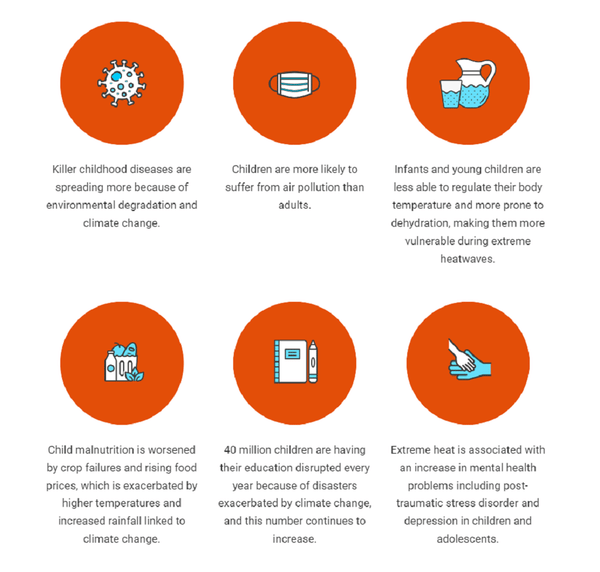
- Health Impacts from Extreme Weather Events: The report explains how extreme weather events like floods, linked to climate change, compromise safe water supply, damage sanitation facilities, and lead to outbreaks of water-borne diseases such as diarrhea. These conditions exacerbate child malnutrition due to crop failures and rising food prices.
- Sustainability and Climate Action Plan: UNICEF plans to launch this initiative to galvanize efforts to protect vulnerable children and address global gaps.
- Inclusion of Children in Climate Agenda: The report calls for embedding children and intergenerational equity in the Global Stocktake of the Paris Climate Change Agreement and including them within the final decision on the Global Goal on Adaptation.
- Advocacy for Child-Responsive Funding: Ahead of COP28, UNICEF advocates for making the Loss and Damage Fund and funding arrangements child-responsive, suggesting that child rights be embedded in the fund’s governance and decision-making process.
| Category | Statistical Data |
|---|---|
| Global Child Exposure to Water Stress | 953 million children (approx. half of the world's children in 2022) |
| Water Scarcity and Vulnerability | 739 million children (high/extreme scarcity) 436 million children (high/extreme vulnerability) in 2022 |
| Exposure to Heatwaves | 559 million children currently exposed |
| Drought Risk |
|
Children’s Climate Risk Index (CCRI)
|

Water Scarcity Index 2022The Water Scarcity Index provides a measure to assess the extent of water scarcity in different regions worldwide. Below are the key findings:
|
What is Water Stress?
- Water stress refers to the difficulty in obtaining sources of fresh water for use, due to various factors, often related to environmental, social, economic, and political issues.
- It occurs when the demand for water exceeds the available amount during a certain period, or when poor quality restricts its use.
- Water stress is influenced by both natural and human factors.
- Climate change is exacerbating the situation by altering weather patterns, leading to more severe and frequent droughts and floods, which disrupt water availability.
- Human activities, such as overuse of water resources, pollution, and inefficient water management practices, also contribute significantly to water stress.
- Addressing water stress requires comprehensive management and conservation strategies, sustainable practices, and a collaborative effort among different sectors and communities.
Key Issues Related to Water Stress
- High Demand vs. Limited Supply: Water stress often occurs in areas where the demand for water exceeds the available supply. This can be due to population growth, industrial activities, or agricultural needs.
- Impact of Climate Change: Climate change exacerbates water stress. It can lead to more frequent and severe droughts, altering rainfall patterns, and reducing the predictability of water availability.
- Water Scarcity and Vulnerability: The UNICEF report highlights that a significant number of children are living in areas with high or extremely high water scarcity and vulnerability.
- This is characterized by low levels of drinking water service and high risks of water stress, affected by factors like seasonal variability, groundwater decline, and drought.
- Health and Sanitation Concerns: Water stress can compromise safe water supply and damage sanitation facilities.
- In areas with open defecation issues, this leads to water contamination and outbreaks of waterborne diseases like diarrhea.
- Nutritional Impact: Extreme weather events and changing climate conditions can cause crop failures and increase food prices, worsening child malnutrition.
- Need for Global Response Focused on Children: The report emphasizes the importance of putting children at the center of the global response to climate change, as they are among the most vulnerable to its impacts.
- Policy and Funding Initiatives: UNICEF's report calls for including children in climate change agendas and policy decisions. It suggests making funding arrangements, like the Loss and Damage Fund, child-responsive and embedding child rights in decision-making processes.
- Risk of Increased Heatwaves and Droughts: The report also indicates that a large number of children are exposed to high heatwave frequency and drought risk, which can exacerbate water stress.
Measures Suggested by UNICEF
- Child-Centric Global Response: Emphasizing the need to have children at the center of the global response to climate change.
- Inclusion in COP28 Agenda: Advocating for COP28 to be a turning point in prioritizing children in the fight against climate change.
- Integration in the Global Stocktake: UNICEF calls for the integration of children's concerns and intergenerational equity in the Global Stocktake, which is a process for assessing progress towards the goals of the Paris Climate Change Agreement.
- Incorporation in Global Goal on Adaptation (GGA): Advocating for the inclusion of children and climate-resilient essential services within the decision-making on the Global Goal on Adaptation under the Paris Agreement.
- Child-Responsive Funding Arrangements: Ahead of COP28, UNICEF suggests making the Loss and Damage Fund and other funding arrangements child-responsive. This includes embedding child rights in the fund's governance and decision-making processes.
- Sustainability and Climate Action Plan: UNICEF is planning to launch this plan inorder to galvanize efforts to protect vulnerable children and address the gaps in global responses to climate challenges.
Global Stocktake
Global Goal on Adaptation (GGA)
|
Conclusion
UNICEF views COP28 as a crucial opportunity to prioritize children in the climate change agenda. The report underscores the urgent need for global cooperation and targeted actions to protect children from the escalating impacts of climate change.
(*Click this link to read prelims specific weekly current affairs articles)
FAQs
Question: What is water stress?
Answer:
Water stress refers to the difficulty in obtaining sources of fresh water for use, due to various factors, often related to environmental, social, economic, and political issues. It occurs when the demand for water exceeds the available amount during a certain period, or when poor quality restricts its use. Water stress is influenced by both natural and human factors.
Question: What is Global Stocktake?
Answer:
The Global Stocktake is a key component of the Paris Agreement on climate change, adopted in 2015. It serves as a formal process to periodically review the collective progress of countries towards achieving the goals set out in the Paris Agreement.
Question: What is the Global Goal on Adaptation (GGA)?
Answer:
The Global Goal on Adaptation (GGA) is a key element of the Paris Agreement, which was adopted at the United Nations Framework Convention on Climate Change (UNFCCC) Conference of the Parties (COP) in 2015. The GGA is aimed at enhancing adaptive capacity, strengthening resilience, and reducing vulnerability to climate change.
UPSC Previous Year Practice Question
|
MCQs
Q.1) What is the main objective of the Global Stocktake mentioned in the UNICEF report?
- a) To assess global water resources
- b) To evaluate progress towards the Paris Climate Change Agreement goals
- c) To measure the impact of climate change on children
- d) To review UNICEF's sustainability programs
Answer: (b) See the Explanation
The Global Stocktake is a process for assessing collective progress in meeting the goals of the Paris Climate Change Agreement, emphasizing the importance of global cooperation in addressing climate change.
Therefore, option (b) is the correct answer.
Q.2) What does UNICEF's Sustainability and Climate Action Plan aim to address?
- a) Reducing carbon emissions in UNICEF facilities
- b) Promoting renewable energy sources among children
- c) Protecting vulnerable children from climate change impacts
- d) Educating children about sustainability practices
Answer: (c) See the Explanation
The plan focuses on galvanizing efforts to protect the most vulnerable children from the adverse effects of climate change, highlighting UNICEF's commitment to child welfare in the face of environmental challenges.
Therefore, option (c) is the correct answer.
Download the PREPP App and attempt FREE IAS Exam Mock Tests and get complete study material!

Full Test - 04: UPSC CSE Prelims CSAT (Paper-II)
Full Test - 03: UPSC CSE Prelims CSAT (Paper-II)
UPSC CSE Prelims 2026 GS Paper 1 Question Paper (24-May-2026)
UPSC CSE Prelims 2026 CSAT Paper 2 Question Paper (24-May-2026)

17 February 2025 | The Hindu Must Read Articles | Current Affairs

16 February 2026 | The Hindu Must Read Articles | Current Affairs

13 February 2026 | The Hindu Must Read Articles | Current Affairs









Comments