Lord Warren Hastings (1773-1785) – Governor General of Bengal – Modern India History Notes
Warren Hastings was a British colonial administrator who served as the first Governor of the Presidency of Fort William (Bengal), the head of the Supreme Council of Bengal, and thus the first de facto Governor-General of Bengal from 1772 to 1818. He and Robert Clive are credited with establishing the British Empire in India. He was a tireless organizer and reformer. He was accused of corruption and impeached in 1787, but was acquitted after a lengthy trial in 1795. In 1814, he was appointed to the Privy Councillor. In this article, we will discuss the background and activities of Warren Hastings in India which will be useful for UPSC exam preparation.
|
Table of Contents |
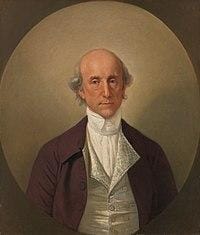
Warren Hastings - Background
- Warren Hastings was born on December 6, 1732, and attended Westminster School.
- In 1750, he joined the British East India Company as a clerk, and in 1752, he was promoted and sent to Kasimbazar, Bengal, which was the company's major trading post.
- Siraj-ud-Daulah imprisoned Warren Hasting and others at Kasimbazar because he was anti-European. Soon after, he fled to the island of Fulda, where he joined the Calcutta refugees.
- He later volunteered for Robert Clive's force.
- In 1758, he became a British resident in Murshidabad and was assigned certain jobs on behalf of Robert Clive.
- Warren Hastings (1732–1818) was the first Governor of the Presidency of Fort William (Bengal) in 1772 and the first Governor-General of Bengal in 1774, serving until his resignation in 1785.
- The First Anglo-Maratha war and the Second Anglo-Mysore war were fought during his reign.
- During his presidency, the Regulating Act of 1773 was passed.
- In 1785, he helped Sir William Jones establish the Asiatic Society of Bengal.
|
|
|
|---|---|
| Lord Cornwallis (1786-1793) | Francis Rawdon Hastings (1813-1823) |
| Sir John Shore (1793-1798) | Lord Amherst (1823-28) |
| Lord Arthur Wellesley (1798-1805) | Lord Minto-I (1807-1813) |
Tenure at Madras and Calcutta
- During his time at Madras, Hastings instituted a number of trading-related reforms.
- One of the reforms was to eliminate the middlemen, which would benefit both the Company and the Indian workers.
- Warren advocated for Robert Clive's vision of unifying the three major British administrations of Madras, Bombay, and Calcutta.
- Warren Hastings was appointed as Governor of Calcutta in 1771. During his presidency, the Bengal Famine occurred, killing 10 million people.
- The Regulating Act of 1773 was passed to bring the administrations of Madras and Bombay under the control of Bengal.
- It elevated Hastings from Governor to Governor-General. However, his authority was limited as a result of this promotion.
- It was due to the formation of the five-member Supreme Council of Bengal, one of whom was the Governor-General.
Significant Events under Warren Hastings
- The British government enacted the following acts during his tenure:
- The Regulating Act of 1773
- Act of Settlement Act, 1781 (Amending Act of 1781)
- Pitt’s India Act, 1784
- Warren Hastings rejected the Treaty of Wadgaon and captured Ahmedabad, Bassein, and Gwalior during the first Anglo-Maratha war. Finally, he signed the Treaty of Salbai to end the war.
- During his reign, the Rohilla war of 1774 and the Second Mysore War of 1780-84 occurred.
- In 1779–1784, he led East India Company forces against a coalition of native states and the French. Finally, while France lost influence in India, the well-organized British side held its own.
Reforms under Warren Hastings
Abolition of Dual System
- Warren Hastings played a key role in the abolishment of the Dual System that had been established by Sir Robert Clive.
- Under the Dual System, the company had Diwani rights (that is right to collect revenue) and the Indian rulers had the power over administrative authority.
- Due to this system, the annual allowance of the kings was reduced to 16 Lakhs from 32 Lakhs.
Revenue Reforms
- To collect the revenue a Board of Revenue was set up at Calcutta. Calcutta now became the capital of Bengal in the year 1772.
- Also, the treasury was transferred from Murshidabad to the new capital.
- For every district, a British collector along with an Accountant General was appointed.
Judicial Reforms
- A lot of Judicial Reforms took place when Warren Hastings was in power.
- First was the abolishment of the judicial powers of Zamindars.
- Two types of Courts were established - Civil and Criminal along with two Appellate courts (One for civil and another for Criminal cases). All of them were established at Calcutta.
- The criminal court had an Indian judge. Muslims were to be judged according to their law in the Koran and Hindus, according to Hindu laws.
Trade and Regulation
- Warren Hastings ended the system of dastans.
- The officials of the company along with the traders highly misused the system of dastaks. Also, private trading by the officials was restricted.
- To create uniformity in the trade he implemented a uniform tariff of 2.5% for Indian and foreign goods.
Impeachment of Warren Hastings
- Between 1787 and 1795, Warren Hastings was impeached for his misbehavior while in Kolkata (then Calcutta).
- He was charged with managerial incompetence and personal corruption.
- Warren Hastings' impeachment was led by Edmund Burke (MP of the United Kingdom Parliament).
- The Impeachment of Warren Hastings failed in 1788 in the Parliament of Great Britain.
- Hastings was cited for wrongdoing during his tenure in Calcutta. It was related to mismanagement and private depravity.
- The inquiry happened and it displayed a broad range of debates concerning the position of the East India Company and expanding the empire of India.
- The trial of Warren Hastings was delayed for seven years. When the eventual verdict was given Hastings was overwhelmingly acquitted.
Conclusion
The passage of Pitt's India Act in 1784, which established a new constitution, convinced Hastings that he had little reason to stay. He resigned and returned to England in 1785. He was charged right away with "high crimes and misdemeanors. Parliament impeached him in 1786, but the trial began two years later and lasted seven years. The House of Lords acquitted him, but his personal fortune was depleted by his defense. The East India Company stepped in and provided him with funds and an annuity. On August 22, 1818, he died in Daylesford.
FAQs
Question: Who was Warren Hastings, and what was his role in British India?
Answer: Warren Hastings was the first Governor-General of Bengal, serving from 1773 to 1785. He is credited with laying the foundations of British administrative rule in India. His policies and reforms, particularly in finance and justice, played a significant role in strengthening British control over India.
Question: What were Warren Hastings' major reforms in India?
Answer: Warren Hastings introduced several reforms during his tenure, including judicial reforms, revenue settlements, and administrative restructuring. He established the Calcutta High Court and streamlined tax collection. He also worked towards consolidating British power by securing alliances with Indian rulers.
Question: What was the significance of the Regulating Act of 1773 in Warren Hastings' administration?
Answer: The Regulating Act of 1773 was a significant piece of legislation passed by the British Parliament to address the governance of the British East India Company. It established the office of Governor-General, which Warren Hastings was the first to hold. The act marked a shift towards centralized control of British territories in India.
Question: How did Warren Hastings' policies impact Indian society?
Answer: Warren Hastings' policies had a mixed impact on Indian society. While his administrative reforms strengthened the British position, they also led to increased taxation and land revenue demands. This often placed a heavy burden on Indian peasants and landlords. His judicial reforms, however, provided some legal consistency in British territories.
Question: Why was Warren Hastings impeached after his return to England?
Answer: Warren Hastings faced impeachment in England after his return due to allegations of corruption, mismanagement, and abuse of power during his tenure as Governor-General. Although the trial lasted for several years, Hastings was ultimately acquitted of all charges in 1795.
MCQs
1. Which of the following acts established the position of Governor-General of Bengal, first held by Warren Hastings?
A) The Pitt's India Act of 1784
B) The Regulating Act of 1773
C) The Charter Act of 1813
D) The Indian Councils Act of 1861
Answer: B See the Explanation
Explanation: The Regulating Act of 1773 established the position of Governor-General of Bengal, with Warren Hastings being the first to hold this office. The act aimed to bring the East India Company's administration under parliamentary control.
2. Warren Hastings introduced significant reforms in which of the following areas during his tenure as Governor-General?
A) Military
B) Judiciary
C) Education
D) Industrialization
Answer: B See the Explanation
Explanation: Warren Hastings introduced several important judicial reforms, including the establishment of the Calcutta High Court and the reorganization of the legal system to better suit British interests in India.
3. Warren Hastings faced impeachment in England due to accusations of:
A) Abuse of power
B) Economic mismanagement
C) Corruption
D) All of the above
Answer: D See the Explanation
Explanation: Warren Hastings was impeached in England due to multiple accusations, including abuse of power, economic mismanagement, and corruption during his time as Governor-General of Bengal. He was, however, acquitted of all charges after a lengthy trial.
4. What was the impact of the judicial reforms introduced by Warren Hastings?
A) They undermined British rule
B) They stabilized the Indian economy
C) They established a consistent legal framework
D) They expanded Indian autonomy
Answer: C See the Explanation
Explanation: Warren Hastings' judicial reforms aimed to establish a consistent legal framework for British-controlled territories in India. His efforts included the creation of the Calcutta High Court and the reorganization of the legal system to enhance administrative efficiency.
5. The main aim of Warren Hastings' revenue reforms was to:
A) Increase British land holdings
B) Establish better trade relations with Indian rulers
C) Streamline tax collection and increase revenue
D) Reduce taxes on Indian peasants
Answer: C See the Explanation
Explanation: One of Warren Hastings' key reforms was to streamline tax collection processes to increase revenue for the East India Company. However, these reforms often placed a significant burden on Indian peasants.
GS Mains Questions and Answers
Q1: Discuss the administrative and judicial reforms introduced by Warren Hastings during his tenure as Governor-General of Bengal.
Answer: Warren Hastings introduced several key administrative and judicial reforms aimed at strengthening British control in India. His judicial reforms included the establishment of the Calcutta High Court, a reorganization of the existing legal system, and the introduction of English laws in civil and criminal matters. These changes created a consistent legal framework that was more suited to British governance. In administration, Hastings worked to centralize authority, curbing the powers of local zamindars, and introduced new revenue systems that increased tax collection for the East India Company. These reforms were critical in consolidating British power, but they also drew criticism for burdening Indian peasants and creating friction between the British and Indian ruling classes.
Q2: Analyze the significance of Warren Hastings' tenure as Governor-General in shaping British policies in India.
Answer: Warren Hastings' tenure as the first Governor-General of Bengal was highly significant in shaping British policies in India. His efforts to centralize British administration, reform the judicial system, and implement new revenue policies set the tone for future British rule. He introduced the Regulating Act of 1773, which established the office of Governor-General, and his revenue policies ensured a steady flow of income for the British East India Company. However, his policies also faced criticism for their harsh impact on the Indian population. Nevertheless, Hastings' tenure laid the foundation for British imperial control in India, influencing subsequent policies.
Q3: Evaluate the impact of Warren Hastings' impeachment on British politics and governance in India.
Answer: Warren Hastings' impeachment had far-reaching consequences for British politics and governance in India. Although Hastings was ultimately acquitted, the trial highlighted concerns over corruption and mismanagement in the British administration of India. It brought attention to the need for greater oversight and reform in the East India Company's rule. The impeachment trial also exposed the challenges of governing a vast colonial empire and raised questions about the morality and ethics of British imperialism. Hastings' trial influenced subsequent legislative actions, such as Pitt's India Act of 1784, which sought to increase parliamentary control over the East India Company and its operations in India.
Previous Year Questions on Warren Hastings
1. UPSC CSE Prelims 2016:
Question: The Regulating Act of 1773, which introduced the office of the Governor-General of Bengal, was enacted by:
A) British East India Company
B) British Parliament
C) Mughal Emperor
D) French East India Company
Answer: B
Explanation: The Regulating Act of 1773 was enacted by the British Parliament to bring the British East India Company's administration under direct control and establish the office of Governor-General of Bengal.
2. UPSC CSE Mains 2017 (GS Paper 1):
Question: "Warren Hastings' administrative and judicial reforms set the foundation for British governance in India." Discuss with reference to the Regulating Act of 1773.
Answer: Warren Hastings' administrative and judicial reforms, introduced under the Regulating Act of 1773, played a pivotal role in shaping British governance in India. The Regulating Act established the office of Governor-General, and Hastings was the first to hold this position. His reforms aimed to centralize British power, improve tax collection, and streamline the legal system to suit British interests. These reforms set the stage for subsequent British policies, leaving a lasting impact on India's administrative structure. Despite their effectiveness, Hastings' reforms also faced criticism for their negative effects on the Indian population, particularly due to increased taxation and the consolidation of British control.
Download the PREPP App and attempt FREE IAS Exam Mock Tests and get complete study material!
UPSC IAS : GS - Indian Geography - Subject Knowledge Test

Live Test : UPSC CSE Prelims CSAT (Paper-II) (July 28 - 31)
UPSC CSE Prelims 2026 GS Paper 1 Question Paper (24-May-2026)
UPSC CSE Prelims 2026 CSAT Paper 2 Question Paper (24-May-2026)

17 February 2025 | The Hindu Must Read Articles | Current Affairs

16 February 2026 | The Hindu Must Read Articles | Current Affairs

13 February 2026 | The Hindu Must Read Articles | Current Affairs









Comments