Leave Benefits for Women in Armed Forces Made Uniform
Click here for Daily Current Affairs
Why in the news?
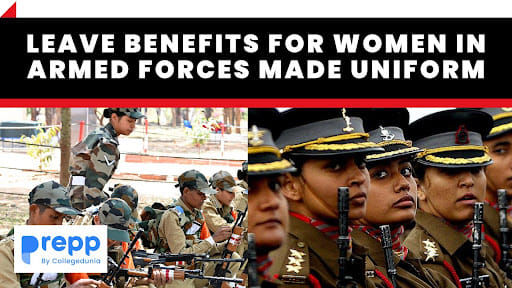
- Defence Minister Rajnath Singh has sanctioned a policy granting equivalent maternity, childcare, and adoption leaves for women in various roles within the Indian armed forces.
- The move aligns with the vision of inclusive participation in the military, aiming to enhance conditions for servicewomen to balance professional and family responsibilities.
Table of Contents
Leave Entitlement for Women in Armed Forces
- Maternity Leave: Women officers are entitled to 180 days of paid maternity leave for up to two children.
- Childcare Leave: A total of 360 days of childcare leave is available throughout a woman officer's service, provided the child is under 18 years of age.
- Adoption Leave: For adopting a child below one year of age, women officers can avail 180 days of leave from the date of valid adoption.
Paradigm Shift in Military Inclusion
- Nari Shakti: The policy is a testament to the government's commitment to harnessing "Nari Shakti" (women power) by integrating women into combat roles, signaling a paradigm shift.
- Women Agniveers: The recruitment of women Agniveers is seen as a step to empower the armed forces with the qualities of bravery, dedication, and patriotism that women bring.
- Operational Roles: Indian women have been operationally deployed in challenging environments like Siachen and on warships, breaking barriers across various domains in the armed forces.
- Historical Recruitment: The recruitment of women into the Indian Army as soldiers, particularly in the Corps of Military Police in 2019, marked a significant milestone in gender integration.
Recent Milestones for Women in Armed Forces
- Combat Roles: Historically, women were barred from serving in combat roles in many armed forces. This has changed in recent years, with countries like the United States, the United Kingdom, and India allowing women to serve in combat positions, including in infantry units and special forces.
- Leadership Positions: Women have been attaining higher ranks and taking on leadership roles within the military.
- For instance, in the Indian Air Force, Mitali Madhumita became the first woman officer to receive a gallantry award, and in 2021, the Indian Navy deployed its first woman pilot on a warship.
- Inclusion in Military Academies: Military academy such as the National Defence Academy (NDA) in India has recently opened its doors to female candidates following a Supreme Court ruling in 2021.
- Maternity and Family Leave: Policies to support maternity, childcare, and adoption leave have been introduced or expanded, recognizing the need to balance military service with family life.
- Agnipath Scheme in India: In 2022, India introduced the Agnipath scheme, a transformative military recruitment policy that includes provisions for recruiting women as Agniveers, opening up more opportunities for women in various branches of the armed forces.
- Deployment in Strategic Locations: Women have been deployed in strategic and previously male-dominated locations, such as the Siachen Glacier by the Indian Army and on warships and as fighter pilots by the Indian Navy and Air Force, respectively.
- Integration into Military Police: The Indian Army started inducting women into the Corps of Military Police, broadening their role in the military beyond traditional branches.
- International Peacekeeping: Women have been participating in higher numbers in international peacekeeping missions, often seen as being able to interact with local populations in ways that their male counterparts cannot.
- Physical Standards: Military institutions have been reviewing and, in some cases, revising physical standards and training regimes to accommodate women without compromising the effectiveness of the forces.
Significance of Women Oriented Initiatives
- Gender Equality: Extending the same benefits to women soldiers, sailors, and air warriors as those provided to officers signifies a step towards gender equality within the armed forces.
- Inclusivity: The measure aligns with the vision of inclusive participation, which aims to integrate women fully into the armed forces, not just as a token representation but as full members with equal rights and benefits.
- Improved Work-Life Balance: By providing adequate maternity, childcare, and adoption leave, the armed forces are recognizing the unique challenges women face and are supporting them in balancing their family responsibilities with their professional duties.
- Talent Retention: Such initiatives can help in retaining skilled and trained women by not forcing them to choose between their career and family.
- Modernization and Cultural Shift: Introducing and implementing these policies represents a cultural shift towards a more progressive and equitable institution, which is essential for any organization that seeks to remain relevant and effective in today's society.
- Operational Effectiveness: By addressing the specific needs of women in the military, such initiatives can increase the overall operational effectiveness of the forces.
- Positive Societal Impact: Measures that promote gender equality can have a ripple effect, encouraging other institutions to follow suit and thereby promoting societal change towards greater gender equality.
- Global Standing: Such initiatives improve the global perception of a nation's armed forces. Nations that show commitment to equality and inclusivity are often viewed more favourably on the international stage.
Way Forward
- Implementation: Ensure the new leave benefits are implemented effectively and uniformly across all branches of the military.
- Awareness and Education: Conduct awareness campaigns within the armed forces to educate both male and female personnel about the new policies to foster an environment of inclusivity and support.
- Monitoring and Feedback: Establish a system for monitoring the implementation of these policies and collect feedback from women in the armed forces to identify any issues or areas for improvement.
- Support Systems: Develop support systems, such as child care facilities within or nearby military bases, to help women soldiers balance their professional and family responsibilities.
- Continuous Review: Regularly review and assess the impact of these policies on the retention and performance of women in the armed forces and make necessary adjustments.
- Career Development: Work towards ensuring that taking leave does not negatively impact women's career advancement opportunities. Establish clear guidelines and support for returning to duty after leave.
- Inclusivity in Leadership: Encourage and facilitate the inclusion of women in leadership roles within the armed forces to ensure that the perspective of women is included in decision-making processes.
- Broader Cultural Shift: Advocate for a cultural shift within the armed forces that respects and values the contributions of women and ensures equal opportunities.
- International Collaboration: Look for opportunities to collaborate with other nations' armed forces that have successfully integrated women to share best practices and lessons learned.
Conclusion
The inclusive policy for leave benefits for women in the Indian armed forces is anticipated to strengthen the forces by incorporating women's unique strengths. This move not only supports the individual service members but is also aimed at fortifying India's land, sea, and air defenses through enhanced participation of women in national security. The continuation of such initiatives highlights an ongoing effort towards gender equality in India's defense services, acknowledging the vital role women play in the security and defense sectors.
(*Click this link to read prelims specific weekly current affairs articles)
FAQs
Question: Who are Women Agniveers?
Answer:
Women Agniveers specifically refer to the female candidates who are recruited under the Agnipath scheme. This marks a significant step in the direction of empowering women and providing them with opportunities to serve in the Indian Armed Forces alongside their male counterparts. The program allows women to serve in various capacities within the Army, Navy, and Air Force, and they are expected to undergo the same rigorous training and perform similar duties as the male Agniveers.
Question: What recent policy change has been made regarding leave benefits for women in the Indian Armed Forces?
Answer:
Defence Minister Rajnath Singh has approved a policy granting maternity, childcare, and adoption leave to women soldiers, sailors, and air warriors on equal terms with officers. This includes 180 days of maternity leave with full pay for each child, 360 days of childcare leave, and 180 days of child adoption leave.
Question: What does the inclusion of women as soldiers, sailors, and air warriors signify for the Indian Armed Forces?
Answer:
The inclusion of women in these roles marks a paradigm shift in the armed forces, promoting "Nari Shakti" (women power) and diversity. It is a step towards empowering the forces with the qualities that women bring to the table, such as bravery, dedication, and patriotism, and it acknowledges their role in defending the nation's land, sea, and air frontiers.
UPSC Mains Practice Question:
|
MCQs
Question: As per the new policy approved by Defence Minister Rajnath Singh, what is the duration of maternity leave granted to women in the Indian Armed Forces?
(a) 90 days
(b) 180 days
(c) 240 days
(d) 360 days
Answer: (b) See the Explanation
Women officers in the Indian Armed Forces are granted 180 days of maternity leave with full pay for each child, in line with the new policy. This is aimed at ensuring they can adequately care for their newborns while maintaining their role in the armed forces.
Therefore, option (b) is the correct answer.
Question: What milestone was achieved in 2019 concerning women's role in the Indian Armed Forces?
(a) Introduction of women fighter pilots
(b) Recruitment of women in the Indian Army as soldiers in the Corps of Military Police
(c) Equal pay for women in the armed forces
(d) Women were allowed to serve in combat roles
Answer: (b) See the Explanation
In 2019, a significant development was the recruitment of women into the Indian Army as soldiers in the Corps of Military Police. This was a notable step in enhancing the participation of women in the armed forces, indicating a shift towards gender inclusivity in roles that were traditionally male-dominated.
Therefore, option (b) is the correct answer.
Download the PREPP App and attempt FREE IAS Exam Mock Tests and get complete study material!

Full Test - 04: UPSC CSE Prelims CSAT (Paper-II)
Full Test - 03: UPSC CSE Prelims CSAT (Paper-II)
UPSC CSE Prelims 2026 GS Paper 1 Question Paper (24-May-2026)
UPSC CSE Prelims 2026 CSAT Paper 2 Question Paper (24-May-2026)

17 February 2025 | The Hindu Must Read Articles | Current Affairs

16 February 2026 | The Hindu Must Read Articles | Current Affairs

13 February 2026 | The Hindu Must Read Articles | Current Affairs









Comments