Kerala Village Bets Big On Mushroom Coffee Brand
Relevance: GS3 - Agriculture
(Source: The Hindu, 11/02/2023)
Click here for Daily Current Affairs
Why in the news?
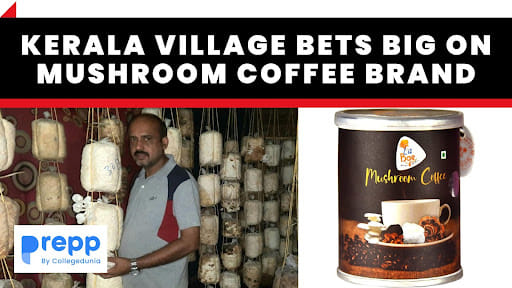
- "La Bae" unique mushroom coffee brand was recently launched by Lalu Thomas, an entrepreneur from rural Thalavoor in Kerala with the support of the Krishi Vigyan Kendra.
- Mushroom coffee recently has emerged as a fresh and enticing option, captivating a caffeine-loving generation seeking a seemingly healthier alternative.
Table of Contents
About La Bae’s Mushroom Coffee
- Organic and Healthy Product: La Bae's mushroom coffee is promoted as an organic product rich in antioxidants. It is targeted at customers who seek to improve their diet quality and maintain a healthy lifestyle. The product is free from fillers, preservatives, and artificial additives.
- La Bae mushroom coffee is 70% mushroom and 30% coffee.
- Mushroom Varieties: La Bae uses a variety of mushrooms, including button, oyster, milky, lion's mane, and turkey tail, along with organic arabica coffee beans from Wayanad to create its mushroom coffee.
- Each mushroom type is selected for its specific health benefits, such as cognitive enhancement, vitamin D content, and bone health.
- Local Support: The success of La Bae has led to the Thalavoor panchayat's initiation of the "Koon Gramam" project.
- This project aims to extend mushroom cultivation in the area and has started training approximately 100 farmers in mushroom cultivation.
- The local body has allocated funds for the project, with a focus on empowering women in the community.
What is Mushroom Coffee?
- Mushroom coffee is simply coffee that has been infused with mushroom extracts. The most common types of mushrooms used in mushroom coffee are chaga, reishi, lion's mane, and cordyceps.
- These mushrooms are all known for their adaptogenic properties, which means that they can help the body to adapt to and overcome stress.
- Mushroom coffee is gaining popularity due to its potential benefits, such as improved cognitive function, reduced anxiety, improved immunity, and jitter-free energy.
- A cup of mushroom coffee contains about half the amount of caffeine than in a regular cup of coffee.
- Global market size of mushroom coffee: In 2022, the global mushroom coffee market was valued at USD 2.71 billion and is expected to reach USD 4.12 billion by 2030, exhibiting a 5.5% compound annual growth rate (CAGR) during the forecast period spanning from 2023 to 2030.
Origin of Mushroom Coffee
- Mushroom coffee's origins can be traced back to the scarcity of coffee during World War II in the 1940s, when coffee was one of the few goods to face acute shortages across Europe.
- With coffee shortages plaguing the continent, Finland introduced an alternative in the form of chaga mushroom coffee.
- This variety of fungi grows on the back of birch trees in cold terrains like Northern Europe, Korea, Siberia, Russia, Northern Canada, and Alaska.
- It has traditionally been used in these cultures and other parts of Asia as an immunity booster.
How will the production of mushroom coffee benefit farmers?
- Diversification of Income: Mushroom coffee cultivation provides farmers with an opportunity to diversify their sources of income. Many rural areas rely on traditional crops, and by introducing a unique product like mushroom coffee, farmers can reduce their dependence on a single crop and mitigate the risks associated with crop failure.
- Improved Profit Margins: Mushroom coffee, being a niche product, can often command higher prices in the market. This can lead to improved profit margins for farmers, which is especially important for those operating in areas with limited access to markets and resources.
- Easier and Sustainable Farming: Mushroom cultivation is generally considered easier compared to traditional crops. It requires less land, and the cultivation process is not as labor-intensive.
- Local Economic Development: The success of mushroom coffee cultivation can lead to the development of a local industry and supply chain. This can create jobs and opportunities for other businesses in the area, including packaging, transportation, and marketing.
- Market Opportunities: Mushroom coffee, due to its distinctive health advantages and organic characteristics, can cater to a specific requirement of consumers who prioritize premium, health-focused products.
Challenges related to Mushroom Coffee Production
- Limited Availability of Raw Materials: Mushroom coffee is made by infusing coffee with mushroom extracts. However, the mushrooms used to make these extracts are not widely cultivated. This can lead to supply shortages and price fluctuations.
- Climate and Environmental Conditions: Mushroom varieties used in coffee cultivation may have specific temperature and humidity requirements. Maintaining these conditions can be challenging, especially in areas with extreme climate variations.
- Certifications and Compliance: To target certain markets, especially in organic and health-conscious segments, obtaining relevant certifications and complying with quality and safety standards can be complex and costly.
- Perishability of Mushrooms: Mushrooms are a perishable food, so they must be used quickly once they are harvested. This can be a challenge for producers who are trying to keep up with demand.
- Competition from Other Coffee Products: Mushroom coffee faces competition from other coffee products, such as regular coffee and flavored coffees. Producers must work to differentiate their product and convince consumers that it is worth the extra cost.
About Coffee Cultivation in India
|
(*Click this link to read prelims specific weekly current affairs articles)
FAQs
Question: What is Mushroom Coffee?
Answer:
Mushroom coffee is simply coffee that has been infused with mushroom extracts. The most common types of mushrooms used in mushroom coffee are chaga, reishi, lion's mane, and cordyceps.
Question: What is La Bae mushroom coffee?
Answer:
"La Bae" unique mushroom coffee brand was recently launched by Lalu Thomas, an entrepreneur from rural Thalavoor in Kerala with the support of the Krishi Vigyan Kendra.
Question: What is the Global market size of Mushroom Coffee?
Answer:
In 2022, the global mushroom coffee market was valued at USD 2.71 billion and is expected to reach USD 4.12 billion by 2030, exhibiting a 5.5% compound annual growth rate (CAGR) during the forecast period spanning from 2023 to 2030.
MCQ
Question: Though coffee and tea both are cultivated on hill slopes, there is some difference between them regarding their cultivation. In this context, consider the following statements: (UPSC 2010)
- Coffee plants require a hot and humid climate of tropical areas whereas tea can be cultivated in both tropical and subtropical areas.
- Coffee is propagated by seeds but tea is propagated by stem cuttings only.
Which of the statements given above is/are correct?
(a) 1 only
(b) 2 only
(c) Both 1 and 2
(d) Neither 1 nor 2
Answer: (a) See the Explanation
- Tea thrives in tropical and sub-tropical regions, coffee exhibits adaptability to a broader range of climates, spanning from Warm Temperate Dry to Rainy conditions with minimal frost. Hence, statement 1 is correct.
- Coffee can be propagated by seeds, cuttings, grafting, and tissue culture. Tea can also be propagated by seeds, although it is more commonly propagated by stem cuttings. Hence, statement 2 is not correct.
Therefore, option (a) is the correct answer.
Download the PREPP App and attempt FREE IAS Exam Mock Tests and get complete study material!

Full Test - 04: UPSC CSE Prelims CSAT (Paper-II)
Full Test - 03: UPSC CSE Prelims CSAT (Paper-II)
UPSC CSE Prelims 2026 GS Paper 1 Question Paper (24-May-2026)
UPSC CSE Prelims 2026 CSAT Paper 2 Question Paper (24-May-2026)

17 February 2025 | The Hindu Must Read Articles | Current Affairs

16 February 2026 | The Hindu Must Read Articles | Current Affairs

13 February 2026 | The Hindu Must Read Articles | Current Affairs









Comments