India's Plan To Develop Green Hydrogen (UPSC Current Affairs)
Relevance: GS2 - Government policies and interventions for the development of various sectors, GS3 - Energy, Conservation
(Source: The Hindu, Indian Express, 01/06/2023)
Click here for Daily Current Affairs
Why in the news?
- Recently, the Union Cabinet approved the National Green Hydrogen mission with the aim of making India a global hub for using, producing, and exporting green hydrogen.
- India is the world’s third-largest single emitter of carbon dioxide despite a low per capita emission (1.8 tonnes of Co2e per person).
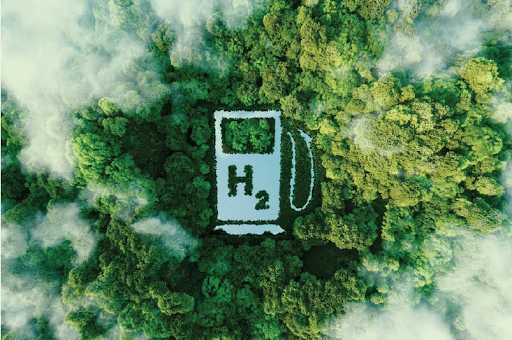
What is Green Hydrogen?
- Hydrogen is a key industrial fuel used in the manufacture of ammonia, steel, electricity, and refined goods.
- However, all the hydrogen produced in India now is derived from coal and is called ‘black’ or ‘brown’ hydrogen.
- Coal derived from natural gas is called grey hydrogen while blue hydrogen is produced from fossil fuel sources where the emitted carbon is captured by the carbon-capturing process.
- Green hydrogen is produced by the splitting of water into hydrogen and oxygen by electrolysis powered by electricity from renewable sources like solar energy.
- The production of green hydrogen is the most ecologically friendly and sustainable method of hydrogen production available.
Why is this method not as popular as others?
- Production of green hydrogen is extremely expensive and accounts for around 1% of global hydrogen production.
- According to the Council for Energy, Environment and Water, it costs $3.5 -5.5 to produce 1 Kg of green hydrogen as compared to $0.9-1.5 for black hydrogen, $1.7-2.3 for grey hydrogen, and $1.3-3.6 for blue hydrogen.
What is the National Green Hydrogen Mission?
- The National Green Hydrogen Mission aims to incentivize the production of green hydrogen in the country and make India a net exporter of the fuel.
- It has set a target of developing at least 5MMT (Million Metric Tonnes) of production capacity per annum.
- Along with the target of an additional 125 GW of renewable energy, it will help decarbonize the Indian industrial, mobility, and energy sectors.
- It will help reduce the dependence on fuel imports and help develop local production capacities and new technologies like fuel-efficient cells.
- This will further contribute to employment generation and immunization of the economy from supply chain challenges.
- The Central Government has targeted that the scheme will create $8 trillion of investment and 6 lakh jobs by 2030.
- As a result of decarbonization, by 2030 India expects savings of around 50 MMT of carbon dioxide emissions yearly.
- This is in line with India’s Nationally Determined Contributions under the Paris Agreement, of reducing the emission intensity of its GDP by 45% from 2005 levels in 2030.
How will the mission support the production of Green Hydrogen?
- There are two umbrella missions under the programme:
- The Strategic Interventions for Green Hydrogen Transition Programme (SIGHTS) will fund the domestic manufacture of electrolysers and the development of green hydrogen.
- Support pilot projects in emerging end-use and production pathways.
- The Ministry of New and Renewable energy has planned to identify states and regions capable of the production or utilization of hydrogen on a large scale and develop them as Hydrogen hubs.
- The Ministry has budgeted ₹17,490 Crore for the SIGHTS programme, ₹1466 Crore for pilot projects and hydrogen hubs, ₹400 Crore for research and development, and ₹388 Crore for other parts of the mission.
What are the challenges faced by the Green Hydrogen Mission?
- India faces the challenge of accessing a reliable supply of components for all sectors of the green hydrogen supply chain. Industrial houses have supported the project subject to the satisfaction of this criteria.
- The skills and techniques of the small and medium manufacturing industries need to be upgraded to keep pace with new developments in the sector.
- Effective skill development programmes need to be formulated to create an efficient workforce among the lakhs of unemployed youth.
- There is a need to develop an efficient transmission network to supply energy from the production hubs to industrial areas.
- Supply chain infrastructure in the form of pipelines, tankers, storage and distribution systems needs to be developed in rural and urban areas.
- Other advanced nations have also announced similar schemes which could result in them overtaking India due to the lack of infrastructure in India.
- According to a report by the McKinsey group, effective decarbonization down to 1.9GT of CO2e by 2070 from the present 2.9GT would cost $7.2 trillion.
- India lacks the intermediary infrastructure needed for the process and has to incentivize users of industrial hydrogen to shit to green hydrogen.
What are the advantages of adopting green hydrogen?
- Green hydrogen is a clean, cheap, reliable, and easy-to-access fuel source that is available regardless of the season, unlike wind and solar.
- Even though it is not yet ready for implementation, it is expected to be more cost-effective and less dangerous than nuclear energy.
- A substantial portion of the Mission’s outlay is in research and development to ensure that India can profit from future demand like China did with photovoltaic cells.
- Achieving net-zero emissions ahead of schedule would create energy security and encourage the growth of futuristic industries.
- Adoption of green hydrogen as a strategy going forward would mean that all future infrastructure developed in India would be decarbonized reducing the costs of achieving emission targets.
Way Forward
- The Indian government should declare 5-year, 10-year, and 25-year goals for decarbonization and implement policies and provide investment to ensure they are met.
- A National land use plan should be defined that maximizes the use of barren land and increases the generation of energy and agro-productivity.
- Encourage private firms to invest in sectors like recycling, hydrogen, biomass, electrolyzers, and batteries which may take time to turn profitable but have huge impacts on the environment.
(*Click this link to read prelims specific weekly current affairs articles)
FAQs
Question: What is decarbonization?
Answer.
Decarbonization is the reduction of carbon, primarily carbon dioxide (CO2), that is released into the atmosphere. Its goal is to create a low-emission global economy in order to transition to a climate-neutral energy system.
Reduced fuel consumption, support for green grids, low-power digital designs, increased efficiency, improved water treatment facilities, and other measures are all part of the decarbonization strategy.
Question: What are India’s Nationally Determined Contributions?
Answer:
India’s commitments under the Paris Agreement include
- Reduce the GDP's carbon intensity by 33 to 35% from its 2005 level by 2030.
- Reach a total installed capacity of non-fossil fuel-based energy resources equal to around 40% by 2030.
- Increase the amount of forest and tree cover by 2030, adding 2.5–3 billion tonnes of CO2 equivalent as a carbon sink.
MCQ
Question: Consider the following statements.
- Grey hydrogen is produced from petroleum.
- Blue hydrogen is produced by the electrolysis of water.
Which of the above statements is/are correct?
(a) 1 only
(b) 2 only
(c) Both 1 and 2
(d) Neither
Answer: (d) See the Explanation
- Grey hydrogen is produced from natural gas while blue hydrogen is produced from fossil fuels while carbon capturing released emissions.
- Green hydrogen is the cleanest method of generation and involves the electrolysis of water using electricity developed from renewable energy.
- Electrolysis is the splitting of water into hydrogen and oxygen using electricity.
Therefore d is the correct answer.
Question: Consider the following statements.
- Reusing barren land to generate renewable power and increase agricultural productivity is a part of the National land use plan.
- India would need an additional 18 million hectares of land to act as carbon sinks to meet its decarbonization goals.
Which of the above statements is/are correct?
(a) 1 only
(b) 2 only
(c) 1 and 2
(d) None of the above
Answer: (c) See the Explanation
- According to a report by the McKinsey group, India would require an additional 18 million hectares of land acting as a carbon sink in order to meet its carbon emission control targets.
- Resuing barren land in order to generate renewable energy and increase a
Download the PREPP App and attempt FREE IAS Exam Mock Tests and get complete study material!

Full Test - 04: UPSC CSE Prelims CSAT (Paper-II)
Full Test - 03: UPSC CSE Prelims CSAT (Paper-II)
UPSC CSE Prelims 2026 GS Paper 1 Question Paper (24-May-2026)
UPSC CSE Prelims 2026 CSAT Paper 2 Question Paper (24-May-2026)

17 February 2025 | The Hindu Must Read Articles | Current Affairs

16 February 2026 | The Hindu Must Read Articles | Current Affairs

13 February 2026 | The Hindu Must Read Articles | Current Affairs









Comments