India’s Own CAR-T Cell Therapy
Relevance: GS3 - Awareness in the field of biotechnology
(Source: Indian Express; 11/03/2023)
Click here for Daily Current Affairs
Why in the news?
- Recently, the Central Drugs Standard Control Organisation (CDSCO) has officially authorized the market launch of NexCAR19, India's inaugural CAR-T cell therapy, granted to ImmunoACT, a company incubated by IIT Bombay.
- This landmark achievement paves the way for the commercial introduction of this innovative therapy in India, offering cancer patients access to it at a fraction of the cost compared to overseas alternatives.
Table of Contents
What is CAR-T cell therapy?
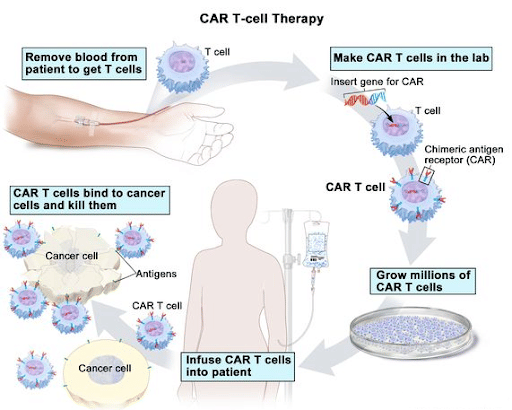
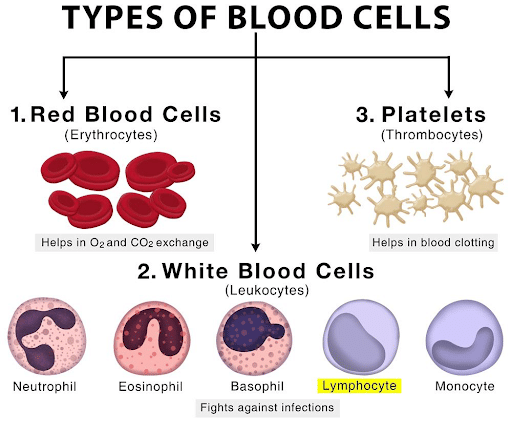
- CAR-T (Chimeric Antigen Receptor T-cell) therapy is an innovative approach that transforms regular T-cells, a type of white blood cell responsible for identifying and combating diseases, into potent cancer-fighting cells called CAR-T cells.
- Through genetic modification, T-cells are engineered to target and destroy cancer cells. Once reintroduced into the patient's body, these enhanced CAR-T cells specifically seek out and attack cancer cells, particularly in blood cancers such as leukemia and lymphomas.
- Procedure:
- In the process, T cells are extracted from the patient's blood and modified in the lab with a unique receptor that can latch onto a specific protein found on the patient's cancer cells. This receptor is referred to as a chimeric antigen receptor (CAR).
- Subsequently, a substantial quantity of these CAR T cells is cultivated in the laboratory and then administered to the patient through infusion.
About NexCAR19
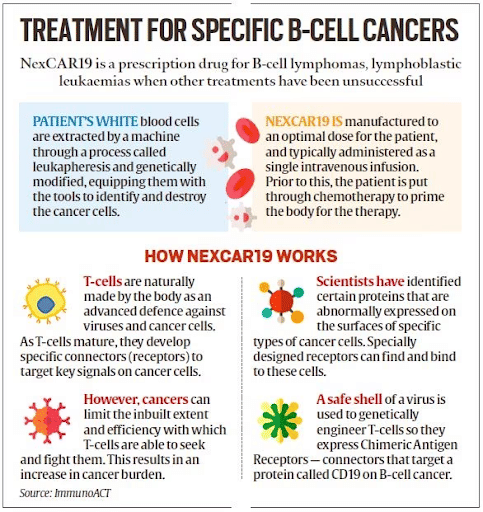
- NexCar19 is a type of CAR-T and gene therapy developed indigenously in India by ImmunoACT, which is a company incubated at IIT Bombay.
- This therapy is tailored to target cancer cells bearing the CD19 protein, effectively marking these cancer cells for destruction.
- The therapy is for people with B-cell lymphomas who didn’t respond to standard treatments like chemotherapy, leading to relapse or recurrence of the cancer.
- B-cell lymphoma is a type of cancer that starts in white blood cells called lymphocytes.
- Mechanism and Effectiveness: NexCAR19 is designed to target cancer cells expressing the CD19 protein, effectively eliminating them from the body. The therapy has shown promising results, with around 70% of patients exhibiting positive responses, particularly in cases of leukemia and lymphoma.
Challenges related to CAR-T Cell Therapy
- Preparation: The complexity of preparing CAR T-cell therapies has been a major barrier to their widespread adoption. The first successful clinical trial was conducted a decade ago, and India's first indigenous therapy was performed in 2021.
- Side Effects: While CAR T-cell therapy shows high efficacy, around 90% in certain types of leukemia and lymphomas, it is less effective in other cancer types.
- Furthermore, potential side effects, including cytokine release syndrome (resulting in widespread immune system activation and damage to normal cells) and neurological symptoms (severe confusion, seizures, and speech impairment), are significant concerns.
- Affordability: The introduction of CAR T-cell therapy in India may encounter challenges related to cost and accessibility. Critics argue that developing this therapy in India may not necessarily make it cost-effective, as it could still be financially out of reach for many individuals.
What are T Cells?
|
Government Initiatives Related to Cancer Treatment
- National Programme for Prevention and Control of Cancer, Diabetes, Cardiovascular Diseases and Stroke
- National Cancer Grid
- National Cancer Awareness Day
- HPV Vaccine
- Universal Immunization Programme (UIP).
(*Click this link to read prelims specific weekly current affairs articles)
FAQs
Question: What is CAR-T cell therapy?
Answer:
CAR-T (Chimeric Antigen Receptor T-cell) therapy is an innovative approach that transforms regular T-cells, a type of white blood cell responsible for identifying and combating diseases, into potent cancer-fighting cells called CAR-T cells.
Question: What is NexCAR19
Answer:
NexCar19 is a type of CAR-T and gene therapy developed indigenously in India by ImmunoACT, which is a company incubated at IIT Bombay. This therapy is tailored to target cancer cells bearing the CD19 protein, effectively marking these cancer cells for destruction.
Question: What are T Cells?
Answer:
T cells, also referred to as T lymphocytes, are a specific category of white blood cells crucial to the immune system's functioning. These cells are primarily responsible for cell-mediated immunity, aiding the body in identifying and combatting foreign entities such as viruses, bacteria, and abnormal cells like cancer cells.
MCQ
Question: Which one of the following statements best describes the role of B cells and T cells in the human body? (UPSC 2022)
(a) They protect the environmental allergens body
(b) They alleviate the body’s pain and inflammation
(c) They act as immunosuppressants in the body
(d) They protect the body from the diseases caused by pathogens.
Answer: (d) See the Explanation
- T-cells are a key component of the human adaptive immune system.
- They perform critical functions ranging from maintenance of immunologic memory and recognition of foreign antigens to the generation.
- T-cells originate in the bone marrow and mature in the thymus, a small gland in the lymphatic system.
- In the thymus, they multiply and differentiate into helper cytotoxic T-cells or memory T cells. They maintain immune homeostasis over decades.
Therefore, option (d) is the correct answer.
Download the PREPP App and attempt FREE IAS Exam Mock Tests and get complete study material!

Full Test - 04: UPSC CSE Prelims CSAT (Paper-II)
Full Test - 03: UPSC CSE Prelims CSAT (Paper-II)
UPSC CSE Prelims 2026 GS Paper 1 Question Paper (24-May-2026)
UPSC CSE Prelims 2026 CSAT Paper 2 Question Paper (24-May-2026)

17 February 2025 | The Hindu Must Read Articles | Current Affairs

16 February 2026 | The Hindu Must Read Articles | Current Affairs

13 February 2026 | The Hindu Must Read Articles | Current Affairs









Comments