India’s Coal Production To Surpass A Billion Tonnes By 2025: IEA Annual Report (UPSC Current Affairs)
Relevance: GS 1 - Distribution of key natural resources across the world (including South Asia and the Indian subcontinent; GS 2- Bilateral, regional and global groupings and agreements involving India and/or affecting India’s interests. GS 3 - Infrastructure: Energy;
(Source:Down to Earth,12/17/22)
Click here for Daily Current Affairs
Why in the news?
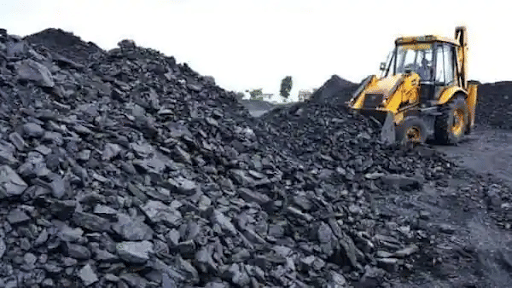
According to Coal 2022, the IEA's annual report on coal trends, the coal-fired power generation in China and India is increasing to keep up with higher demand, whereas several European countries have been temporarily switching to coal due to record-high natural gas prices, low hydropower generation, and maintenance-related closures at nuclear plants.
Coal 2022 – IEA
- Coal 2022 provides a complete study of current changes in coal demand, supply, trade, costs, and pricing.
- Additionally, it offers projections for demand, supply, and trade through 2025, broken down by region and coal grade.
- It also includes a thorough examination of China, whose impact on the global coal market is unmatched by any other nation or source of fuel.
Highlights of the report
- Raise in global consumption: According to the IEA's annual report on coal, global coal consumption is expected to increase by 1.2% this year, breaking the previous record of 8 billion tonnes established in 2013 and breaking it for the first time.
- It also predicts that coal consumption will remain flat at that level to 2025 as falls in mature markets are offset by continued strong demand in emerging Asian economies.
- As a result, coal will still be by far the biggest source of carbon dioxide emissions in the entire global energy system.
- India is predicted to experience the biggest increase in coal demand, at 7%, followed by the European Union at 6% and China at 0.4%.
- There is no indication that investment in export-driven coal projects is increasing, despite the fact that the world's three largest coal producers—China, India, and Indonesia—are expected to set production records, resulting in high prices and comfortable margins for coal producers due to a surge in demand in Europe as a result of the Russia-Ukraine war.
- This illustrates the hesitancy of financiers and mining firms regarding coal's medium- and long-term prospects.
- China consumes more coal than any other nation, with 53% of the world's demand.
- In 2021, China's use of coal climbed by 4.6% to 4,232 tonnes.
India
- India is projected to add the largest percentage increase in coal use in the coming year globally ahead of China and the European Union.
- India will serve as the "growth engine" for global coal demand.
- India’s coal consumption has doubled since 2007 at an annual growth rate of 6%.
- India has vowed to gradually transition to renewable energy sources, but has vehemently defended its intention to continue using coal because it is the quickest and least expensive resource it possesses for sustaining economic growth.
- India, the second-largest user of coal, saw an increase in demand of 128 Mt, or 14%, in 2021.
Reasons
- Russia-Ukraine conflict: Some nations have switched to comparably less expensive coal this year as a result of high gas prices brought on by Russia's invasion of Ukraine and the resulting supply interruptions.
- Heat waves: In other areas, heat waves and droughts have also increased electricity demand and reduced hydropower.
- Shut down of Nuclear Plants: nuclear generation has also been very low, particularly in Europe, where France had to shut down nuclear reactors for maintenance.
Concerns
- It is bad for the environment, particularly in light of international climate change accords and efforts to limit temperature increases to 1.5 degrees Celsius.
What is International Energy Agency (IEA) ?
- The International Energy Agency (IEA) was founded after the 1973–1974 oil crisis to assist industrialised nations in responding to severe oil shocks.
- Since then, the IEA's mission has broadened to include clean energy, economic development, and overall energy security.
- A candidate country to the IEA must be a member country of the OECD
Founding members
- The founding members are Austria, Belgium, Canada, Denmark, Germany, Ireland, Italy, Japan, Luxembourg, The Netherlands, Norway (under a special Agreement), Spain, Sweden, Switzerland, Turkey, United Kingdom, and the United States.
- They were followed by Greece (1976), New Zealand (1977), Australia (1979), Portugal (1981), Finland (1992), France (1992), Hungary (1997), Czech Republic (2001), Republic of Korea (2002), Slovak Republic (2007), Poland (2008), Estonia (2014), and Mexico (2018) and Lithuania (2022).
- Chile, Colombia and Israel are seeking full membership.
- The IEA has made an effort to involve important non-members in its activities as the global energy landscape has altered, including Brazil, China, India, Indonesia, South Africa, Thailand, Singapore, Morocco, and accession countries Mexico and Chile.
(*Click this link to read prelims specific weekly current affairs articles)
Some Important FAQs
Question: What is Organisation for Economic Co-operation and Development (OECD)?
Answer:
The Organisation for Economic Co-operation and Development (OECD) produces independent analysis and statistics to promote policies to improve economic and social wellbeing across the globe.
Question: What are types of coal found in India?
Answer:
Types of coal found in India
- Anthracite: It is the highest grade of coal containing a high percentage of fixed carbon.It is found in smaller quantity in regions of Jammu and Kashmir.
- Bituminous: It is a medium grade of coal having high heating capacity. It is the most commonly used type of coal for electricity generation in India. Most of bituminous coal is found in Jharkhand, Odisha, West Bengal, Chhattisgarh, and Madhya Pradesh.
- Subbituminous: It is black in colour, dull (not shiny) and has a higher heating value than lignite.
- Lignite: It is the lowest grade coal with the least carbon content. It is found in the regions of Rajasthan, Tamil Nadu, and Jammu & Kashmir.
Question: What is 1973 oil crisis?
Answer:
The Yom Kippur War support by the United States for Israel led to an Arab oil embargo, which led to a spike in energy prices and gasoline shortages during the 1973 energy crisis, also known as the Oil Shock of 1973–74.
MCQs
Question: Consider the following statements:
- International Energy Agency was founded after the 1973–1974 oil crisis to assist industrialised nations in responding to severe oil shocks.
- A candidate country to the IEA must be a member country of the OECD.
Which of the above statements is/are correct?
(a) 1 only
(b) 2 only
(c) Both 1 and 2
(d) Neither 1 nor 2
Answer: (c) See the Explanation
- The International Energy Agency (IEA) was founded after the 1973–1974 oil crisis to assist industrialised nations in responding to severe oil shocks. Hence, statement 1 is correct.
- Since then, the IEA's mission has broadened to include clean energy, economic development, and overall energy security.Hence, statement 2 is correct.
- Therefore, option (c) is the correct answer.
Download the PREPP App and attempt FREE IAS Exam Mock Tests and get complete study material!

Full Test - 04: UPSC CSE Prelims CSAT (Paper-II)
Full Test - 03: UPSC CSE Prelims CSAT (Paper-II)
UPSC CSE Prelims 2026 GS Paper 1 Question Paper (24-May-2026)
UPSC CSE Prelims 2026 CSAT Paper 2 Question Paper (24-May-2026)

17 February 2025 | The Hindu Must Read Articles | Current Affairs

16 February 2026 | The Hindu Must Read Articles | Current Affairs

13 February 2026 | The Hindu Must Read Articles | Current Affairs









Comments