How Do SIM Cards Work?
Relevance: GS3 - Science and Technology- developments and their applications and effects in everyday life.
(Source: The Hindu, 10/25/2023)
Click here for Daily Current Affairs
Why in the news?
- This article discusses the evolution and working of SIM cards, which have become one of the most ubiquitous technologies in the world.
- In 2021, there were more than 14 billion cellular devices in the world, more than double that of the global population.
Table of Contents
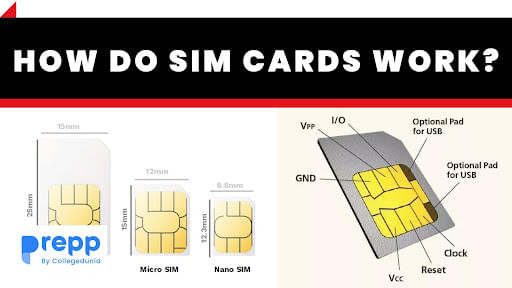
What is a SIM card?
- A SIM or Subscriber Identification Module card is an integrated circuit or microchip that identifies subscribers on a cellular network.
- It is used to confirm the identity of a subscriber by helping the network locate and verify the user.
- A SIM card is mandatory for a user to connect to a cellular network following the Global System for Mobile Communications (GSM) standard.
- It uses a unique authentication key which is stored on the SIM card to identify the user as signals sent by the phone into the network are ‘signed’ by the key, which helps determine the legitimacy of the connection.
- Moreover, the key is designed in such a way that the user cannot access it through their phone.
- However, it is possible to duplicate a SIM card by accessing its key and storing it in multiple cards.
- SIM cards also store information about their own ID number, the IMSI, the subscriber’s location area identity, a list of preferred networks, emergency numbers, and in some cases, contacts and SMS messages.
How does a SIM card work?
- Design standard: SIM Cards are designed according to the ISO/IEC 7816 international standard maintained by the International Organisation for Standardisation and the International Electrotechnical Commission.
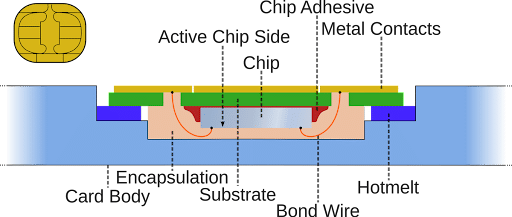
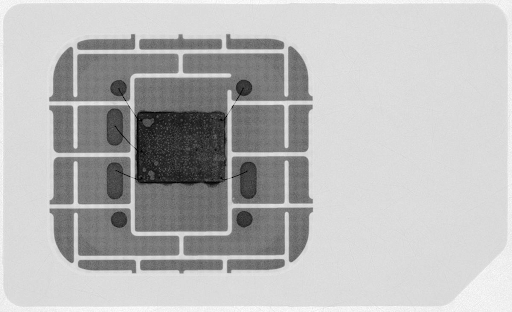
- Physical structure: The card consists of an integrated circuit glued to a silicon substrate on the top side with metal contacts (gold-colored side of the SIM card) interfacing with the phone’s data connectors.
- Working of the pins: The metal contacts are segmented in appearance with each segment called a pin, each having a specific purpose.
- These pin-wise roles are specified by the ISO/IEC 7816-2 standard which specifies various functions of a SIM card and how they are to be implemented.
- Network side: The SIM helps a phone establish its place within a cellular network.
- The phone sends data via the network to a telephone exchange when the subscriber dials a recipient’s number.
- If the recipient is connected to the same exchange, the network establishes their identity and the call is routed to them.
- If the recipient is ‘located’ elsewhere, a computer connected to the network routes the call there according to the most optimum route.
How have SIM cards changed?
- Smart cards, of which SIM cards are a type, were first developed in the late 1960s by German Engineer - Helmut Gröttrup - as an integrated circuit in a plastic panel the size of a credit card.
- The evolution of the SIM card has been correlated with the network to which its users connect.
- GSM standardization: The GSM Technical Specification 11.11 prepared by the European Telecommunications Standards Institute defines the physical features, internal organization, functioning, operating conditions, etc.
- 3GPP: 3GPP is a consortium of seven organizations that developed the standards for the 3G, 4G, and 5G networks.
- The ETSI transferred its responsibilities to the consortium which includes the Telecommunications Standards Development Society in India.
- Universal Mobile Telecommunications System: Following the introduction of the Universal Mobile Telecommunications System, 3G networks replaced the 2G networks.
- Prior to this, the term ‘SIM card’ denoted both the hardware and the corresponding software.
- As 3G systems emerged, ‘SIM’ began to be used to refer to just the software while the hardware was referred to as the Universal Integrated Circuit Card (UICC).
- The software part was upgraded to an application called Universal SIM, or USIM, which could be modified to be compatible with the identification and security requirements of 3G, 4G, and 5G networks.
What is an eSIM?
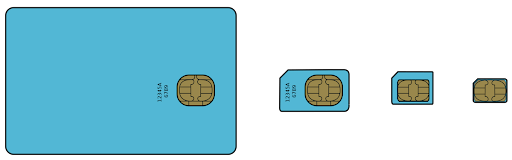
- Over the years, SIM cards have evolved into a more compact size and shape to micro SIMs and nano SIMs and now to eSIMs, which are digital extensions of the regular SIM card.
- In eSIMs, the SIM software is loaded onto a UICC that is permanently installed in the mobile equipment in the factory itself, also known as the eUICC.
- The specifications of the eSIM are defined by the GSM Association.
- Mobile equipment with this capability can be remotely reprogrammed by the network operator who simply has to reprogram the eSIM, instead of physically replacing the SIM.
- Advantages of the eSIM:
- Environmentally friendly: It is considered to be more environmentally friendly in comparison to a physical SIM due to its reprogrammability which reduces the plastic and metal requirements.
- Security: Since it cannot be separated from the phone, it is more secure than a physical SIM as malicious actors cannot duplicate its details by gaining access to the device.
- Disadvantages of the eSIM:
- Difficult for digitally illiterate users: In countries like the USA, eSIMs can be reprogrammed by users. However, this can be difficult for those who are not digitally literate like the elderly population.
- Privacy concerns: In the absence of adequate data privacy laws, network operators could track and misuse subscribers’ data.
(*Click this link to read prelims specific weekly current affairs articles)
FAQs
Question: What is GSM?
Answer:
GSM or the Global System for Mobile Communication was established by the ETSI to define protocols for 2 G networks. It is a circuit-switching program that works by splitting every 200 kHz channel into eight 25 kHz time slots. Its advantages include better security, wider compatibility, and simultaneous use of voice calls and data, and better clarity
Question: What are 5G networks?
Answer:
5G is the 5th generation mobile network or wireless technology. It enables a new kind of network with improved connectivity, peak speeds, ultra-low latency, reliability, higher network capacity, and a uniform user experience.
MCQs
Question: Which of the following do not belong to the GSM family of wireless technologies? (UPSC CSE 2010)
(a) EDGE
(b) LTE
(c) DSL
(d) Both EDGE and LTE
Answer: (c) See the Explanation
- DSL is a family of technologies under the general name of xDSL, for various x, like ADSL, HDSL, and RADSL.
- It is used in the local loop of the telephone network, i.e. the part of the telephone network that connects the customer premises with the end office of the telephone company.
- It does not belong to the GSM family.
Therefore, option (c) is the correct answer.
Question: With reference to communication technologies, what is/are the difference/differences between LTE (Long Term Evolution) and VoLTE (Voice over Long Term Evolution)?
- LTE is commonly marketed as 3G and VoLTE is marketed as advanced 3G.
- LTE is data-only technology while VoLTE is voice-only technology.
Select the correct answer using the code given below: (UPSC CSE 2019)
(a) 1 only
(b) 2 only
(c) Both 1 and 2
(d) None of the above
Answer: (d) See the Explanation
- LTE is a series of 4G network standards, not 3G. Hence statement 1 is incorrect.
- VoLTE is both data and voice technology while LTE only allows the transmission of data. Hence statement 2 is incorrect.
Therefore, option (d) is the correct answer.
Download the PREPP App and attempt FREE IAS Exam Mock Tests and get complete study material!

Full Test - 04: UPSC CSE Prelims CSAT (Paper-II)
Full Test - 03: UPSC CSE Prelims CSAT (Paper-II)
UPSC CSE Prelims 2026 GS Paper 1 Question Paper (24-May-2026)
UPSC CSE Prelims 2026 CSAT Paper 2 Question Paper (24-May-2026)

17 February 2025 | The Hindu Must Read Articles | Current Affairs

16 February 2026 | The Hindu Must Read Articles | Current Affairs

13 February 2026 | The Hindu Must Read Articles | Current Affairs









Comments