GSLV Mk III-D1 / GSAT-19 Mission – Science & Technology Notes
GSAT-19 was launched on June 5, 2017 by GSLV Mk III-D1 from the Satish Dhawan Space Centre SHAR (SDSC SHAR), Sriharikota. The first GSLV Mk III developmental flight (the GSLV-Mk III-D1) successfully placed the GSAT-19 satellite into a Geosynchronous Transfer Orbit (GTO). In this article, we will discuss in detail regarding GSLV Mk III-D1 / GSAT-19 Mission which will be helpful for UPSC exam preparation.
Table of Contents
What is Geosynchronous Satellite Launch Vehicle Mk III (LVM3)?
- LVM3 is a three-stage vehicle with two solid strap-on motors (S200), one liquid core stage (L110), and a cryogenic upper stage with high thrust (C25).
- With 204 tonnes of solid propellant, the S200 solid motor is one of the world's largest solid boosters.
- The liquid L110 stage has 115 tonnes of liquid propellant and a twin liquid engine configuration, whereas the C25 Cryogenic upper stage has a fully indigenous high thrust cryogenic engine (CE20) with a propellant loading of 28 tonnes.
- The vehicle's overall length is 43.5 metres, with a gross lift-off weight of 640 tonnes and a payload fairing diameter of 5 metres.
| Other Relevant Links | |
|---|---|
| GSLV and Various Engine | Recent National and International Space Missions |
| Cryogenic rockets | Scramjet Engine |
| ISRO’s World Record PSLV C37 Launch: | Global Positioning System |
| Galileo | GLONASS |
| IRNSS | GAGAN |
| Chandrayaan – I & II | Mars Orbiter Mission |
What is GSLV Mk III-D1?
- The GSLV MkIII-D1/GSAT-19 Mission is the first developmental flight of the GSLV Mk III, a heavy lift launch vehicle capable of launching payloads weighing up to 4,000 kg into Geosynchronous Transfer Orbit (GTO) and 10,000 kg into Low Earth Orbit (LEO).
- The first developmental flight, GSLV-Mk III-D1, carried the 3136 kg GSAT-19 satellite to a Geosynchronous Transfer Orbit (GTO).
- To provide aerodynamic robustness, the vehicle is outfitted with a 5 m ogive payload fairing and a slanted strap-on nose cone.
- GSAT-19 was launched on Monday, June 5, 2017 by GSLV Mk III-D1 from the Second Launch Pad (SLP) at Satish Dhawan Space Centre SHAR (SDSC SHAR), Sriharikota.
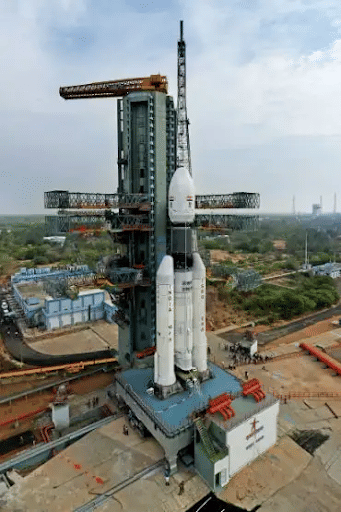
GSLV Mk III-D1
What is GSAT-19 Mission?
- The GSAT-19 satellite, with a lift-off mass of 3136 kg, is India's communication satellite, built around the ISRO's standard I-3K bus.
- The satellite's main structure is a cuboid shape built around a CFRP central cylinder.
- GSAT-19's two solar arrays, which are made up of Ultra Triple Junction solar cells, generate approximately 4500 Watts of electrical power.
- The satellite's orientation is provided by sensors such as the Sun, Earth, and Star, as well as gyroscopes.
- GSAT-19's Attitude and Orbit Control System (AOCS) uses momentum wheels, magnetic torquers, and thrusters to keep the satellite oriented.
- For initial orbit raising and station keeping, the satellite's propulsion system consists of a Liquid Apogee Motor (LAM) and chemical thrusters that use liquid propellants.
- The Ka/Ku-band high throughput communication transponders are carried by GSAT-19.
- It also carries a Geostationary Radiation Spectrometer (GRASP) payload, which will monitor and study the nature of charged particles as well as the impact of space radiation on satellites and their electronic components.
- GSAT-19 also includes advanced spacecraft technologies such as a miniaturised heat pipe, a fibre optic gyro, a Micro Electro-Mechanical Systems (MEMS) accelerometer, a Ku-band TTC transponder, and an indigenous Lithium-ion battery.
- GSAT-19 will use its own propulsion system to reach its geostationary orbital home after separating from the GSLV MkIII in GTO.
- The payload in this mission is GSAT-19, a high throughput communication satellite. This will be India's most powerful satellite launch to date.
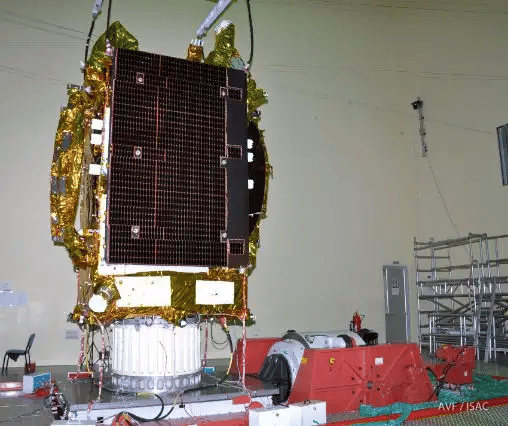
GSAT-19
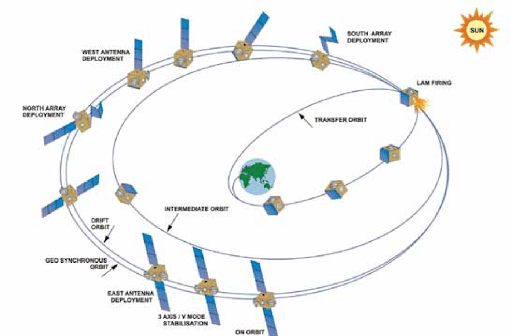
GSAT-19 Mission Profile
Conclusion
The design and development of GSLV Mk III is based on ISRO’s rich experience in handling solid, liquid and cryogenic rocket propulsion technologies. The first suborbital test flight of GSLV Mk III was successfully conducted on December 18, 2014.
| Other Relevant Links | |
|---|---|
| Science & Technology Policy in India | Scientific Policy Resolution 1958 |
| Science & Technology Policy of 1983 | Science & Technology Policy of 2003 |
| Science, Technology and Innovation Policy 2013 | New Initiatives Aligned with the National Agenda |
| India and World collaboration in science projects | Technology Vision Document 2035 |
FAQs
Question: What is the GSLV Mk III D1 mission?
Answer: The GSLV Mk III D1 mission is the inaugural flight of the GSLV Mk III (Geosynchronous Satellite Launch Vehicle Mark III), also known as LVM3. It was designed by ISRO to launch heavier payloads into geostationary orbit. The mission successfully placed the GSAT-19 communication satellite into orbit, marking a significant achievement for India's space capabilities.
Question: What is the GSAT-19 satellite and its purpose?
Answer: GSAT-19 is a high-throughput communication satellite developed by ISRO. It is designed to augment the capacity of India’s communication and broadcasting services. The satellite carries advanced communication payloads, including transponders for telecommunication, broadcasting, and broadband services. It is positioned to provide services for a wide range of sectors, including government services, rural communications, and emergency services.
Question: Why is the GSLV Mk III D1 mission significant for ISRO?
Answer: The GSLV Mk III D1 mission is significant because it marks a milestone in ISRO’s efforts to develop more powerful and reliable launch vehicles. The successful deployment of GSAT-19 demonstrated the capability of GSLV Mk III to handle heavier payloads, which is essential for launching larger satellites and supporting ISRO’s future interplanetary missions, such as the Mars and Moon missions.
Question: What are the technical advancements in the GSLV Mk III compared to previous versions?
Answer: The GSLV Mk III is an advanced version of the GSLV series, equipped with a more powerful cryogenic upper stage. It is designed to carry payloads up to 4,000 kg to geostationary orbit, which is a significant improvement over earlier versions. The vehicle also features a more robust and efficient design, with enhanced stability and payload handling capability, which allows it to perform more complex missions, including launching heavier satellites and supporting crewed space exploration in the future.
Question: How does the GSAT-19 satellite benefit India’s communication infrastructure?
Answer: The GSAT-19 satellite significantly enhances India’s communication infrastructure by increasing the capacity for telecommunications, broadcasting, and broadband services. It helps provide high-speed internet connectivity, improve the quality of telecommunication services, and expand coverage to rural and remote areas. The satellite also plays a vital role in disaster management, providing emergency communication capabilities during natural disasters.
MCQs
1. What was the primary goal of the GSLV Mk III D1 mission?
A) To launch a satellite for global navigation
B) To test the cryogenic stage for future missions
C) To send a human crew to space
D) To test new technologies for deep space exploration
Answer: (B) See the Explanation
The primary goal of the GSLV Mk III D1 mission was to test the cryogenic upper stage and demonstrate the vehicle’s ability to carry heavier payloads, which is crucial for future deep space and crewed space missions.
2. What is the purpose of the GSAT-19 satellite?
A) Scientific exploration
B) Communication and broadcasting
C) Earth observation
D) Weather monitoring
Answer: (B) See the Explanation
GSAT-19 is primarily designed for communication and broadcasting, offering enhanced services in telecommunications, broadcasting, and broadband services across India.
3. How does the GSLV Mk III differ from earlier GSLV models?
A) It uses a solid rocket motor
B) It has a larger payload capacity
C) It is not capable of launching satellites into geostationary orbit
D) It uses a simpler design with fewer stages
Answer: (B) See the Explanation
The GSLV Mk III has a larger payload capacity compared to previous GSLV models, enabling it to carry heavier satellites into geostationary orbit, thanks to its enhanced cryogenic upper stage.
4. Which of the following features enhances the GSLV Mk III’s performance?
A) Smaller payload size
B) The use of a solid fuel core
C) The inclusion of a powerful cryogenic upper stage
D) Simplified engine design
Answer: (C) See the Explanation
The inclusion of a powerful cryogenic upper stage enhances the GSLV Mk III’s performance, enabling it to launch heavier payloads and execute more complex missions.
5. What is the potential impact of the GSLV Mk III on India’s space exploration ambitions?
A) It will reduce ISRO's dependence on international partners
B) It will limit the payload capacity for future missions
C) It will increase the cost of space missions
D) It will make ISRO reliant on other countries for satellite launches
Answer: (A) See the Explanation
The GSLV Mk III will reduce ISRO’s dependence on international partners for launching heavier payloads and enable India to independently carry out complex satellite launches and future crewed space missions.
GS Mains Questions and Model Answers
Q1: Evaluate the significance of the GSLV Mk III D1 mission for India’s space exploration and future space missions.
Answer: The GSLV Mk III D1 mission marked a significant step forward in India’s space exploration capabilities. The successful launch of GSAT-19 demonstrated the ability of ISRO to handle heavier payloads and place them into geostationary orbit. This is crucial for future missions, such as sending astronauts into space (Gaganyaan mission) and deploying satellites for interplanetary missions. The success of this mission positions ISRO to independently manage more complex space programs and reduces the dependency on international space agencies for launching large payloads.
Q2: How does the GSAT-19 satellite contribute to India’s communication infrastructure and its role in national development?
Answer: GSAT-19 plays a pivotal role in strengthening India’s communication infrastructure by augmenting the capacity of the INSAT/GSAT series. The satellite provides enhanced telecommunications, broadband, and broadcasting services, which are crucial for improving connectivity, especially in remote areas. Additionally, the satellite supports government services, education, healthcare, and disaster management by enabling better communication channels. By improving access to information and services, GSAT-19 plays a critical role in India’s national development goals, particularly in achieving digital inclusion and supporting economic growth.
Q3: Discuss the technological advancements in GSLV Mk III and their impact on ISRO’s future space missions.
Answer: GSLV Mk III represents a major technological leap for ISRO, particularly due to its cryogenic upper stage, which provides higher efficiency and allows for heavier payloads to be launched into space. This capability significantly enhances ISRO’s ability to execute complex missions, such as the Gaganyaan crewed space mission and interplanetary explorations. The advancements in payload capacity and efficiency ensure that ISRO can compete globally in the satellite launch market and pursue ambitious projects, including lunar exploration and Mars missions. The GSLV Mk III is integral to achieving India’s long-term space exploration goals and contributing to global space research collaborations.
Previous Year Questions on Space Missions
1. UPSC CSE Prelims 2021:
Question: What is the key feature of the GSLV Mk III that makes it different from its predecessors?
A) It uses a nuclear-powered engine
B) It has a cryogenic upper stage
C) It has a solid core booster
D) It can only launch satellites to low Earth orbit
Answer: (B)
Explanation: The GSLV Mk III is equipped with a cryogenic upper stage, which provides the necessary thrust to launch heavier payloads into geostationary orbit, making it more capable than its predecessors.
2. UPSC CSE Mains 2020 (GS Paper 3):
Question: "Analyze the importance of the GSLV Mk III mission for India’s future space exploration plans."
Answer: The GSLV Mk III mission is vital for India’s future space exploration plans as it provides the capability to launch heavier payloads and supports ISRO’s ambitions to conduct crewed missions like Gaganyaan. The mission also enhances India’s global standing in space exploration and reduces reliance on foreign launch services. The technology developed through GSLV Mk III will be used for future interplanetary missions, including Mars and Moon missions, further solidifying India’s position as a space power.
Download the PREPP App and attempt FREE IAS Exam Mock Tests and get complete study material!

Full Test - 04: UPSC CSE Prelims CSAT (Paper-II)
Full Test - 03: UPSC CSE Prelims CSAT (Paper-II)
UPSC CSE Prelims 2026 GS Paper 1 Question Paper (24-May-2026)
UPSC CSE Prelims 2026 CSAT Paper 2 Question Paper (24-May-2026)

17 February 2025 | The Hindu Must Read Articles | Current Affairs

16 February 2026 | The Hindu Must Read Articles | Current Affairs

13 February 2026 | The Hindu Must Read Articles | Current Affairs









Comments