Defence Exercises - International Relations (IR) Notes
India uses military exercises as a method to prepare for military operations, test the real-time capabilities of its forces and develop new startegies of warfare. Indian military drills or defence drills involving two or more nations are ways to evaluate how well the armed forces operate outside of actual combat. All three armed forces—army, navy, and air force—as well as the Coast Guard regularly participate in defence exercises.
Exercises like Harimau Shakti-2022, Yudh Abhyas 2022, Khanjar, etc are some of the recent military exercises that involved Indian forces.
|
Table of Contents |
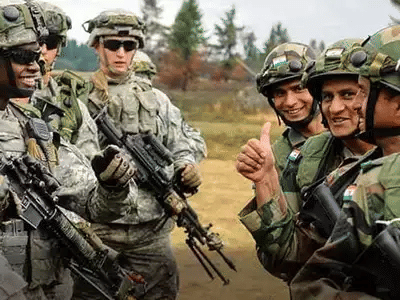
What is a defence exercise?
- A military exercise, sometimes known as a war game, is a training exercise for military operations that either investigates the impacts of battle or tests tactical ideas in the absence of actual fighting.
- This also serves the objective of guaranteeing the combat preparedness of garrisoned or deployable forces prior to deployment from a home base.
- Defence exercises involving two or more nations allow for improved military coordination, the observation of enemy tactics, and a visible display of power for the participating nations.
- A 2021 study found that joint military exercises within well-defined alliances typically dissuade adversaries whereas combined military exercises outside of an alliance typically escalate conflict.
Classification
- Military exercises are mainly classified into three distinct types
- Bilateral
- Multilateral
- Domestic
- Bilateral Exercise: Bilateral exercises are those that are conducted between two countries. Eg: Vajra Prahar
- Multilateral Exercises: These exercises are conducted between multiple countries as part of security grouping or otherwise. Eg: Malabar
- Domestic Excercise: These exercises usually take place between the different services of the country or within the service. Eg: Suraksha Kavach
Objectives
- Defence exercises are held to attain specific objectives, assess preparedness and build confidence.
- Military exercises are a way to display a country’s force and might to other nations of the world.
- Additionally, it enhances the cooperation and coordination of allied militaries.
- Soldiers get an opportunity to learn how to act, think and work together in the heat of battle without facing the risks.
- It offers a chance to evaluate the accuracy of weapons and equipment.
- It serves as an opportunity to train for Natural Disasters and Humanitarian Relief operations.
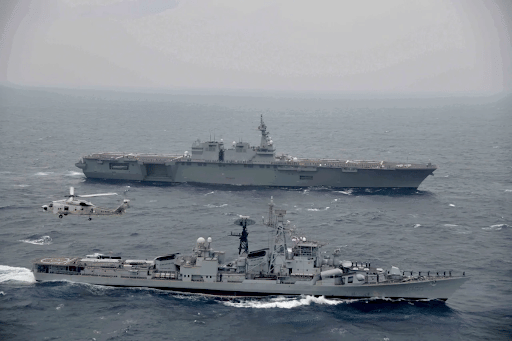
India’s bilateral exercises
- Ex Hand in Hand: The annual joint training exercise had its 7th edition held in Oct 2018 in Chengdu, it was suspended in 2017 because of Doklam Plateau standoff. HAND-IN-HAND 2019' with the topic of 'Counter Terrorism' was held in Umroi, Meghalaya, from December 7 to 20. The exercise's goal is to train cooperative planning and execution of counter-terrorist operations in semi-urban environments.
- Ex Surya Kiran: It is conducted biannually (every six months), alternatively in India and Nepal. The 16th edition was held in December 2022 to enhance interoperability in jungle and mountain terrain.
- Ex Sampriti: It is aimed to strengthen and broaden the aspects of interoperability and cooperation between the Indian and Bangladesh Armies.It was last conducted in June 2022.
- Ex Mitra Shakti: It wasconcieved between India and Sri Lanka in 2012 in response to China’s efforts to strengthen its influence in the Indian Ocean region & Southeast Asia. The 8th edition was held in October 2021 in Ampara, Sri Lanka.
- Ex Yudh Abhyas: It is an annual combat exercise, started in 2004 between the USA and India. The 18th edition was held in 2022 in Auli, Uttarakhand.
- Ex Vajra Prahar: The exercise is conducted between Special Forces of India and the USA to deal with operations for counterterrorism. The 13th edition was conducted in 2022 at Bakloh, India.
- Ex IMBAX: It was aimed at strengthening closer relations with armies of India and Myanmar and efficient peacekeeping efforts. It was first held in 2017.
- Ex Harimau Shakti: This is a bilateral military training exercise between the Indian and Malaysian militaries that was first held in 2012. The 2022 edition was organized in November-December in Pulai, Malaysia.
- Ex Garuda Shakti: It is an annual military exercise that was started in 2012 between the armies of India and Indonesia. The 2022 edition concluded at Karawang,Indonesia.
- Ex VINBAX: It is a military exercise between India and Vietnam that is aimed at training for Peacekeeping Operations under United Nations (UN) mandates. The 3rd edition took place in Chandimandir, Haryana in 2022.
- Ex Ekuverin: It is an annual bilateral military exercise, started in 2009 and hosted alternatively in India and the Maldives. The 11th edition was held in 2021 in Kadhdhoo island, Maldives.
- Ex INDRA: The exercise was first held as a bilateral exercise between the Indian and Russian navies but was transformed into a tri-services Military Exercise in 2017. The 2021 edition took place at the Prudboy Range, Volgograd.
- Ex AL NAGAH: It is a joint military exercise first conducted in 2015 between the armies of India and Oman that is aimed at interoperability & weapons training. The 4th edition took place in 2022 in Oman.
- Ex DHARMA GUARDIAN: It is a joint military exercise between India and Japan that was last conducted in 2022 in Belgavi, Karnataka. The exercise is aimed at enhancing the level of cooperation between the defence forces of the two countries.
- Ex MAITREE: It was targeted at evolving drills & procedures involved in counter-terrorist operations between the Indian Army and the Royal Thai Army. The 12th edition was held in Meghalaya in 2019.
- Ex AJEYA WARRIOR: It is a biennial military training exercise, started in 2013 and involving the armies of India and the UK. The 6th edition took place in 2021 in Uttarakhand.
- Ex PRABAL DOSTYK: It is a 14 day military training exercise between India and Kazhakastan. It was renamed the Ex KAZIND in 2018 and was last held in 2022 in Meghalaya.
- Ex NOMADIC ELEPHANT: This is an annual bilateral military exercise, started in 2006 and designed to strengthen the partnership between the armies of India & Mongolia. It was recently held in 2019 in Himachal Pradesh.
- Ex LAMITIYE: The 9th edition of this biennial military exercise between India and the Seychelles was conducted in 2022 in the Seychelles Archipelago.
- Ex BOLD KURUKSHETRA: It was a bilateral armor exercise conducted at the BABINA Field Firing Range (BFFR) between the Singapore Army and the Indian Army (IA).
- Ex KHANJAR: It is an exercise between the Special Forces of India and Kyrgyzstan that was last conducted in 2022 at Bakloh.
- Ex SLINEX: The SLINEX exercise started in 2005 was previously held biennially but from 2018 onwards it has become an annual event between the navies of India and Sri Lanka. In March 2022, the exercise was conducted in the Bay of Bengal and Vishakhapatnam.
- Ex KONKAN: The execise was initiated in 2004, to build interoperability and share best practices betwee the navies of the UK and India. In 2021, INS Tabar participated in the exercise which was conducted in the English Channel.
- Ex VARUNA: Bilateral exercises between the navies of India & France started in 1983 but was named Ex Varuna in 2001. The 20th edition was held the Arabian Sea in March 2022 and was aimed at improving Indo-French capabilities at sea.
- Ex NASEEMAL-BAHR: It is a biennial bilateral exercise between the navies of India and Oman that was started in 1993. The name literally means “sea breeze”. In 2022, the event was conducted in three phases off the east coast of Oman.
- Ex Sahyog HOP TAC: This exercise is a the first between the Indian and Vietnam Coast Guards and was held in 2018 in the Bay of Bengal off the coast of Chennai.
- Ex IND-INDO CORPAT: It is an India-Indonesia coordinated patrol (IND-INDO CORPAT), a bi-annual exercise that was started in 2002. The 39th edition was held in the Indian Ocean and included Belawan and Port Blair as debrief locations.
- Ex SIMBEX: It is the annual exercise between the Navies of India and Singapore that has been held since 1994. Its name is an acronym for Singapore India Maritime Bilateral Exercise (SIMBEX). The last edition was held in OCtober 2022 at Vishakhapatnam.
- Ex IMCOR: The Indo-Myanmar Coordinated Patrol (IMCOR) has been held annually since 2013. The 8th edition took place between the Indian and Myanamr navies in 2019 an was aimed at tackling the threats of terrorism, poaching, illegal fishing and trafficking in the Bay of Bengal.
- Ex GARUDA: This exercise between the respective air forces is an important aspect of Indo-French bilateral military cooperation and was established in 2003. GARUDA VII was held in Jodhpur,Rajasthan in 2022.
- Ex EASTERN BRIDGE: It was organized between the Indian Air Force and Royal Oman Air Force in February 2022 at Jodhpur to promote interaction, experience sharing and operational knowledge.
- Ex AVIA-INDRA: The exercise was started in 2014 and is conducted on a biannual basis targeting anti-terrorist operations. The Indian and Russian Air forces participate in this exercise that was last held in 2018.
- Ex SIAM BHARAT: This is a Humanitarian assistance and disaster relief (HADR) training exercise between the air forces of India and Thailand. It was held in 2017 in Chiang Mai, Thailand.
- Ex DESERT EAGLE: It is a bilateral air combat exercise that aims to provide exposure towards mission planning and execution in a simulated high threat combat environment. The Indian Air Force and the United Arab Emirates Air Force partcipate in this exercise.
- Ex INDRADHANUSH: This exercise was conceived to enhance the mutual operational understanding between the Indian Air Force and the Royal Air Force of the UK. The fifth edition of the exercise took place in Hindan UP in 2020.
- Ex RED FLAG: It is 2-week aerial combat exercise organized by the Indian Air Force that offers air combat training to military pilots from USA and it allies. It is an annual exercise at the Nellis Air Force Base Nevada, and was first held in 1975.
- Ex AL-MOHED AL-HINDI: It was the first naval exercise between the Indian Navy and the Royal Saudi Naval Force. The purpose of the exercise was to promote the defence and military cooperation between Saudi Arabia and India. The flagship destroyer of the Indian Western Naval Fleet, the INS Kochi, represented India in Port-al-Jubail, Saudi Arabia.
| Name of the Exercise | Partcipant |
|---|---|
| Hand in Hand | China |
| Surya Kiran | Nepal |
| Sampriti | Bangladesh |
| Mitra Shakti | Sri Lanka |
| Yuddh Abhyas | USA |
| Vajra Prahar | USA |
| IMBAX | Myanmar |
| Harimau Shakti | Malyasia |
| Garuda Shakti | Indonesia |
| VINBAX | Vietnam |
| Ekuverin | Maldives |
| Indra | Russia |
| Al Nagah | Oman |
| Dharma Guardian | Japan |
| Maitree | Thailand |
| Ajeya Warrior | United Kingdom |
| Prabal Dostyk | Kazhakastan |
| Nomadic Elephant | Mongolia |
| Lamitiye | Seychelles |
| Bold Kurukshetra | Singapore |
| Khanjar | Krygyzstan |
| SLINEX | Sri Lanka |
| Konkan | United Kingdom |
| Varuna | France |
| Naseemal-Bahr | Oman |
| Sahyog Hop Tac | Vietnam |
| IND-INDO CORPAT | Indonesia |
| IMCOR | Myanmar |
| SIMBEX | Singapore |
| Garuda | France |
| Eastern Bridge | Oman |
| AVIA-INDRA | Russia |
| Siam Bharat | Thailand |
| Desert Eagle | United Arab Emirates |
| Indra Dhanush | United Kingdom |
| Red Flag | USA |
| AL-MOHED AL-HINDI | Saudi Arabia |
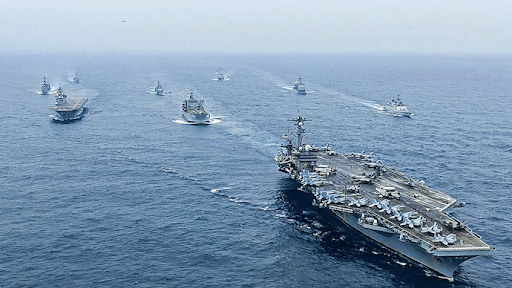
Multilateral Exercises
- Ex RIMPAC: It is the world’s largest maritime exercise and is held biannually near Honolulu, Hawaii (USA). It was first held in 1973 and the 2022 edition had 27 participant nations under the theme ‘capable, adaptive partners’. India was represented by INS Satpura and a P81 maritime patrol craft.
- Ex MALABAR: The exercise is an annual quadrilateral naval exercise involving the United States, Japan, Australia and India as permanent partners. It originally began in 1992 as a bilateral exercise between India and the US.Japan joined in 2015 and Australia rejoined in 2020. The 26th edition was held in Yokosuka, Japan in 2022.
- Ex MILEX-18: It was the first joint military exercise between BIMSTEC countries and was conducted in Pune, Maharashtra in 2018. All member BIMSTEC countries, except Thailand and Nepal, particapered in this exercise with the main aim of promoting efficient practices in areas of counter-terrorism.
- Ex PEACE MISSION: It is a Counter Terror Military Exercise, held in Russia under the framework of the Shanghai Cooperation Organisation (SCO). India participated for th first time in 2018. The 6th edition was organized by Russia in 2021.
- Ex Samvedna: This was the first multilateral Humanitarian Assistance and Disaster Relief (HADR) exercise of the Indian Air Force (IAF) with the South Asian Region nations. In 2018 it was held off the coast of Kerala and had representatives from Sri Lanka, Nepal, UAE and Bangladesh.
- Ex COBRA GOLD: It is the largest Asia-Pacific military exercise held in Thailand every year. The Exercise has activities that highlight regional security and effective response mechanisms to regional crises.
- Ex KAKADU: This exercise started in 1993 is a multilateral regional maritime engagement exercise hosted by the Royal Australian Navy and derives its name from the Kakadu National Park. The 2022 edition had the theme, ‘Partnership. Leadership, Friendship’. India was represented by INS Satpura.
- Ex KOMODO: It is a biennial multilateral Humanitarian Assistance and Disaster Relief (HADR) exercise, conducted by the Indonesian Navy. Its last edition was in 2018 which had 43 participants including India and was aimed at improving multilateral engagement in the Indian Ocean Region.
- Ex Pitch Black: It is a biennial exercise hosted by Australia that is aimed at enhancing interoperability and strengthening relationships between the participants. It was conducted at Darwin in 2022 and had participants from 17 nations including the Indian Air Force.
| Exercise | Participants |
|---|---|
| RIMPAC | Australia, Brunei, Canada, Chile, Colombia, Denmark, Ecuador, France, Germany, India, Indonesia, Israel, Japan, Malaysia, Mexico, Netherlands, New Zealand, Peru, the Republic of Korea, the Republic of the Philippines, Singapore, Sri Lanka, Thailand, Tonga, the United Kingdom and the United States. |
| Malabar | India, USA, Japan and Australia |
| MILEX-18 | Bangladesh, Bhutan, India, Sri Lanka, Myanmar |
| Peace Mission | Russia, China, India, Kazakhstan, Kyrgyzstan, Pakistan, Tajikistan, and Uzbekistan |
| Samvedana | India, Sri Lanka, Nepal, UAE and Bangladesh |
| COBRA GOLD | The United States, Thailand, Singapore, South Korea, Indonesia, Japan and Malaysia. Observers: Brunei, Laos, Cambodia, Israel, Vietnam, Germany, Pakistan, Sri Lanka, Brazil and Sweden. |
| KAKADU | Singapore, New Zealand, Thailand, Malaysia, Indonesia, Papua New Guinea, Philippines, Japan, South Korea, France, India, Pakistan, Brunei, Timor-Leste, Tonga, Hong Kong (UK), Canada, Bangladesh, Cambodia, Vietnam, Fiji, US, UAE, Cook Islands, Sri Lanka, Chile, China and Vanuatu. |
| Pitch Black | Canada, France, Germany, India, Indonesia, Japan, Malaysia, Netherlands, New Zealand, the Philippines, Republic of Korea, Singapore, Thailand, UAE, the UK, and the USA. |
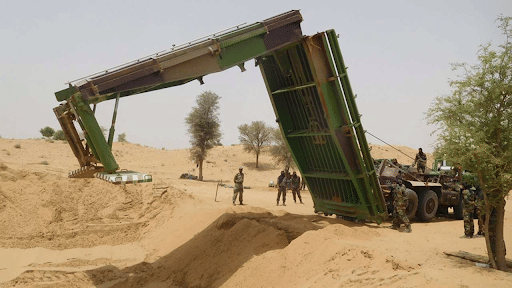
Domestic Exercises
- Ex GANDIV VIJAY: This exercise was held by the Chetak corps of the Indian Army’s South Western Command in the Mahajan field firing ranges in Rajasthan. It aims to develop offensive operations through joint air-land battle in network-centric environment employing modern technology.
- Ex VIJAY PRAHAR: The South Western Command of Indian Army organized this exercise in Suratgarh Rajasthan. The month-long exercise aimed to organize the high tempo air and land operational response to a wide spectrum of threats including Nuclear, Chemical or Biological attack.
- Ex PASCHIM LEHAR: This was a tri-service maritime exercise conducted off the western coast in the Arabian Sea. The exercise is aimed at improving the interoperability between the Indian Navy, Indian Army, Indian Air Force, and Coast Guard and was organized by the Indian Navy. XPL-2022 lasted for 20 days and aimed to build operational readiness in responding to maritime challenges.
- Ex Vayu Shakti: It is an exercise conducted once in every 3 years by the Indian Air Force. Vayu Shakti 2022 was a firepower demonstration exercise of the Indian Air Force that was held at Pokhran, Rajasthan and was the largest war exercise conducted by the Air Force ever with over 140 planes participating.
| Exercise | Participant |
|---|---|
| Gandiv Vijay | South Western Command of Indian Army |
| Vijay Prahar | South Western Command of Indian Army |
| Paschim Lehar | Tri-services and Coast Guard |
| Vayu Shakti | Indian Air Force |
Conclusion
Military exercises are an integral activity of the defence forces of the nation that are conducted to assess operational readiness, train members of the forces, display the nations strength to other nations, etc. It is a useful tool to deter other countries from resorting to attacks and thus avoiding the occurrence of full scale war between nations.
FAQs
Question: What are defence exercises in international relations?
Answer: Defence exercises in international relations refer to joint military drills conducted by two or more countries to enhance interoperability, build strategic partnerships, and strengthen military cooperation. These exercises help countries share expertise, practice coordinated actions, and foster trust among armed forces.
Question: Why are defence exercises important for international relations?
Answer: Defence exercises play a crucial role in enhancing diplomatic ties, building mutual trust, and improving military readiness. These exercises demonstrate a country's commitment to collective security arrangements, promote regional stability, and act as a deterrent against potential threats.
Question: What are some prominent examples of defence exercises held internationally?
Answer: Some prominent defence exercises include the India-US 'Malabar' naval exercise, the Russia-China 'Peace Mission', and NATO's 'Trident Juncture'. These exercises involve multiple nations and are designed to enhance cooperation in countering security threats like terrorism, piracy, and regional conflicts.
Question: How do defence exercises enhance military capabilities?
Answer: Defence exercises improve military capabilities by allowing countries to test their tactical operations, simulate real combat situations, and refine strategies. They also provide an opportunity for troops to familiarize themselves with each other's equipment and communication protocols, ensuring smoother coordination in real-world scenarios.
Question: What role do defence exercises play in regional security?
Answer: Defence exercises are instrumental in promoting regional security by enhancing the preparedness of allied forces, building mutual confidence, and deterring adversaries. They act as a mechanism for reinforcing strategic partnerships and addressing common security challenges, such as terrorism, natural disasters, or border conflicts.
MCQs
1. Which of the following defence exercises involves multiple countries and is conducted by the Indian Navy?
A) Vostok
B) Malabar
C) Peace Mission
D) Red Flag
Answer: (B) See the Explanation
Explanation: 'Malabar' is a trilateral naval exercise involving India, the US, and Japan. It aims to improve maritime security and build interoperability among the participating navies, making it one of the key defence exercises conducted by India in the Indo-Pacific region.
2. What is the primary objective of defence exercises between nations?
A) To promote trade relations
B) To enhance military cooperation and readiness
C) To resolve territorial disputes
D) To provide humanitarian aid
Answer: (B) See the Explanation
Explanation: The primary objective of defence exercises is to enhance military cooperation, readiness, and interoperability among the forces of participating countries. These exercises help improve tactical skills, build trust, and prepare nations for joint operations in real-world scenarios.
3. Which of the following countries is a key participant in the 'Peace Mission' exercise?
A) India
B) China
C) Russia
D) All of the above
Answer: (D) See the Explanation
Explanation: The 'Peace Mission' is a joint anti-terrorism exercise conducted by China, Russia, and several other members of the Shanghai Cooperation Organisation (SCO). It focuses on counterterrorism operations and regional security cooperation.
4. Which of the following is the largest defence alliance in the world?
A) NATO
B) ASEAN
C) SCO
D) Quad
Answer: (A) See the Explanation
Explanation: NATO (North Atlantic Treaty Organization) is the largest military alliance in the world, consisting of 30 countries. It aims to ensure collective security and defense against any external aggression or threats to its member states.
5. The 'Red Flag' exercise is conducted by which country?
A) China
B) United States
C) India
D) Russia
Answer: (B) See the Explanation
Explanation: 'Red Flag' is a premier air combat training exercise hosted by the United States Air Force. It is designed to provide realistic combat scenarios to improve the capabilities of both US and allied air forces.
GS Mains Questions and Model Answers
Q1: Defence exercises between countries play a significant role in international relations. Discuss the diplomatic and security benefits of such exercises.
Answer: Defence exercises foster strong diplomatic ties between countries by enhancing trust and improving communication between armed forces. They allow nations to build military interoperability, which strengthens regional security frameworks. Furthermore, these exercises help in addressing common threats like terrorism, piracy, and border disputes, thereby contributing to global peace and stability.
Q2: How do defence exercises contribute to the military capabilities of participating countries? Analyze their impact on joint military operations.
Answer: Defence exercises contribute significantly to military capabilities by enabling armed forces to practice coordinated actions, refine strategies, and test new technologies. They enhance operational readiness and foster closer cooperation between nations. In joint military operations, these exercises ensure that forces can work together seamlessly, optimizing their collective strength during crises or combat situations.
Q3: Examine the role of multinational defence exercises in shaping geopolitical strategies. How do such exercises affect the balance of power in regional security dynamics?
Answer: Multinational defence exercises are vital tools in shaping geopolitical strategies as they allow countries to showcase military strength, demonstrate alliances, and establish military cooperation. These exercises can influence regional security dynamics by strengthening defense ties and deterring potential adversaries. For example, the Quad and Malabar exercises highlight a strong Indo-Pacific security framework, balancing China's growing influence in the region.
Previous Year Questions on Defence Exercises
UPSC CSE 2017
Question: "Discuss the role of joint military exercises in improving the defense capabilities of India. How do these exercises contribute to regional security?"
Answer: Joint military exercises enhance India's defense capabilities by fostering interoperability with other nations' forces. They allow for better coordination in real-time operations and improve tactical efficiency. These exercises also act as a deterrent to external threats and foster regional cooperation, contributing to peace and security in areas such as the Indian Ocean region.
UPSC CSE 2020
Question: "How do defence exercises help in strengthening India’s diplomatic and strategic ties with other countries?"
Answer: Defence exercises strengthen India's diplomatic and strategic ties by facilitating greater military cooperation, building trust, and improving bilateral relations with participating countries. These exercises promote transparency and understanding, helping to resolve potential conflicts and ensuring mutual defense interests are safeguarded, thus enhancing India's global standing.
Download the PREPP App and attempt FREE IAS Exam Mock Tests and get complete study material!

Full Test - 04: UPSC CSE Prelims CSAT (Paper-II)
Full Test - 03: UPSC CSE Prelims CSAT (Paper-II)
UPSC CSE Prelims 2026 GS Paper 1 Question Paper (24-May-2026)
UPSC CSE Prelims 2026 CSAT Paper 2 Question Paper (24-May-2026)

17 February 2025 | The Hindu Must Read Articles | Current Affairs

16 February 2026 | The Hindu Must Read Articles | Current Affairs

13 February 2026 | The Hindu Must Read Articles | Current Affairs









Comments