Deepfake Technology: How And Why China Is Planning To Regulate It (UPSC Current Affairs)
Relevance: GS3 - Awareness in the fields of IT, Computers, robotics; Cyber Security
(Source: The Hindu,12/19/22)
Click here for Daily Current Affairs
Why in the news?
- Recently, the Cyberspace Administration of China, the country’s cyberspace watchdog, is rolling out new regulations, to be effective from January 10, to restrict the use of deep synthesis technology and curb disinformation.
- Under the guidelines of China’s new rules, companies and platforms using the technology must first receive consent from individuals before they edit their voice or image.
What is Deep Synthesis?
- Deep synthesis is process of generating text, images, audio, and video to build virtual scenes using technologies like deep learning and augmented reality.
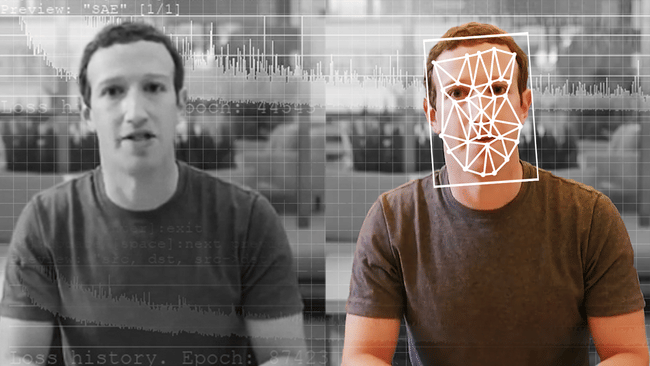
- Deepfakes, in which the voice or face of one person is substituted for another using synthetic media, is one of the most notorious uses of the technique.
- With the development of technology, deepfakes are becoming more difficult to identify.
- Among other wrongdoings, it is used to create fake news, make celebrity porn movies, and commit financial fraud.
What are Deepfakes?
- Deepfakes are a collection of fake images and audio that have been stitched together using machine learning algorithms to spread misinformation and to mimic the voice or appearance of a real person.
- It has the ability to construct fictional characters and to make false statements and actions by actual individuals.
- When an anonymous Reddit user went by the name "Deepfakes" in 2017, that is when the phrase "deepfake" first appeared.
- This user created and posted pornographic videos using Google's open-source, deep-learning technology.
- The videos were altered using a process called face-swapping.
- According to a blog post by cybersecurity company Norton, deepfake technology is now being utilised for malicious activities like scams and hoaxes, celebrity pornography, election meddling, social engineering, automated disinformation attacks, identity theft, and financial fraud.
- Former American presidents Barack Obama and Donald Trump, Indian Prime Minister Narendra Modi, Facebook CEO Mark Zuckerberg, and Hollywood star Tom Cruise have all been impersonated using deepfake technology.
- China's new regulation attempts to stop the spread of misinformation using deepfake.
What is China’s new policy to curb deepfakes?
- According to the South China Morning Post, the guideline mandates that deep synthesis service providers and users make sure that any content that has been altered using the technology is clearly identified and can be tracked back to its source.
- The law also requires those who use technology to alter someone's voice or picture to tell them and get their permission before doing so.
- Only sources on the government-approved list of news organisations may be used for reposting news generated by the technology.
- The new legislation stipulates that deep synthesis service providers must also follow ethics, adhere to local regulations, and maintain the "right political direction and correct public opinion orientation."
- According to a South China Morning Post story, China's internet authority expressed concern that the unfettered development and usage of deep synthesis could result in its application in illegal activities including online scams or defamation.
- The nation recently made a move in an effort to reduce threats that could be brought on by activities offered by platforms that use deep learning or virtual reality to modify any online content.
- If effective, China's new regulations might serve as a model and establish a set of guidelines that other countries could adopt.
What steps are other nations doing to fight deepfakes?
European Union
- European Union has amended its Code of Practice to prevent the dissemination of false information through deepfakes.
- The updated Code mandates that social media platforms like Twitter, Google, and Meta take action against deepfakes and fake accounts.
- Once they have agreed to the Code, they have six months to put their plans into action.
- The revised Code states that these businesses could be fined up to 6% of their annual global turnover if found to be in violation.
- The Code of Practice on Disinformation was introduced in 2018 and brought together global industry leaders for the first time to commit to battling disinformation.
USA
- The bipartisan Deepfake Task Force Act was introduced in the United States in July of last year to help the Department of Homeland Security (DHS) combat deepfake technology.
- The law requires the DHS to conduct an annual investigation into deepfakes, evaluate the technology involved, monitor how both domestic and foreign companies are using it, and develop potential defences against it.
- Some American States, including California and Texas, have enacted legislation making it illegal to broadcast and distribute deepfake videos with the intent to sway an election.
Canada
- The government of Canada is working with a number of local and international actors to conduct some of the most cutting-edge AI research in the country.
- Canada also participates in and assumes leadership roles in a number of related multilateral efforts, including the Global Partnership on Artificial Intelligence, the NATO Cooperative Cyber Defence Centre of Excellence, and the Paris Call for Trust and Security in Cyberspace.
- Through these forums, it can work with national and international actors to develop deepfake policies across a range of fields.
Global Partnership on Artificial Intelligence (GPAI)
Paris Call for Trust and Security in Cyberspace
|
(*Click this link to read prelims specific weekly current affairs articles)
Some Important FAQs
Question: What is Global Partnership on Artificial Intelligence (GPAI)?
Answer:
The Global Partnership on Artificial Intelligence (GPAI) is a multi-stakeholder initiative which aims to bridge the gap between theory and practice on AI by supporting cutting-edge research and applied activities on AI-related priorities.
- It was launched in June 2020 with 15 members, GPAI is the fruition of an idea developed within the G7.
Question: What is Artifical Intelligence?
Answer:
Artificial intelligence leverages computers and machines to mimic the problem-solving and decision-making capabilities of the human mind.
Question: What is Virtual Reality?
Answer:
Virtual Reality, or VR, is the use of computer technology to create a simulated environment which can be explored in 360 degrees. Unlike traditional interfaces, VR places the user inside the virtual environment to give an immersive experience.
MCQs
Question: With reference to Deepfakes, consider the following statements:
- They are a collection of fake images and audio that have been stitched together using machine learning algorithms to spread misinformation.
- It is being utilised for malicious activities like scams and hoaxes, election meddling, social engineering, automated misinformation attacks, identity theft etc.
Which of the above statements is/are correct?
(a) 1 only
(b) 2 only
(c) Both 1 and 2
(d) Neither 1 nor 2
Answer: (c) See the Explanation
- Deepfakes are a collection of fake images and audio that have been stitched together using machine learning algorithms to spread misinformation and to mimic the voice or appearance of a real person. Hence, statement 1 is correct.
- It has the ability to construct fictional characters and to make false statements and actions by actual individuals.
- When an anonymous Reddit user went by the name "Deepfakes" in 2017, that is when the phrase "deepfake" first appeared.
- This user created and posted pornographic videos using Google's open-source, deep-learning technology.
- The videos were altered using a process called face-swapping.
- According to a blog post by cybersecurity company Norton, deepfake technology is now being utilised for malicious activities like scams and hoaxes, celebrity pornography, election meddling, social engineering, automated disinformation attacks, identity theft, and financial fraud. Hence, statement 2 is correct.
- Therefore, option (c) is the correct answer.
Download the PREPP App and attempt FREE IAS Exam Mock Tests and get complete study material!

Full Test - 04: UPSC CSE Prelims CSAT (Paper-II)
Full Test - 03: UPSC CSE Prelims CSAT (Paper-II)
UPSC CSE Prelims 2026 GS Paper 1 Question Paper (24-May-2026)
UPSC CSE Prelims 2026 CSAT Paper 2 Question Paper (24-May-2026)

17 February 2025 | The Hindu Must Read Articles | Current Affairs

16 February 2026 | The Hindu Must Read Articles | Current Affairs

13 February 2026 | The Hindu Must Read Articles | Current Affairs









Comments