Bees are Fewer, Flowers Evolving to Self-Pollinate, New Study Says
Primary Source: The Indian Express
Click here for Daily Current Affairs
Why in the news?
- The article highlights a concerning decline in pollinators such as bees and butterflies and discusses the consequences for plant reproduction.
- Flowers are adapting by self-pollinating more frequently, a response that may hinder their ability to cope with future environmental changes.
Table of Contents
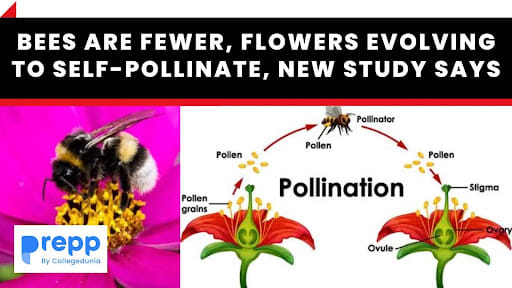
Key Findings
- Decline of Pollinators: The study observes a continuing decline in the population of pollinators like bees and butterflies.
- Evolution of Self-Pollination: In response to the dwindling number of pollinators, some flowers, like field pansies, are evolving to self-pollinate more often.
- Reduced Flower Size and Nectar: Field pansies near Paris were found to be 10% smaller and produced 20% less nectar than those observed 20 to 30 years prior.
- Reduced Genetic Diversity: The shift to self-pollination reduces the opportunity for plants to mix their DNA with others, potentially making future generations more vulnerable to environmental stressors like diseases and droughts.
- Vicious Cycle: A vicious cycle is emerging where reduced nectar production leads to less food for insects, which could further accelerate the decline of pollinators.
- Rapid Evolutionary Changes: The plants are evolving quickly, altering ancient interactions with pollinators that have developed over millions of years.
- No Other Significant Changes: Apart from changes to the flowers, no other differences (like leaf size or total size of the plant) were found between the current and ancestral pansy populations.
- Increase in Self-Pollination: Research has indicated that the percentage of field pansies relying on self-pollination has increased by 25% over the past 20 years.
- Global Phenomenon: The decline of pollinators and the subsequent changes in plant pollination strategies are not confined to Europe and North America but are a global phenomenon.
- Invasive Species Adaptation: Similar changes in pollination strategies are observed in invasive species like foxglove, which adapted to new pollinators in new ecological niches.
- Differential Reproductive Strategies: Plants that cannot self-pollinate may increase pollen production to attract the decreasing numbers of pollinators, as they cannot resort to self-pollination.
Research Methodology
The methodology used in the research is referred to as "resurrection ecology." The unique approach of the study involved reviving ancestral pansy plants from seeds stored in botanical conservatories to compare historical and contemporary populations. This method involves following steps:
- Seed Collection and Storage: The scientists collected seeds of the field pansy plants (Viola arvensis) in the 1990s and 2000s and stored them in national botanical conservatories. This storage served to preserve the genetic material of the plants from that time period.
- Germination of Ancestral Plants: The stored seeds were then germinated to grow ancestral pansy plants. This allowed the researchers to have living specimens of the plants as they were in the past, providing a direct comparison to current populations.
- Comparison of Plant Populations: The research team compared four populations of field pansies to see how they have changed over the past 20 to 30 years. They looked for changes in the size of the flowers, nectar production, and other morphological traits, such as leaf size and the total size of the plant.
- Assessment of Self-Pollination Rates: They assessed the changes in the pansies' pollination strategies, particularly the increase in the rate of self-pollination over the past two decades. They noted a 25% increase in self-pollination reliance.
- Analysis of Evolutionary Trends: The research sought to understand the broader implications of these changes in plant traits, considering the context of decreasing pollinator populations and the plants' responses to this environmental pressure.
- Evaluation of Ecological and Evolutionary Implications: The scientists also discussed the ecological and evolutionary implications of the findings, especially regarding the plants' ability to adapt to future environmental changes and the potential impacts on plant-pollinator interactions.
What are the Implications of the Study?
- Reduction in Genetic Diversity: The shift to self-pollination means plants are less likely to exchange genetic material with other plants, leading to a decrease in genetic diversity.
- This can make plant populations more vulnerable to diseases, pests, and changes in the environment since they may lack the genetic variability to adapt.
- Ecosystem Impacts: The decline in pollinators can have a ripple effect throughout the food chain, potentially leading to declines in the populations of animals that feed on insects and the predators of those animals.
- Agricultural Concerns: The loss of pollination services could lead to reduced yields and could necessitate changes in agricultural practices, possibly increasing the reliance on manual pollination or genetically modified crops that don't require insect pollination.
- Evolutionary Changes: The research highlights a rapid evolutionary response to environmental pressures, showcasing the dynamic nature of evolution but also the fragility of long-standing ecological relationships.
- Conservation Urgency: It indicates that the effects of pollinator declines are not easily reversible, as plants may quickly evolve in response to these declines, reinforcing the need for immediate action to prevent further losses.
- Scientific Insight: The use of "resurrection ecology" demonstrates a novel method of understanding evolutionary changes by comparing current populations with ancestral ones.
- This could provide a new tool for scientists to study evolutionary processes in real-time and could be applied to other species and ecological challenges.
- Global Phenomenon: Since pollinator declines are a global issue, similar changes in plant-pollinator relationships may be occurring worldwide, especially in regions with high plant diversity.
- Adaptive Strategies in Other Species: The study mentions that similar adaptive strategies are observed in invasive species and in species that cannot self-pollinate, indicating a broader spectrum of biological responses to environmental changes and the loss of pollinators.
- Variability in Plant Responses: Some plants unable to self-pollinate are increasing pollen production to attract fewer pollinators, while others are evolving towards self-pollination.
- Implications for Conservation Strategies: Efforts to conserve pollinators may need to be coupled with strategies to maintain genetic diversity in plants, especially those that have already begun to evolve towards self-pollination.
Significance of Bees
|
Conclusion
The study underscores the rapid adaptation of certain plant species to the decline of their traditional pollinator partners, highlighting the urgency for conservation measures to address pollinator declines.
(*Click this link to read prelims specific weekly current affairs articles)
FAQs
Question: What is the significance of pollinators in the ecosystem, and what impact does their decline have on plant evolution?
Answer:
Pollinators like bees and butterflies play a vital role in the ecosystem by transferring pollen from one flower to another, facilitating plant reproduction through fertilization. Their decline has led to some plants, such as field pansies, evolving to self-pollinate more frequently. This adaptation can limit genetic diversity and the plants' ability to respond to environmental changes.
Question: What is the concept of 'resurrection ecology'?
Answer:
Resurrection ecology involves reviving ancestral pansy plants from seeds stored in botanical conservatories to compare historical and contemporary populations.
Question: What are the implications of plants evolving to self-pollinate instead of relying on pollinators?
Answer:
While self-pollination ensures short-term reproductive success for plants like field pansies, it may reduce genetic diversity and long-term adaptability to environmental changes. The evolution towards self-pollination can also signify deteriorating plant-pollinator interactions, potentially impacting broader ecological dynamics.
MCQs
Question: Due to some reasons, if there is a huge fall in the population of species of butterflies, what could be its likely consequence/consequences? (UPSC 2017)
- Pollination of some plants could be adversely affected.
- There could be a drastic increase in the fungal infections of some cultivated plants.
- It could lead to a fall in the population of some species of wasps, spiders and birds.
Select the correct answer using the code given below:
(a) 1 only
(b) 2 and 3 only
(c) 1 and 3 only
(d) 1, 2 and 3
Answer: (c) See the Explanation
Butterflies (sometimes known as bees) play a crucial role in plant pollination and crop production. Butterflies move pollen grains from one location to another.
As a result, if the population of some butterfly species declines dramatically, pollination of specific plants may suffer. Hence, statement 1 is correct.
As there are no explanations (that have been demonstrated) for a significant increase in fungal infections in some cultivated plants. Hence, statement 2 is incorrect.
It may cause a decline in the number of some wasps, spiders, and birds because these species are the predators of butterflies, and if the population decreases, these predators will lose their main food source. Hence, statement 3 is correct.
Therefore, option (c) is the correct answer.
The Millennium Ecosystem Assessment describes the following major categories of ecosystem services-provisioning, supporting, regulating, preserving and cultural. Which one of the following is supporting service? (UPSC 2012)
(a) Production of food and water
(b) Control of climate and disease
(c) Nutrient cycling and crop pollination
(d) Maintenance of diversity
Answer: (c) See the Explanation
Millennium Ecosystem Assessment (MA)
- In 2000, United Nations Secretary-General Kofi Annan called for the Millennium Ecosystem Assessment (MA).
- The MA was established in 2001 with the goal of assessing the repercussions of ecosystem change for human well-being and the scientific basis for action required to improve the conservation and sustainable use of such systems, as well as their contribution to human well-being.
- The Millennium Ecosystem Assessment (MA), a major UN-sponsored project to assess the impact of human activity on ecosystems and human well-being, defined four key types of ecosystem services: provisioning, regulatory, cultural, and sustaining services.
Types of Ecosystem Services:
Provisioning Services
- When asked to name a service given by nature, most people think of food.
- As direct products of ecosystems, we have access to fruits, vegetables, trees, fish, and cattle.
- A provisioning service is any form of human benefit that can be obtained from nature.
- Other sorts of provisioning services, in addition to food, include drinking water, timber, wood fuel, natural gas, oils, plants that can be used to make garments and other materials, and therapeutic benefits.
Regulating Services:
- Ecosystems supply many of the basic services that allow people to live their lives.
- Plants purify the air and water, microbes degrade trash, bees pollinate flowers, and tree roots keep soil in place to avoid erosion.
- All of these processes interact to keep ecosystems clean, sustainable, functional, and adaptable to change.
- The benefit supplied by ecological processes that moderate natural events is known as a regulating service.
- Pollination, decomposition, water purification, erosion and flood management, and carbon storage and climate regulation are all examples of regulating services.
Cultural Services:
- As humans engage with and change nature, the natural world has changed us.
- By being a constant influence in our lives, it has steered our cultural, intellectual, and social growth.
- The significance of ecosystems to the human mind may be traced back to the dawn of time, when ancient societies drew drawings of animals, plants, and weather patterns on cave walls.
- A cultural service is a non-material advantage that helps people develop and advance culturally, such as how ecosystems play a part in local, national, and global cultures, knowledge creation and dissemination; engagement with nature-inspired creativity (music, art, architecture); and recreation.
Supporting Services
- The natural world provides so many services that we sometimes ignore the most basic.
- Ecosystems could not exist without the constancy of underlying natural processes such as photosynthesis, nitrogen cycling, soil formation, and the water cycle.
- These mechanisms enable the Earth to support simple living forms, much alone entire ecosystems and people. Provisional, regulating, and cultural services would not exist without supporting services.
Therefore, option (c) is the correct answer.
Question: Biodiversity forms the basis for human existence in the following ways: (UPSC 2011)
- Soil formation
- Prevention of soil erosion
- Recycling of waste
- Pollination of crops
Select the correct answer from the codes given below:
(a) 1, 2 and 3 only
(b) 2, 3 and 4 only
(c) 2 and 3 only
(d) 1, 2, 3 and 4
Answer: (d) See the Explanation
Soil serves as the foundation for all terrestrial life, including people. Thus, biodiversity forms the foundation of human existence through the processes of soil creation and soil erosion prevention.
Biological diversity is essential for the recycling of waste, which is required for the survival of human life.
Crop pollination is essential for food production and human livelihoods.
Biodiversity is the foundation of human existence in these ways.
Therefore, option (d) is the correct answer.
Question: Which of the following best describes the reason for the evolution of self-pollination in field pansies?
(a) Increased competition among flowers
(b) Decline in pollinator populations
(c) Enhanced plant growth
(d) Genetic modifications by scientists
Answer: (b) See the Explanation
Field pansies have evolved to self-pollinate more frequently due to a decline in pollinator populations such as bees and butterflies. This evolutionary change ensures reproduction in the absence of pollinators but may limit the plants' ability to adapt to future environmental changes.
Therefore, option (b) is the correct answer.
Question: Which of the following is a potential consequence of plants evolving towards self-pollination?
(a) Increased genetic diversity
(b) Greater resistance to diseases
(c) Reduced capacity to adapt to environmental changes
(d) Enhanced attractiveness to pollinators
Answer: (c) See the Explanation
Self-pollination may limit a plant's genetic diversity as it reproduces with itself. This can reduce the plant's capacity to adapt to environmental changes, making future generations more vulnerable to diseases, climate change, and other challenges.
Therefore, option (c) is the correct answer.
Download the PREPP App and attempt FREE IAS Exam Mock Tests and get complete study material!

Full Test - 03: UPSC CSE Prelims CSAT (Paper-II)
Full Test - 02: UPSC CSE Prelims CSAT (Paper-II)
UPSC CSE Prelims 2026 GS Paper 1 Question Paper (24-May-2026)
UPSC CSE Prelims 2026 CSAT Paper 2 Question Paper (24-May-2026)

17 February 2025 | The Hindu Must Read Articles | Current Affairs

16 February 2026 | The Hindu Must Read Articles | Current Affairs

13 February 2026 | The Hindu Must Read Articles | Current Affairs









Comments