Which one of the following methods is not suitable for urban rainwater harvesting?
Gully plug
Understanding Urban Rainwater Harvesting Methods
Urban rainwater harvesting involves collecting and storing rainwater from rooftops, pavements, and other surfaces in urban areas. The goal is often to replenish groundwater, reduce urban flooding, and provide a local water source. However, not all traditional water conservation methods are suitable for the specific conditions found in cities.
Analyzing the Given Options
Let's examine each method listed to determine its suitability for urban environments:
- Rooftop recharge pit: This method collects rainwater from rooftops and directs it into a pit filled with permeable material (like gravel, sand, and stones). The water slowly percolates into the ground, recharging the groundwater. This is very suitable for urban areas as rooftops are a major collection surface, and pits can be integrated into urban landscapes.
- Recharge wells: These are structures, often resembling borewells or dug wells, specifically designed to direct collected rainwater deep into the ground to recharge aquifers. Rainwater collected from rooftops, paved areas, or storm drains can be channelled into these wells. Recharge wells are highly effective in urban areas for replenishing groundwater, especially where the water table is low.
- Gully plug: A gully plug is a small barrier or embankment constructed across a gully or small channel. They are typically made of local materials like stones, mud, or brushwood. The main purpose of a gully plug is to slow down the flow of water in a gully, prevent soil erosion, and allow water to infiltrate into the immediate area. Gully plugs are primarily used in rural, hilly, or agricultural areas where gullies form due to surface runoff erosion. They are not practical or effective for widespread groundwater recharge in densely built-up urban areas with extensive paving and different hydrological characteristics. Urban drainage systems are structured differently than the natural gullies where plugs are used.
- Recharge trench: A recharge trench is an excavated trench filled with porous material (like stones or gravel). Rainwater collected from various urban surfaces (rooftops, paths, small open areas) is directed into these trenches, where it infiltrates into the subsoil and recharges the groundwater. Like recharge pits and wells, trenches are a common and suitable method for urban rainwater harvesting and groundwater recharge.
Conclusion on Suitable Methods
Based on the analysis:
- Rooftop recharge pits are suitable for urban rainwater harvesting.
- Recharge wells are suitable for urban rainwater harvesting.
- Recharge trenches are suitable for urban rainwater harvesting.
- Gully plugs are typically used for soil conservation and slowing runoff in rural/hilly gullies and are not a suitable method for urban rainwater harvesting and groundwater recharge due to the nature of urban environments and drainage systems.
Therefore, the method that is not suitable for urban rainwater harvesting among the options is the gully plug.
Rainwater Harvesting Methods Comparison
| Method | Description | Suitability for Urban Areas |
|---|---|---|
| Rooftop Recharge Pit | Collects rooftop water into a permeable pit for infiltration. | Suitable |
| Recharge Well | Channels collected water deep into the ground via a well structure. | Suitable |
| Gully Plug | Small barrier in a gully to slow water flow and prevent erosion. | Not Suitable (primarily rural/hilly) |
| Recharge Trench | Excavated trench filled with porous material for infiltration. | Suitable |
Revision Table: Urban Water Conservation
| Concept | Key Points |
|---|---|
| Urban Rainwater Harvesting | Collecting and storing rainwater in cities. Reduces runoff, prevents flooding, recharges groundwater, conserves water. |
| Groundwater Recharge | Process of water moving from surface water to groundwater. Important for sustaining aquifers. |
| Gully Erosion | Formation of channels (gullies) caused by concentrated surface water flow. Gully plugs are used to control this. |
Additional Information: Gully Plugs vs. Urban Systems
Gully plugs are low-cost, simple structures effective in specific rural or watershed management contexts to control erosion and conserve moisture in the immediate vicinity of the gully. They are part of soil and water conservation practices aimed at rehabilitating degraded lands. Urban areas, on the other hand, have extensive impervious surfaces (like roads, buildings, pavements) and structured drainage systems (gutters, storm drains). Rainwater runoff in urban areas is often collected and channelled differently than in natural gullies. Methods suitable for urban rainwater harvesting focus on capturing this collected water from rooftops and paved areas and directing it into the subsurface for recharge (pits, wells, trenches) or storing it for later use (tanks, reservoirs).
Similar Questions
Consider the following statements with respect to the adolescent population (age group of 10 to 19 years) of India, according to the 2011 Census :
1. Adolescent population comprises half the population of the country.
2. The group is regarded as youthful population with high potential.
3. In this group there are greater number of females than males.
Which of the statements given above is/are correct?
According to the Census 2011, in India, what is the percentage of people (approximately) considered to be migrants (internal), i.e., now settled in a place different from their previous residence?
Which of the the following statements regarding coconut production in Lakshadweep is/are correct?
1. Productivity per hectare is highest in India.
2. Oil content in nuts is highest in the world.
Select the correct answer using the code given below.
What is culturable wasteland?
According to Census 2011, which one of the following is the correct sequence of stages in decreasing order of their total size of the population?
Consider the following map of India:
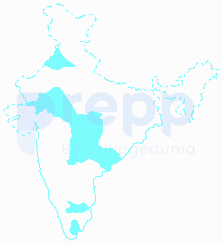
The areas marked in the map given above account for the production of which one of the following cash crops?
Headquarters of which one among the following Railway Zones in India is situated at the highest elevation from the mean sea level?
Which one of the following is the correct sequential phase in the successional development of vegetation community in a habitat?
Match List-I with List-II and select correct answer using the code given below the Lists:
List-I (National Highway) List-II (Route)
A. NH -2 1. Delhi-Jaipur- Ahmedabad-Mumbai
B. NH-4 2. Thane-Pune-Bengaluru-Chennai
C. NH -7 3. Delhi-Agra-Allahabad-Kolkata
D. NH-8 4. Varanasi-Jabalpur-Nagpur-Hyderabad - Bengaluru-Madurai-Kanyakumari
Match List-I with List-II and select the correct answer using the code given below the Lists :
List-I (Type of Land) List-II (Meaning)
A. Urvara 1. Land watered by a river
B. Maru 2. Fertile land
C. Nadimatrika 3. Land watered by rain
D. Devamatrika 4. Desert land
Important Questions from Indian Economic and Human Geography
- Liberalisation reduced government control over economic activities. What did liberalisation in 1991 primarily aim to eliminate?
- Which sector was given top priority under the Second Five-Year Plan of India (1956-61)?
- Which Indian Prime Minister is closely associated with initiating the 1991 LPG reforms?
- Which union territory has the highest total literacy rate in India?
- All the State Governments except the north-eastern region, imposed ceilings on land holdings in __________.