
Match the following : Codes :List – I List – II a. Power efficient transmission i. SSB-SC b. Most bandwidth efficient transmission of voice signal ii. VSB c. Simplest receiver iii. FM d. Bandwidth efficient transmission of signals with significant d.c. component iv. AM
a-iii, b-i, c-iv, d-ii
Each scheme is matched to the single respect in which it is best: a-iii, b-i, c-iv, d-ii — option 2.
| Requirement | Scheme | Why |
|---|---|---|
| a. Power efficient | iii. FM | Constant envelope; noise traded for bandwidth |
| b. Bandwidth efficient (voice) | i. SSB-SC | Half the bandwidth, no carrier |
| c. Simplest receiver | iv. AM | A diode envelope detector suffices |
| d. Signals with DC content | ii. VSB | Retains a vestige near DC |
a — FM's power efficiency. Its envelope is constant, so the transmitter's output stage can be run in class C or saturated switching — 70 % efficient or better — whereas a linear AM stage must stay linear and wastes power doing so. FM also converts extra bandwidth into signal-to-noise improvement, so a given quality is achieved with less transmitted power.
b — SSB for voice. The two sidebands of an AM signal carry identical information, so one is pure redundancy. Removing it halves the occupied bandwidth to \(f_{m}\) and removing the carrier saves the two-thirds of power AM spends on it. Speech tolerates this well because it has no significant energy near DC — the audio band starts around 300 Hz — leaving room for the filter to cut cleanly between the sidebands. This is why long-distance HF voice communication is almost entirely SSB.
d — why VSB exists, and why it is not simply SSB. This is the pairing that explains the whole question. When a signal does have energy down to DC — television video is the standard case — SSB becomes impossible: the two sidebands meet at the carrier with no gap, and no filter can separate them without destroying the low-frequency content that carries the picture's average brightness. VSB is the compromise: transmit one sideband fully, plus a small vestige of the other, so the filter's gradual roll-off is symmetrical about the carrier and the low frequencies are recovered correctly. It costs a little more bandwidth than SSB but far less than DSB.
c — AM's one advantage. A diode, a capacitor and a resistor recover the envelope. That receiver simplicity is the entire justification for transmitting a carrier that carries no information, and it is why AM broadcasting outlived its inefficiency: transmitter power is spent once, while receivers are bought by millions.
Hence, the correct code is a-iii, b-i, c-iv, d-ii.
Similar Questions
Match the following lists :
List – I List – II a. PCM i. Slope overload distortion b. DM ii. Constant carrier frequency c. AM iii. Encoding d. TDM iv. Commutator The correct match is :
Match the following :
List – I List – II a. DSB-SC modulation i. envelope detection b. SSB-modulation ii. Foster Seeley c. AM-demodulation iii. Weaver's method d. Phase-shift detection iv. Balanced modulator Codes :
Match List - I with List - II.
List - I List - II (A) White noise (I) Reduces antenna height (B) RMS noise voltage (II) \(P_{C}\left(\dfrac{m^{2}}{2}\right)\) (C) Modulation (III) Inversely proportional to \(\sqrt{T}\) (D) PDSBSC (IV) Johnson Noise Choose the correct answer from the options given below :
Match the following lists :
List - I List - II a) 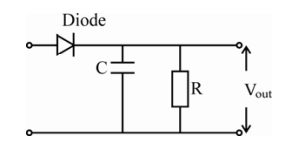
i) Frequency modulated detector b) 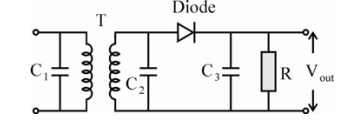
ii) Pre-emphasis c) 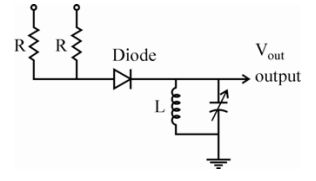
iii) Amplitude modulator d) 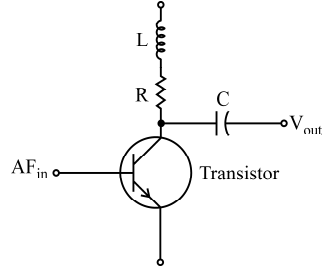
iv) Amplitude detector Choose the correct answer from the codes given below:
Match the following lists :
List -I List - II a. Power efficient transmission of signals i. AM b. Bandwidth efficient transmission of signals with significant dc signals ii. VSB c. Most bandwidth efficient transmission of voice signals iii. SSB-SC d. Simplest Receiver Circuit iv. FM Correct Codes are :
Arrange in order of the increasing Bandwidth value for the below mentioned systems :
(a) DSB-SC (b) VSB (c) FM (d) SSB
Codes :
Important Questions from Modulation
Which of the following modulations is used in India for radio transmission?
- Which of the following is a result of over-modulation?
Which of the following statements are correct?
A. DSB‐SC modulation is well suited for point to point communication involving one transmitter and one receiver.
B. VSB modulation is a linear modulation scheme.
C. SSB is a non‐linear modulation scheme.
D. FM is a linear modulation scheme.
Choose the correct answer from the options given below:
The condition for achieving distortion-less demodulation of an amplitude-modulated signal using an envelope detector is
When a broadcast AM transmitter is 50 % modulated, its antenna current is 12 A. What will be the current when the modulation depth is increased to 90%?



