
Match the following : Codes :List – I List – II a. DSB-SC modulation i. envelope detection b. SSB-modulation ii. Foster Seeley c. AM-demodulation iii. Weaver's method d. Phase-shift detection iv. Balanced modulator
a-iv, b-iii, c-i, d-ii
Every entry is a named technique tied to one scheme: a-iv, b-iii, c-i, d-ii — option 2.
| Item | Match |
|---|---|
| a. DSB-SC | iv. Balanced modulator |
| b. SSB | iii. Weaver's method |
| c. AM demodulation | i. Envelope detection |
| d. Phase-shift detection | ii. Foster-Seeley |
a — how the carrier is removed. A balanced modulator uses two matched devices fed with the carrier in antiphase and the modulating signal in phase. The carrier components cancel at the output while the sidebands, being products of the two inputs, add — leaving
\(s(t)=m(t)\cos\omega_{c}t\)
with no carrier term at all. The ring modulator is the classic diode implementation, and the balance of the devices decides how completely the carrier is suppressed.
b — Weaver's method. There are three ways to produce SSB. The filter method generates DSB-SC and removes one sideband with a very sharp filter — simple but demanding of the filter, since the two sidebands are separated only by twice the lowest audio frequency. The phasing method uses two balanced modulators fed in quadrature, so the unwanted sideband cancels — but it needs a wideband 90° audio phase shifter, which is hard to build accurately. Weaver's third method translates the audio to a low intermediate frequency first, so the required phase shifts and filters are needed only at a fixed frequency — avoiding both the sharp filter and the wideband phase shifter.
c — envelope detection. Full-carrier AM carries the message in its envelope, so a diode, a capacitor and a resistor recover it: the diode rectifies, the capacitor holds the peaks, and the RC time constant is chosen to follow the modulation but not the carrier —
\(\dfrac{1}{f_{c}}\ll RC\ll\dfrac{1}{f_{m}}\)
Cheapness is the whole point of transmitting the carrier at all.
d — Foster-Seeley. The Foster-Seeley discriminator is an FM detector that works by phase shift: a tuned transformer produces a phase difference between primary and secondary that varies with the input frequency, and two diodes compare the resulting vector sums. Its close relative the ratio detector adds amplitude-limiting to the same idea.
Hence, the correct code is a-iv, b-iii, c-i, d-ii.
Similar Questions
Match the following lists :
List – I List – II a. PCM i. Slope overload distortion b. DM ii. Constant carrier frequency c. AM iii. Encoding d. TDM iv. Commutator The correct match is :
Match the following :
List – I List – II a. Power efficient transmission i. SSB-SC b. Most bandwidth efficient transmission of voice signal ii. VSB c. Simplest receiver iii. FM d. Bandwidth efficient transmission of signals with significant d.c. component iv. AM Codes :
Match List - I with List - II.
List - I List - II (A) White noise (I) Reduces antenna height (B) RMS noise voltage (II) \(P_{C}\left(\dfrac{m^{2}}{2}\right)\) (C) Modulation (III) Inversely proportional to \(\sqrt{T}\) (D) PDSBSC (IV) Johnson Noise Choose the correct answer from the options given below :
Match the following lists :
List - I List - II a) 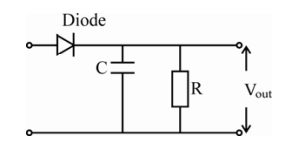
i) Frequency modulated detector b) 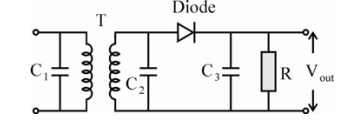
ii) Pre-emphasis c) 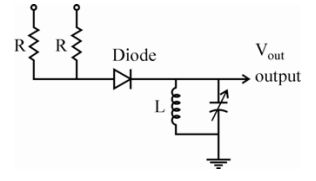
iii) Amplitude modulator d) 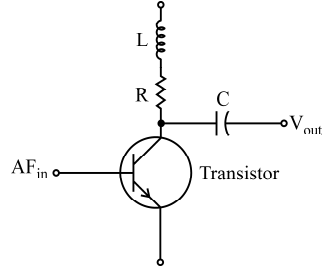
iv) Amplitude detector Choose the correct answer from the codes given below:
Match the following lists :
List -I List - II a. Power efficient transmission of signals i. AM b. Bandwidth efficient transmission of signals with significant dc signals ii. VSB c. Most bandwidth efficient transmission of voice signals iii. SSB-SC d. Simplest Receiver Circuit iv. FM Correct Codes are :
Arrange in order of the increasing Bandwidth value for the below mentioned systems :
(a) DSB-SC (b) VSB (c) FM (d) SSB
Codes :
Important Questions from Modulation
Which of the following modulations is used in India for radio transmission?
- Which of the following is a result of over-modulation?
Which of the following statements are correct?
A. DSB‐SC modulation is well suited for point to point communication involving one transmitter and one receiver.
B. VSB modulation is a linear modulation scheme.
C. SSB is a non‐linear modulation scheme.
D. FM is a linear modulation scheme.
Choose the correct answer from the options given below:
The condition for achieving distortion-less demodulation of an amplitude-modulated signal using an envelope detector is
When a broadcast AM transmitter is 50 % modulated, its antenna current is 12 A. What will be the current when the modulation depth is increased to 90%?



